
抗 TLR7 抗体通过靶向 B 细胞和巡弋单核细胞来预防 NZBWF1 小鼠的狼疮肾炎。
Anti-TLR7 Antibody Protects Against Lupus Nephritis in NZBWF1 Mice by Targeting B Cells and Patrolling Monocytes.
机构信息
Division of Innate Immunity, Department of Microbiology and Immunology, The Institute of Medical Science, The University of Tokyo, Tokyo, Japan.
Faculty of Pharmacy, Department of Pharmaceutical Sciences & Research Institute of Pharmaceutical Sciences, Musashino University, Tokyo, Japan.
出版信息
Front Immunol. 2021 Nov 11;12:777197. doi: 10.3389/fimmu.2021.777197. eCollection 2021.
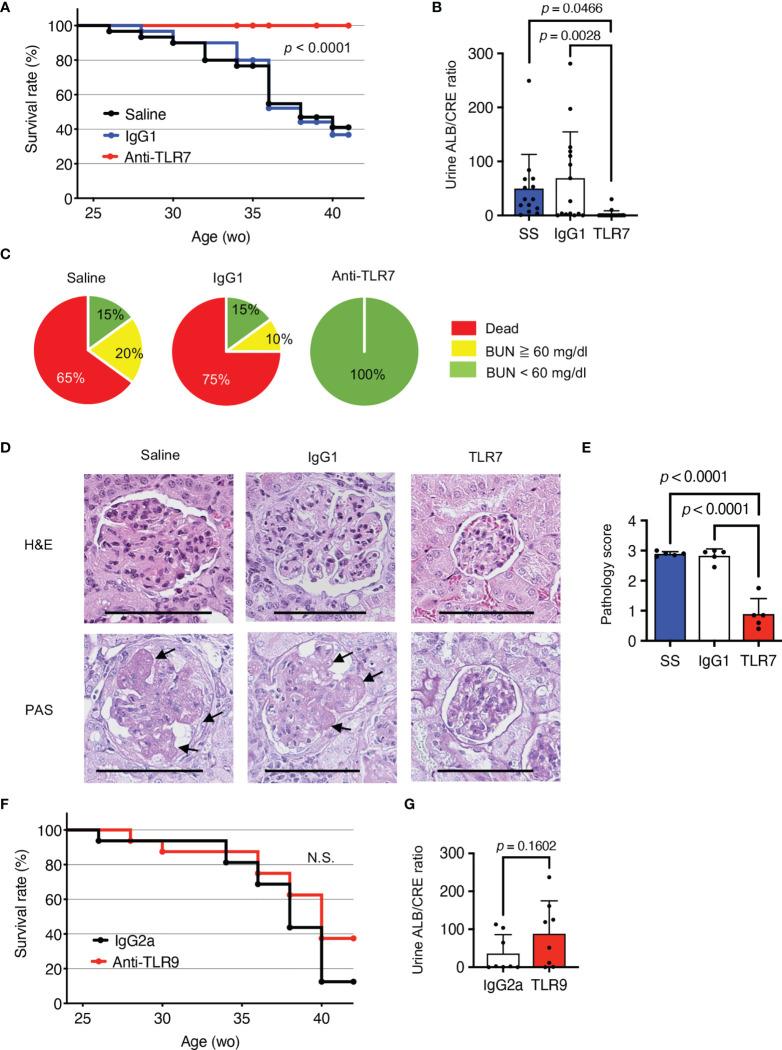
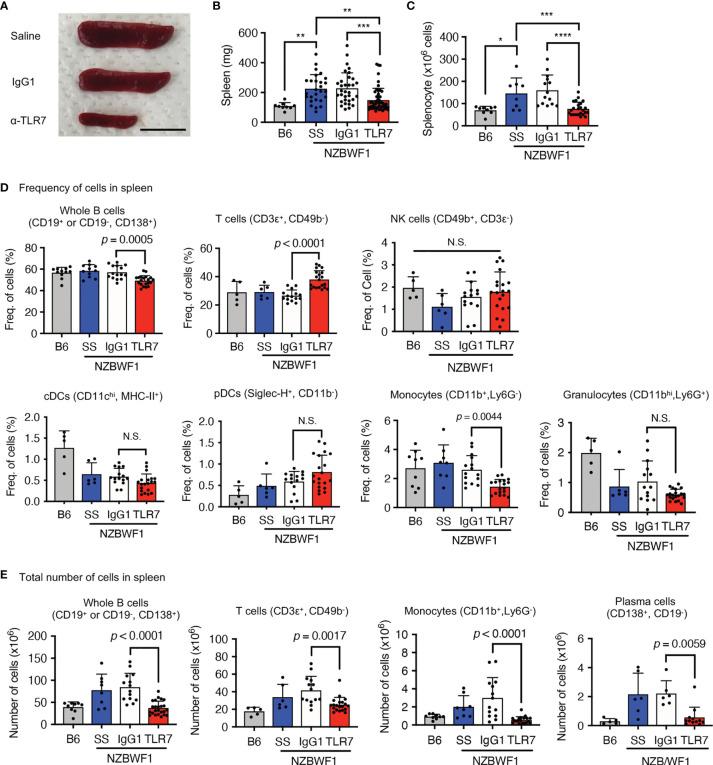
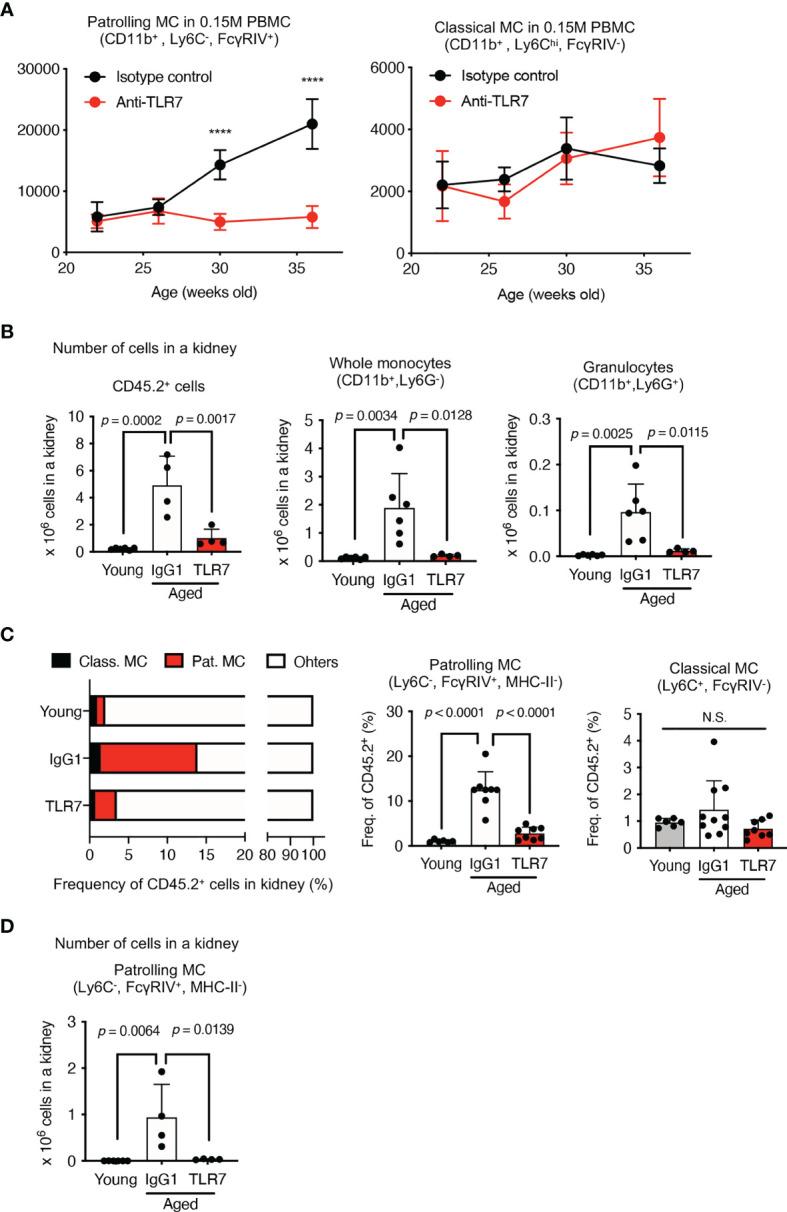
Systemic lupus erythematosus (SLE) is an autoimmune disease characterized by autoantibody production and multiple organ damage. Toll-like receptor 7 (TLR7), an innate immune RNA sensor expressed in monocytes/macrophages, dendritic cells (DCs), and B cells, promotes disease progression. However, little is known about the cellular mechanisms through which TLR7 drives lupus nephritis. Here, we show that the anti-mouse TLR7 mAb, but not anti-TLR9 mAb, protected lupus-prone NZBWF1 mice from nephritis. The anti-TLR7 mAb reduced IgG deposition in glomeruli by inhibiting the production of autoantibodies to the RNA-associated antigens. We found a disease-associated increase in Ly6C patrolling monocytes that expressed high levels of TLR7 and had upregulated expression of lupus-associated IL-10, CD115, CD31, and TNFSF15 in NZBWF1 mice. Anti-TLR7 mAb abolished this lupus-associated increase in patrolling monocytes in the circulation, spleen, and glomeruli. These results suggested that TLR7 drives autoantibody production and lupus-associated monocytosis in NZBWF1 mice and, that anti-TLR7 mAb is a promising therapeutic tool targeting B cells and monocytes/macrophages.
系统性红斑狼疮(SLE)是一种自身免疫性疾病,其特征是产生自身抗体和多器官损伤。Toll 样受体 7(TLR7)是一种先天免疫 RNA 传感器,表达于单核细胞/巨噬细胞、树突状细胞(DC)和 B 细胞中,促进疾病进展。然而,TLR7 如何驱动狼疮肾炎的细胞机制知之甚少。在这里,我们发现抗小鼠 TLR7 mAb 而不是抗 TLR9 mAb 可保护狼疮易感 NZBWF1 小鼠免受肾炎的侵害。抗 TLR7 mAb 通过抑制针对 RNA 相关抗原的自身抗体的产生来减少肾小球中的 IgG 沉积。我们发现,在 NZBWF1 小鼠中,Ly6C 巡逻单核细胞增加,这些细胞表达高水平的 TLR7,并上调狼疮相关的 IL-10、CD115、CD31 和 TNFSF15 的表达。抗 TLR7 mAb 消除了这种在循环、脾脏和肾小球中与狼疮相关的巡逻单核细胞的增加。这些结果表明,TLR7 驱动 NZBWF1 小鼠的自身抗体产生和狼疮相关的单核细胞增多症,并且抗 TLR7 mAb 是一种有前途的针对 B 细胞和单核细胞/巨噬细胞的治疗工具。





 Zotero 插件