
白色脂肪组织的自发褐变可改善小鼠脂肪移植后的血管生成并减少巨噬细胞浸润。
Spontaneous Browning of White Adipose Tissue Improves Angiogenesis and Reduces Macrophage Infiltration After Fat Grafting in Mice.
作者信息
Lin Jiayan, Zhu Shaowei, Liao Yunjun, Liang Zhuokai, Quan Yuping, He Yufei, Cai Junrong, Lu Feng
机构信息
Department of Plastic and Cosmetic Surgery, Nanfang Hospital, Southern Medical University, Guangzhou, China.
出版信息
Front Cell Dev Biol. 2022 Apr 26;10:845158. doi: 10.3389/fcell.2022.845158. eCollection 2022.
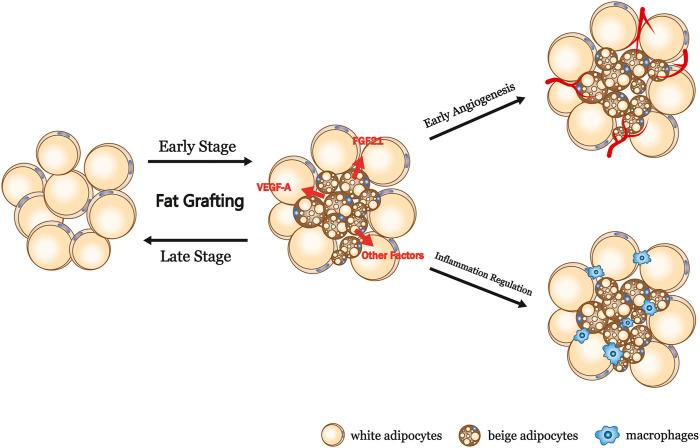
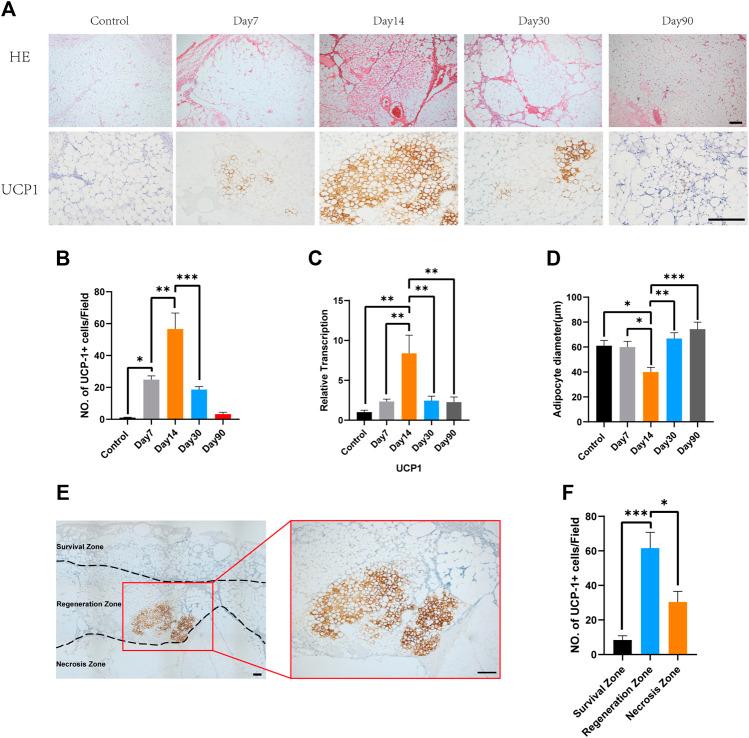
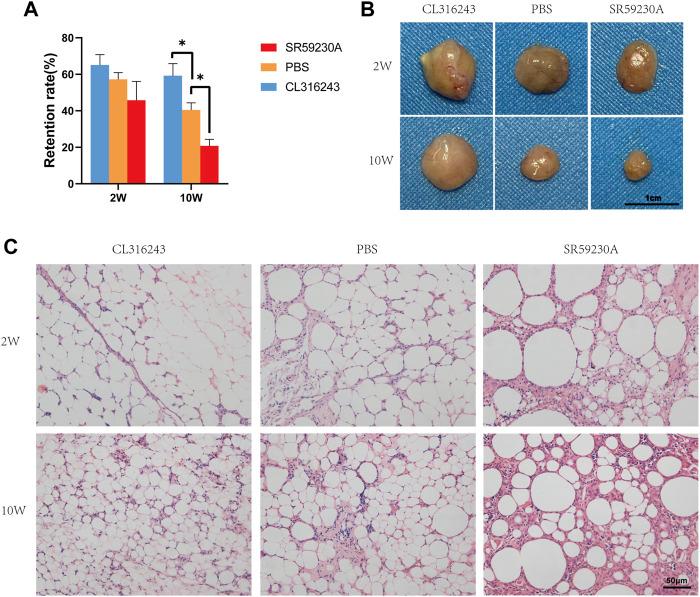
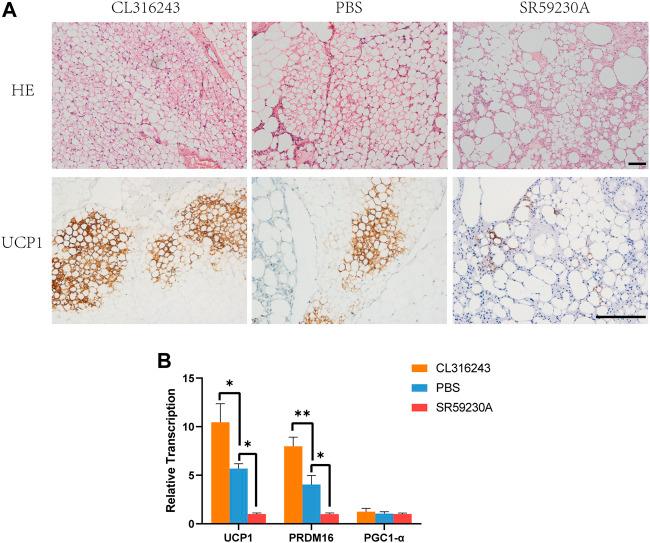
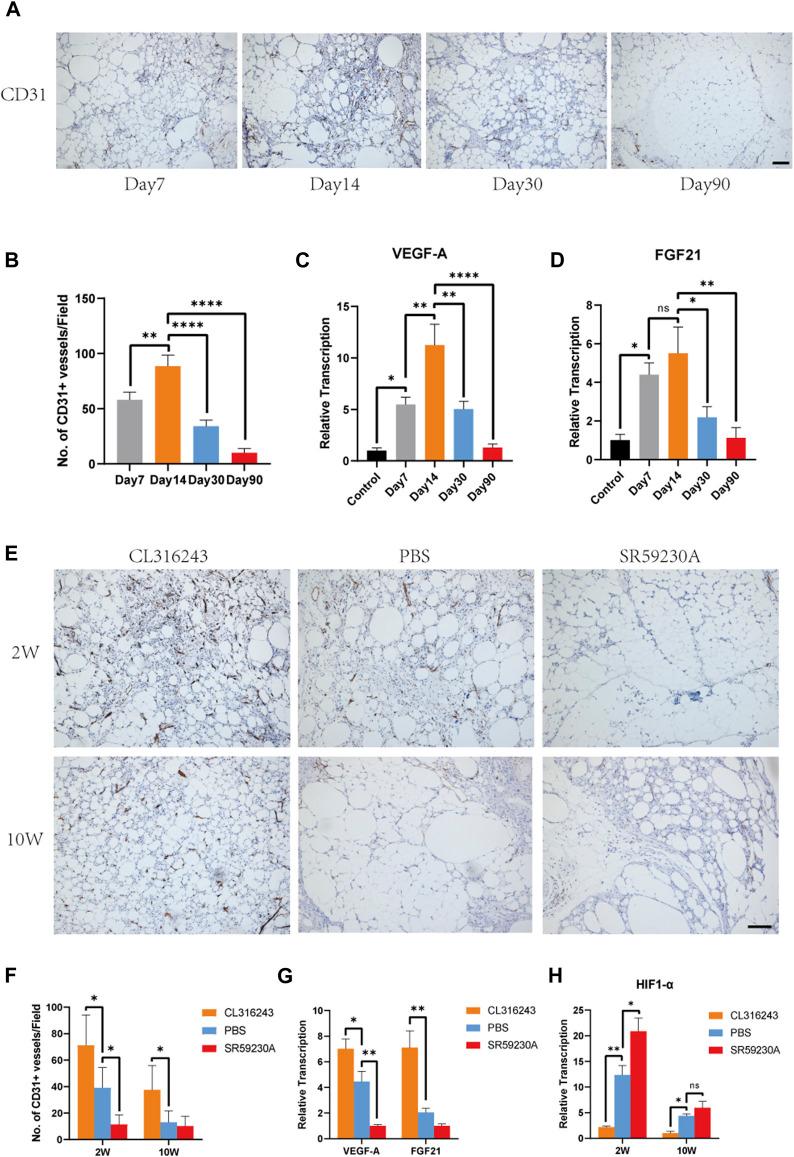
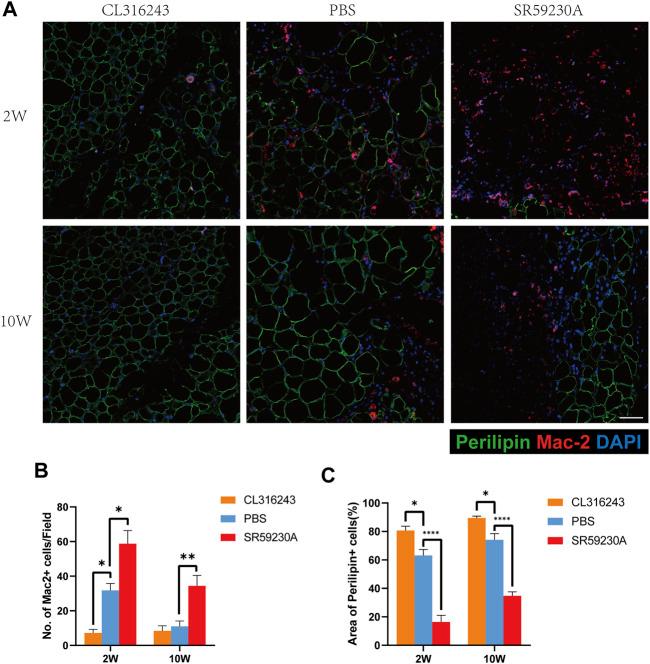
: Fat grafting is a frequently used technique; however, its survival/ regeneration mechanism is not fully understood. The browning of white adipocytes, a process initiated in response to external stimuli, is the conversion of white to beige adipocytes. The physiologic significance of the browning of adipocytes following transplantation is unclear. : C57BL/6 mice received 150 mg grafts of inguinal adipose tissue, and then the transplanted fat was harvested and analyzed at different time points to assess the browning process. To verify the role of browning of adipocytes in fat grafting, the recipient mice were allocated to three groups, which were administered CL316243 or SR59230A to stimulate or suppress browning, respectively, or a control group after transplantation. : Browning of the grafts was present in the center of each as early as 7 days post-transplantation. The number of beige cells peaked at day 14 and then decreased gradually until they were almost absent at day 90. The activation of browning resulted in superior angiogenesis, higher expression of the pro-angiogenic molecules vascular endothelial growth factor A (VEGF-A) and fibroblast growth factor 21 (FGF21), fewer macrophages, and ultimately better graft survival (Upregulation, 59.17% ± 6.64% vs. Control, 40.33% ± 4.03%, * < 0.05), whereas the inhibition of browning led to poor angiogenesis, lower expression of VEGF-A, increased inflammatory macrophages, and poor transplant retention at week 10 (Downregulation, 20.67% ± 3.69% vs. Control, 40.33% ± 4.03%, * < 0.05). : The browning of WAT following transplantation improves the survival of fat grafts by the promotion of angiogenesis and reducing macrophage.
脂肪移植是一种常用技术;然而,其存活/再生机制尚未完全明确。白色脂肪细胞的褐变是指白色脂肪细胞在外部刺激下转化为米色脂肪细胞的过程。移植后脂肪细胞褐变的生理意义尚不清楚。C57BL/6小鼠接受150毫克腹股沟脂肪组织移植,然后在不同时间点采集移植脂肪并进行分析,以评估褐变过程。为验证脂肪细胞褐变在脂肪移植中的作用,将受体小鼠分为三组,分别给予CL316243或SR59230A以刺激或抑制褐变,移植后设立对照组。移植后最早在第7天,移植物中心就出现了褐变。米色细胞数量在第14天达到峰值,然后逐渐减少,直到第90天几乎消失。褐变激活导致更好的血管生成、促血管生成分子血管内皮生长因子A(VEGF-A)和成纤维细胞生长因子21(FGF21)表达增加、巨噬细胞减少,最终移植物存活更好(上调组,59.17%±6.64% vs.对照组,40.33%±4.03%,<0.05),而抑制褐变则导致血管生成不良、VEGF-A表达降低、炎性巨噬细胞增加以及第10周时移植留存率低(下调组,20.67%±3.69% vs.对照组,40.33%±4.03%,<0.05)。移植后白色脂肪组织的褐变通过促进血管生成和减少巨噬细胞来提高脂肪移植物的存活率。
 Zotero 插件