
新一代针对流感的信使 RNA(mRNA)疫苗。
The new generation of messenger RNA (mRNA) vaccines against influenza.
机构信息
Unidad de Virología, Servicio de Microbiología, Hospital Universitario Son Espases, Facultad de Medicina UIB, Palma de Mallorca, Spain.
出版信息
Enferm Infecc Microbiol Clin (Engl Ed). 2023 May;41(5):301-304. doi: 10.1016/j.eimce.2022.07.006. Epub 2022 Jul 26.
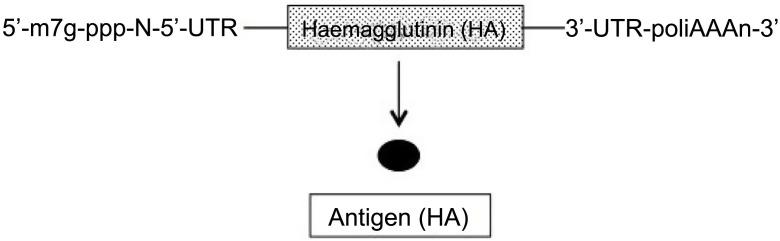
Today there are multiple types of flu vaccines. The emergence of nucleic acid technology used in vaccines against SARS-CoV-2 suggests its future application against this infection. Against influenza, two types of vaccines have been developed based on messenger RNA (mRNA): conventional or non-replicative and self-amplifying or replicative (auRNA), both included in lipid nanoparticles. Animal studies carried out with the former have shown their strong capacity to induce Th-1 antibodies and cellular immunity against influenza haemagglutinin (HA) with few side effects. Human trials have shown 87% seroconversion and 100% seroprotection. The auRNA vaccines have obtained similar results in animals but at a concentration 64 times lower than the conventional one. Vaccines based on mRNA platforms meet the WHO requirements for next generation influenza vaccines.
目前有多种类型的流感疫苗。在针对 SARS-CoV-2 的疫苗中使用的核酸技术的出现表明了其未来在该感染中的应用。针对流感,已经开发出两种基于信使 RNA(mRNA)的疫苗:传统或非复制型和自我扩增或复制型(auRNA),两者都包含在脂质纳米颗粒中。用前者进行的动物研究表明,它们具有很强的诱导针对流感血凝素(HA)的 Th-1 抗体和细胞免疫的能力,副作用很少。人体试验显示 87%的血清转化率和 100%的血清保护率。auRNA 疫苗在动物中获得了类似的结果,但浓度比传统疫苗低 64 倍。基于 mRNA 平台的疫苗符合世界卫生组织对下一代流感疫苗的要求。

 Zotero 插件