Hieda M, Tachibana T, Yokoya F, Kose S, Imamoto N, Yoneda Y
Department of Anatomy and Cell Biology, Osaka University Medical School, Suita, Osaka 565-0871, Japan.
J Cell Biol. 1999 Feb 22;144(4):645-55. doi: 10.1083/jcb.144.4.645.
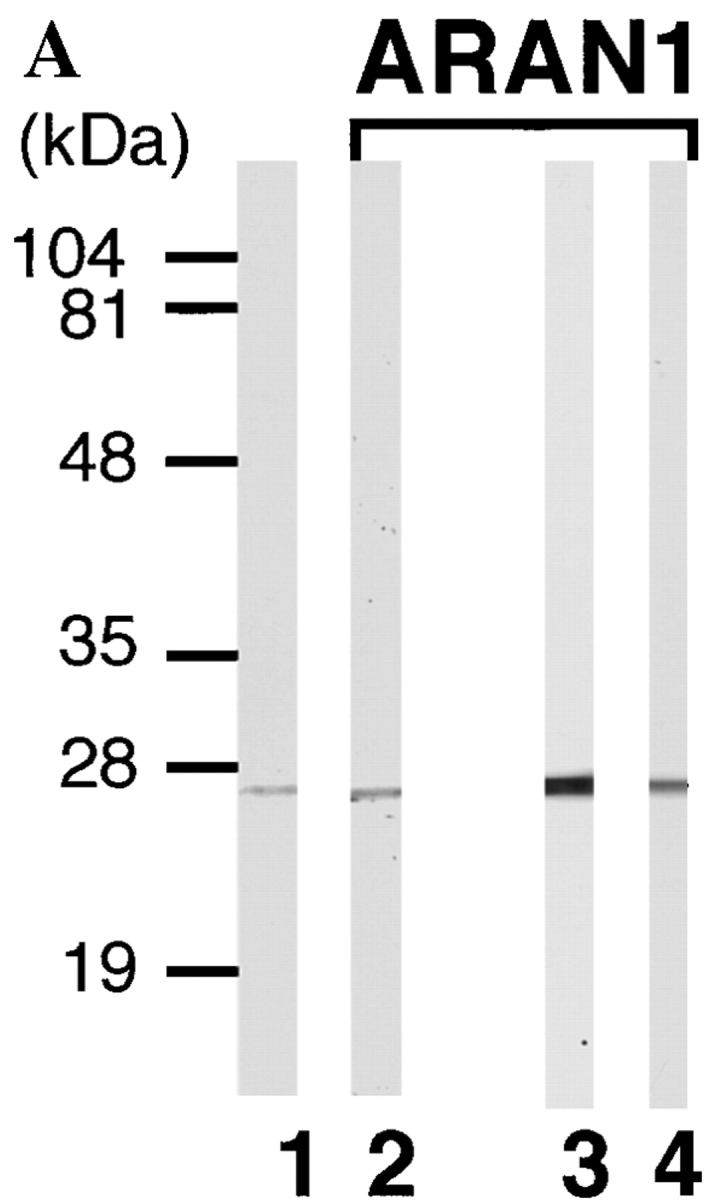
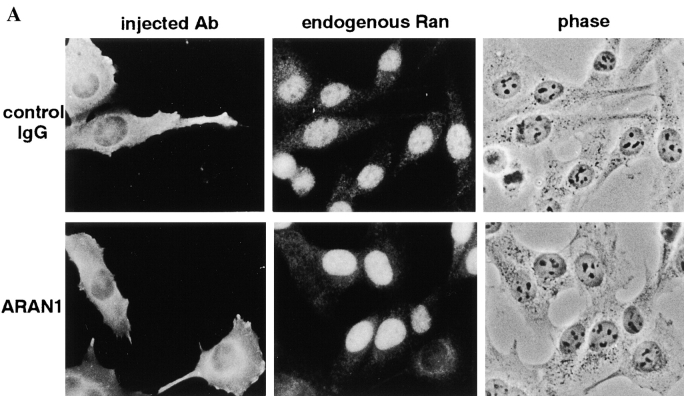
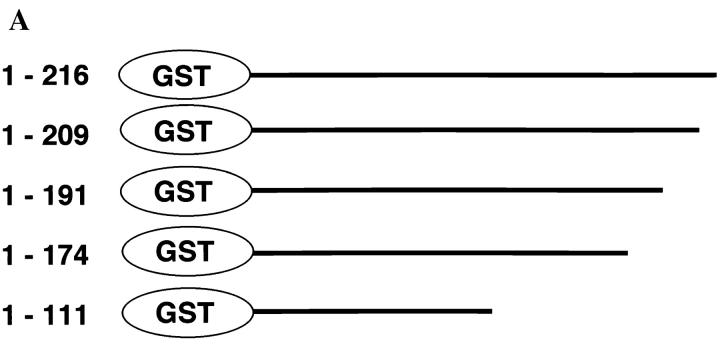
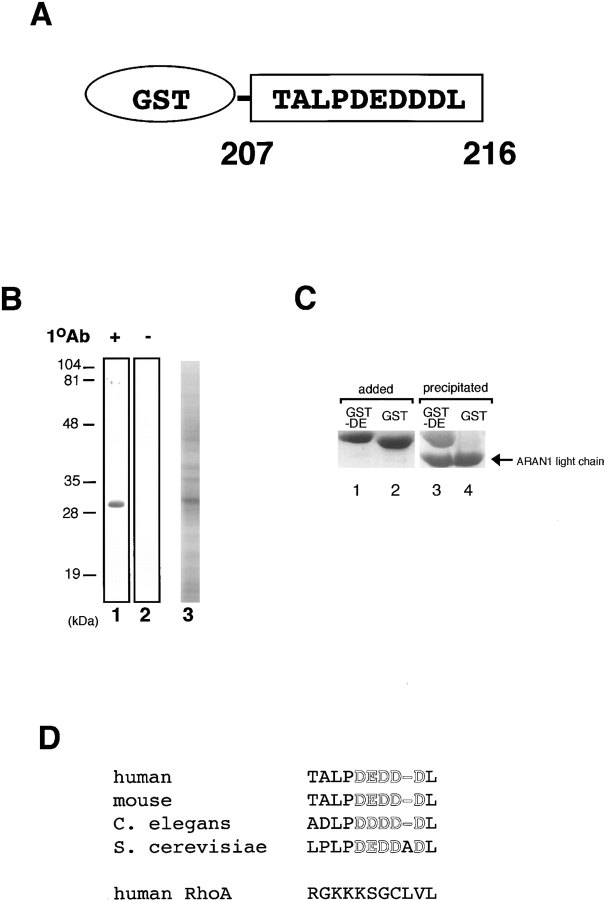
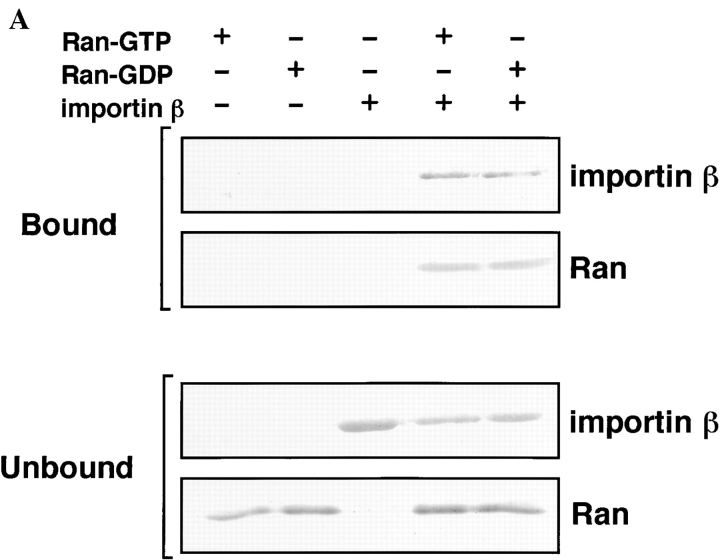
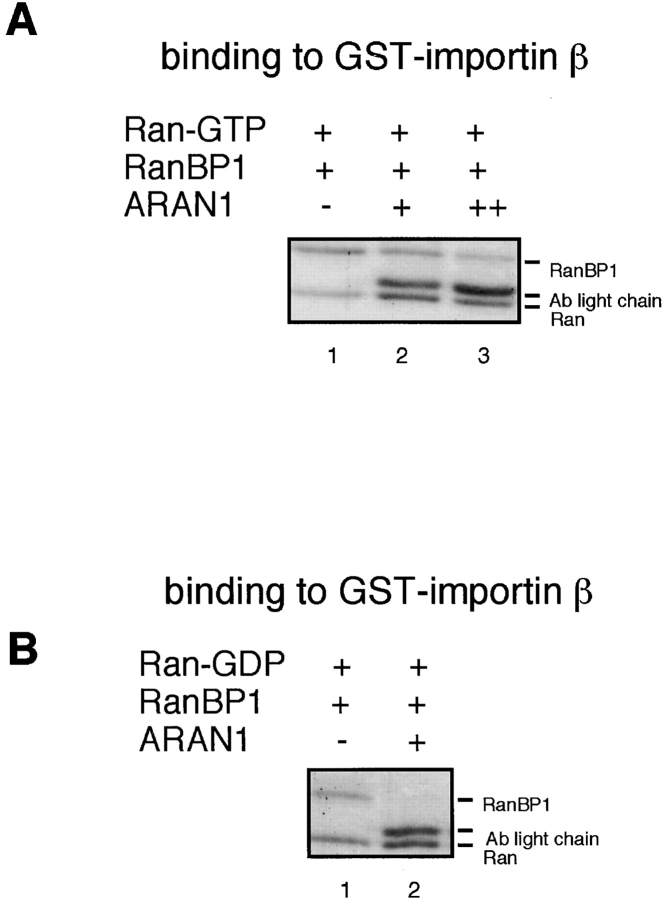
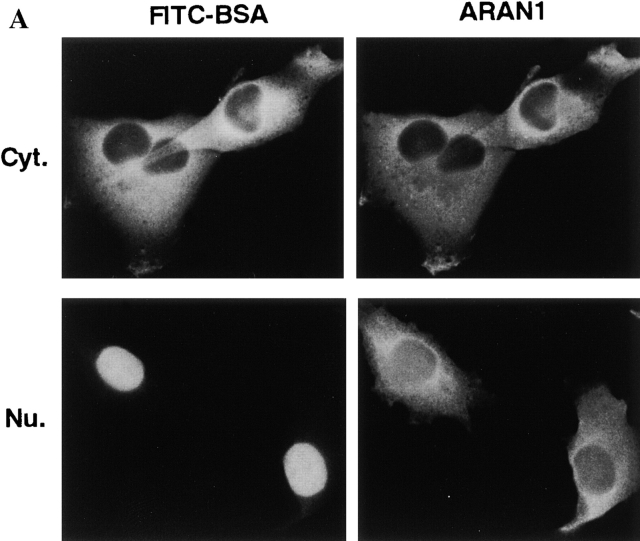
A small GTPase Ran is a key regulator for active nuclear transport. In immunoblotting analysis, a monoclonal antibody against recombinant human Ran, designated ARAN1, was found to recognize an epitope in the COOH-terminal domain of Ran. In a solution binding assay, ARAN1 recognized Ran when complexed with importin beta, transportin, and CAS, but not the Ran-GTP or the Ran-GDP alone, indicating that the COOH-terminal domain of Ran is exposed via its interaction with importin beta-related proteins. In addition, ARAN1 suppressed the binding of RanBP1 to the Ran-importin beta complex. When injected into the nucleus of BHK cells, ARAN1 was rapidly exported to the cytoplasm, indicating that the Ran-importin beta-related protein complex is exported as a complex from the nucleus to the cytoplasm in living cells. Moreover, ARAN1, when injected into the cultured cells induces the accumulation of endogenous Ran in the cytoplasm and prevents the nuclear import of SV-40 T-antigen nuclear localization signal substrates. From these findings, we propose that the binding of RanBP1 to the Ran-importin beta complex is required for the dissociation of the complex in the cytoplasm and that the released Ran is recycled to the nucleus, which is essential for the nuclear protein transport.
小GTP酶Ran是活性核转运的关键调节因子。在免疫印迹分析中,发现一种针对重组人Ran的单克隆抗体(命名为ARAN1)可识别Ran羧基末端结构域中的一个表位。在溶液结合试验中,ARAN1在Ran与输入蛋白β、运输蛋白和CAS形成复合物时能识别Ran,但不能识别单独的Ran-GTP或Ran-GDP,这表明Ran的羧基末端结构域通过与输入蛋白β相关蛋白的相互作用而暴露。此外,ARAN1抑制RanBP1与Ran-输入蛋白β复合物的结合。当注射到BHK细胞的细胞核中时,ARAN1迅速输出到细胞质中,这表明Ran-输入蛋白β相关蛋白复合物在活细胞中作为一个复合物从细胞核输出到细胞质中。此外,当将ARAN1注射到培养细胞中时,它会诱导内源性Ran在细胞质中积累,并阻止SV-40 T抗原核定位信号底物的核输入。基于这些发现,我们提出RanBP1与Ran-输入蛋白β复合物的结合是该复合物在细胞质中解离所必需的,并且释放的Ran会循环回到细胞核,这对核蛋白转运至关重要。