
受体Ck依赖性信号传导调节hTERT基因转录。
Receptor Ck-dependent signaling regulates hTERT gene transcription.
作者信息
Sikand Kavleen, Kaul Deepak, Varma Neelam
机构信息
Department of Experimental Medicine & Biotechnology, Postgraduate Institute of Medical Education and Research, Chandigarh-160 012, India.
出版信息
BMC Cell Biol. 2006 Jan 12;7:2. doi: 10.1186/1471-2121-7-2.
BACKGROUND
Available evidence suggests that the regulation of telomerase activity primarily depends on the transcriptional control of the human telomerase reverse transcriptase (hTERT) gene. Although several activators and repressors of hTERT gene transcription have been identified, the exact mechanism by which hTERT transcription is repressed in normal cells and activated in cancer cells remains largely unknown. In an attempt to identify possible novel mechanisms involved in the regulation of hTERT transcription, the present study examined the role of Receptor Ck, a cell surface receptor specific for cholesterol, in the transcription of hTERT gene in normal human peripheral blood mononuclear cells.
RESULTS
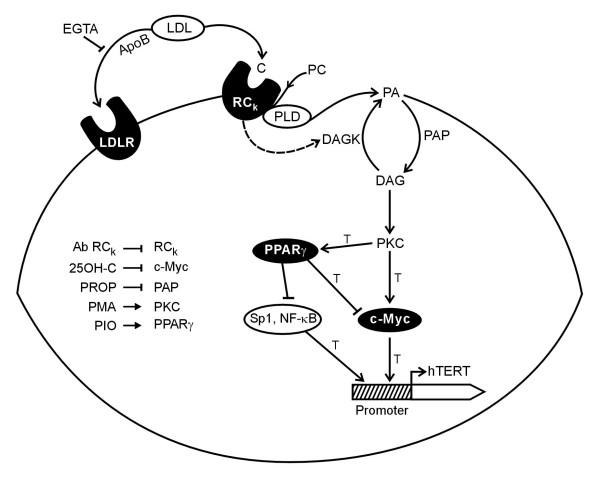
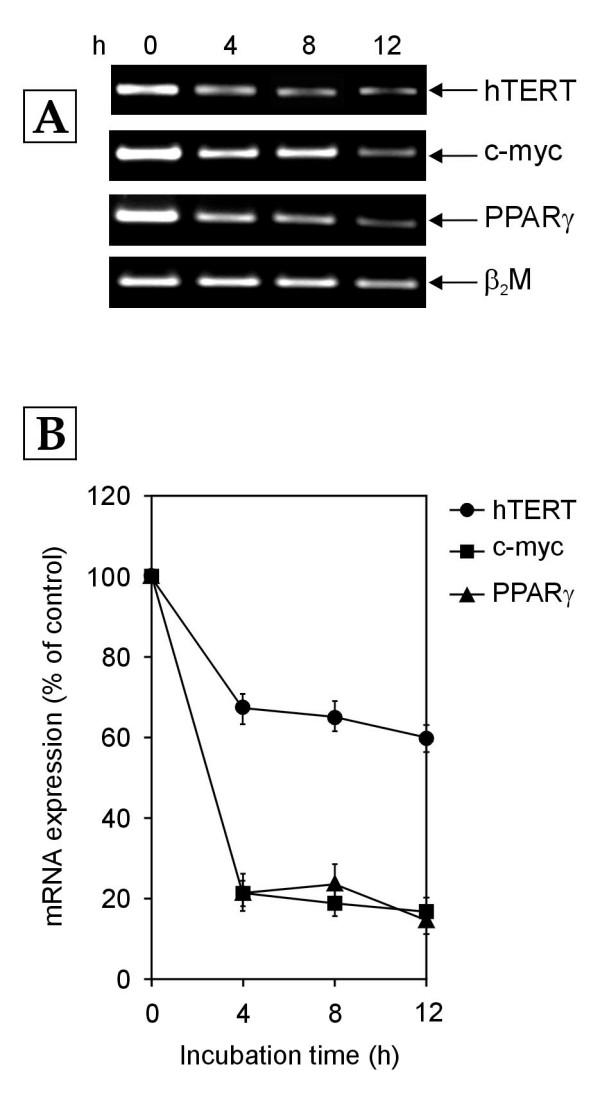
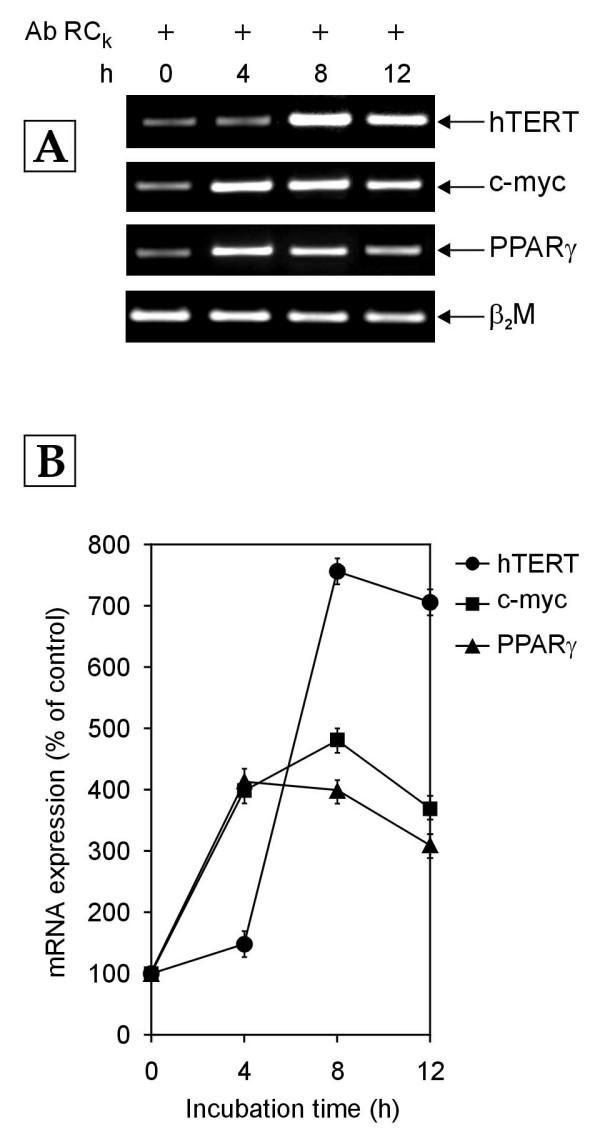
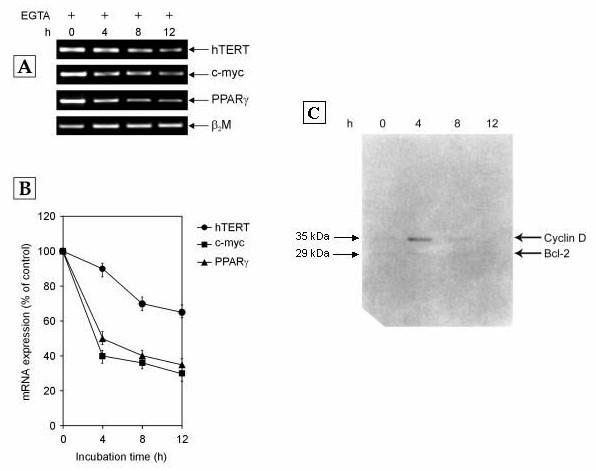
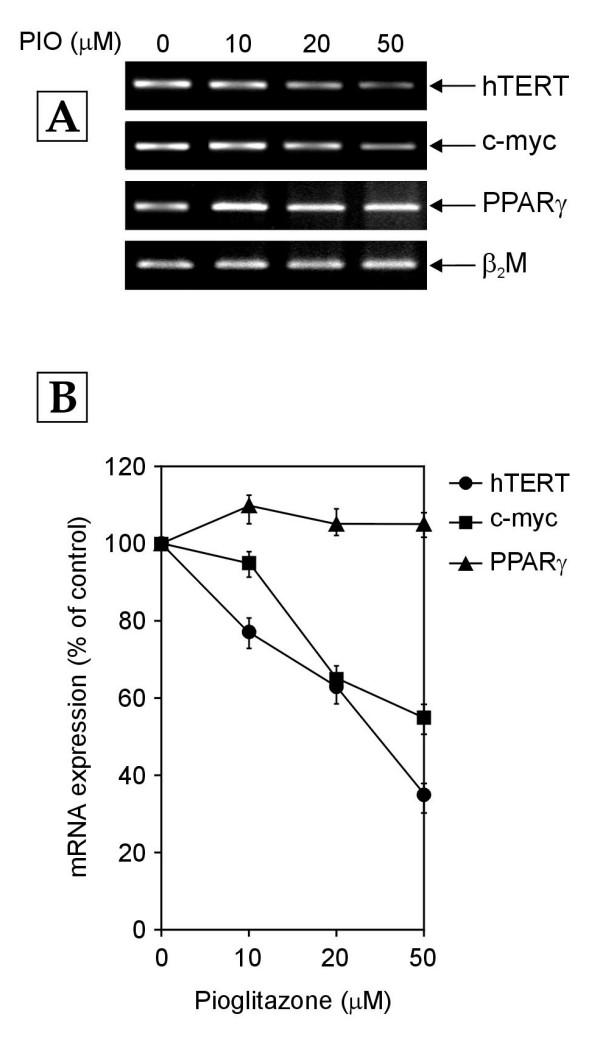
Activated Receptor Ck was found to down-regulate hTERT mRNA expression by repressing the transcription of c-myc gene. Receptor Ck-dependent signaling was also found to down-regulate the mRNA expression of the gene coding for the ligand inducible transcription factor, peroxisome proliferator-activated receptor gamma (PPARgamma). The ligand activation of PPARgamma resulted in the down-regulation of c-myc and hTERT mRNA expression. By using specific activator and inhibitor of protein kinase C (PKC), it was demonstrated that Receptor Ck dependent down-regulation of hTERT gene transcription involved inhibition of PKC. In addition, 25-hydroxycholesterol was found to contribute to the transcriptional regulation of hTERT gene.
CONCLUSION
Taken together, the findings of this study present evidence for a molecular link between cholesterol-activated Receptor Ck and hTERT transcription, and provide new insights into the regulation of hTERT expression in normal human peripheral blood mononuclear cells.
背景
现有证据表明,端粒酶活性的调节主要取决于人类端粒酶逆转录酶(hTERT)基因的转录控制。尽管已经鉴定出几种hTERT基因转录的激活剂和抑制剂,但在正常细胞中hTERT转录被抑制而在癌细胞中被激活的确切机制仍 largely 未知。为了确定参与hTERT转录调节的可能新机制,本研究检测了受体Ck(一种对胆固醇特异的细胞表面受体)在正常人外周血单核细胞hTERT基因转录中的作用。
结果
发现激活的受体Ck通过抑制c-myc基因的转录来下调hTERT mRNA表达。还发现受体Ck依赖的信号传导下调编码配体诱导转录因子过氧化物酶体增殖物激活受体γ(PPARγ)的基因的mRNA表达。PPARγ的配体激活导致c-myc和hTERT mRNA表达下调。通过使用蛋白激酶C(PKC)的特异性激活剂和抑制剂,证明受体Ck依赖的hTERT基因转录下调涉及PKC的抑制。此外,发现25-羟基胆固醇有助于hTERT基因的转录调节。
结论
综上所述,本研究结果为胆固醇激活的受体Ck与hTERT转录之间的分子联系提供了证据,并为正常人外周血单核细胞中hTERT表达的调节提供了新的见解。




 Zotero 插件