Ohmori Fumiko, Shimizu Shizuyo, Kagaya Atsuko
National Institute of Fitness and Sports in Kanoya, 1 Shiromizu, Kanoya, Kagoshima 891-2393, Japan.
Dyn Med. 2007 May 9;6:5. doi: 10.1186/1476-5918-6-5.
Dynamic exercise is characterized by relaxation periods between contractions. The relaxation period should be considered as a causal factor for determining the magnitude of blood flow during dynamic exercise. The purpose of this study was to investigate the effect of muscle relaxation periods determined by the response of each subject on the exercise-induced blood flow response.
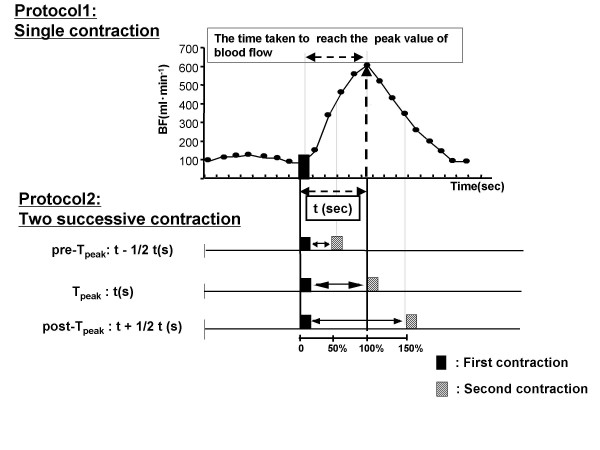
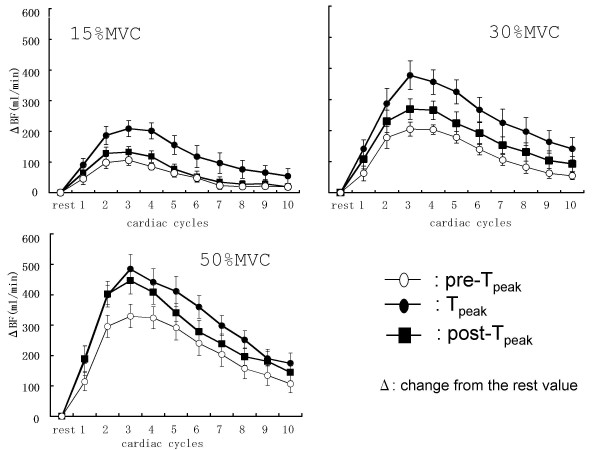
Seven healthy female subjects performed dynamic plantar flexions twice in succession; the duration of each flexion was 1-s and they were performed at an intensity of 15%, 30% and 50% of the maximal voluntary contraction (MVC). Based on the blood flow response after a single contraction, we set up intervals between two successive contractions; the intervals corresponded to 50% (pre-Tpeak), 100% (Tpeak), and 150% (post-Tpeak) of the time required to reach peak blood flow.
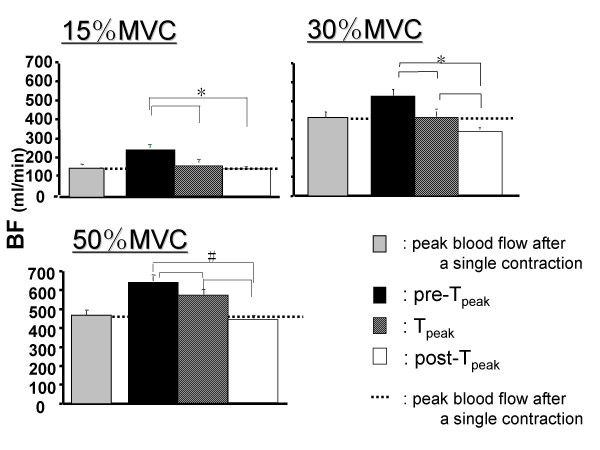
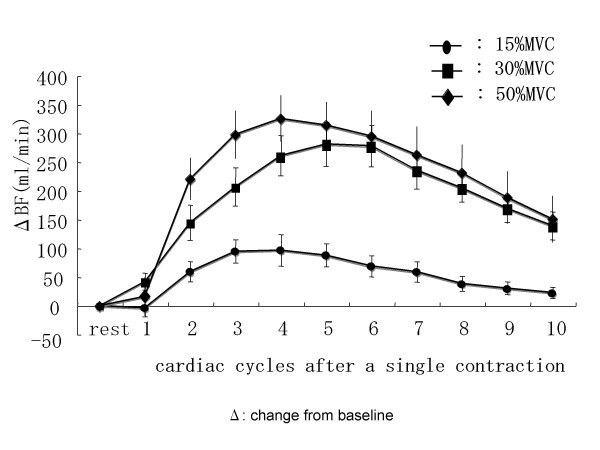
In all the conditions, upon cessation of the contraction, there was a progressive, beat-by-beat increase in the blood flow through the popliteal artery that peaked by the 5th cardiac cycle. Peak values of blood flow achieved after exercise were significantly higher at pre-Tpeak than at Tpeak and post-Tpeak (p < 0.05).
The result indicate that at three intervals based on the time taken to reach the peak value, the highest blood flow value was obtained at the pre-Tpeak interval.
动态运动的特点是收缩之间有放松期。放松期应被视为决定动态运动期间血流大小的一个因果因素。本研究的目的是调查由每个受试者的反应所确定的肌肉放松期对运动诱导的血流反应的影响。
7名健康女性受试者连续进行两次动态跖屈;每次屈曲持续时间为1秒,以最大自主收缩(MVC)的15%、30%和50%的强度进行。根据单次收缩后的血流反应,我们设定了两次连续收缩之间的间隔;这些间隔分别对应于达到峰值血流所需时间的50%(T峰前)、100%(T峰)和150%(T峰后)。
在所有条件下,收缩停止后,通过腘动脉的血流逐搏进行性增加,在第5个心动周期达到峰值。运动后达到的血流峰值在T峰前显著高于T峰和T峰后(p<0.05)。
结果表明,在基于达到峰值所需时间的三个间隔中,在T峰前间隔获得了最高的血流值。