Aleksunes Lauren M, Slitt Angela L, Maher Jonathan M, Augustine Lisa M, Goedken Michael J, Chan Jefferson Y, Cherrington Nathan J, Klaassen Curtis D, Manautou José E
Department of Pharmaceutical Sciences, School of Pharmacy, University of Connecticut, 69 North Eagleville Road, Unit 3092, Storrs, CT 06269-3092, USA.
Toxicol Appl Pharmacol. 2008 Jan 1;226(1):74-83. doi: 10.1016/j.taap.2007.08.022. Epub 2007 Aug 31.
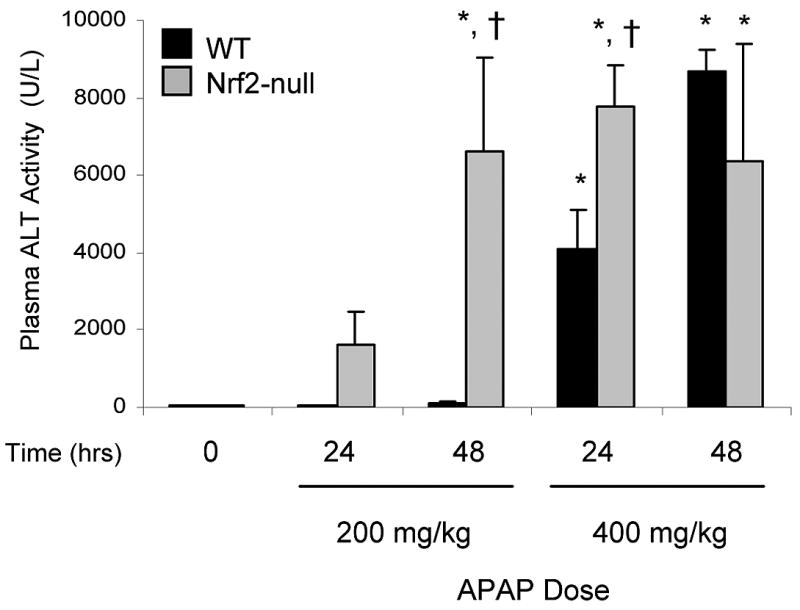
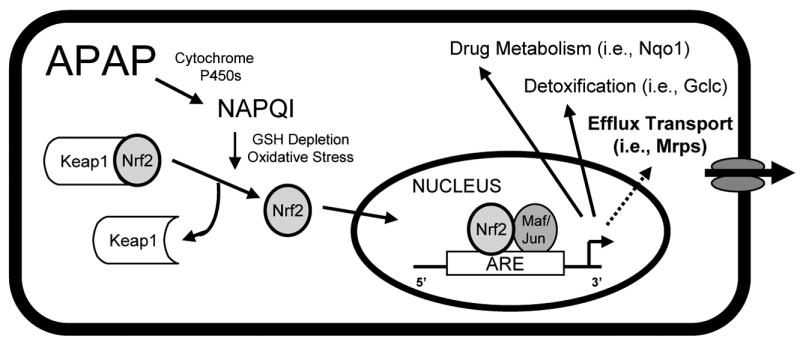
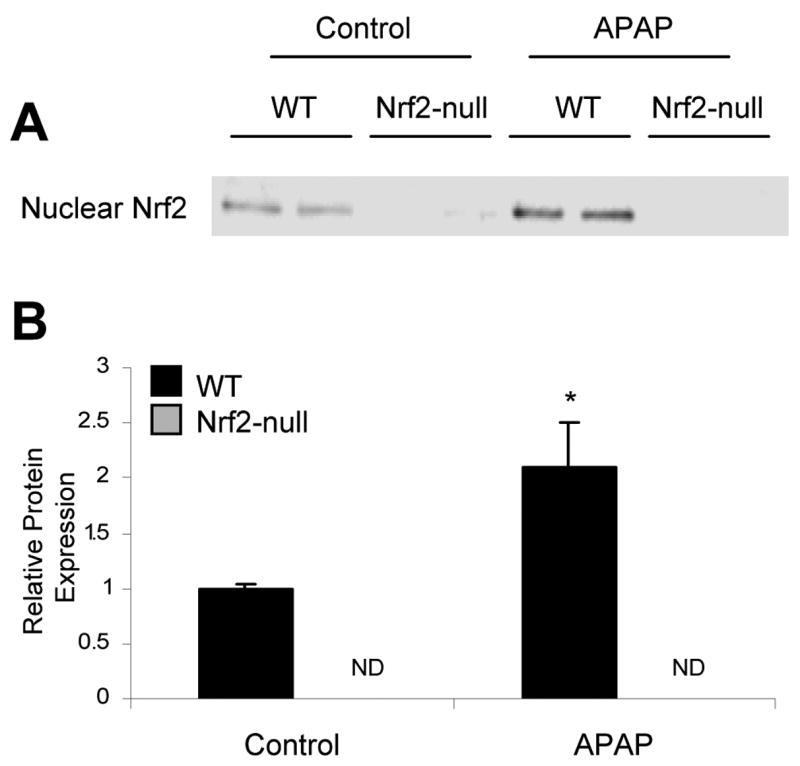
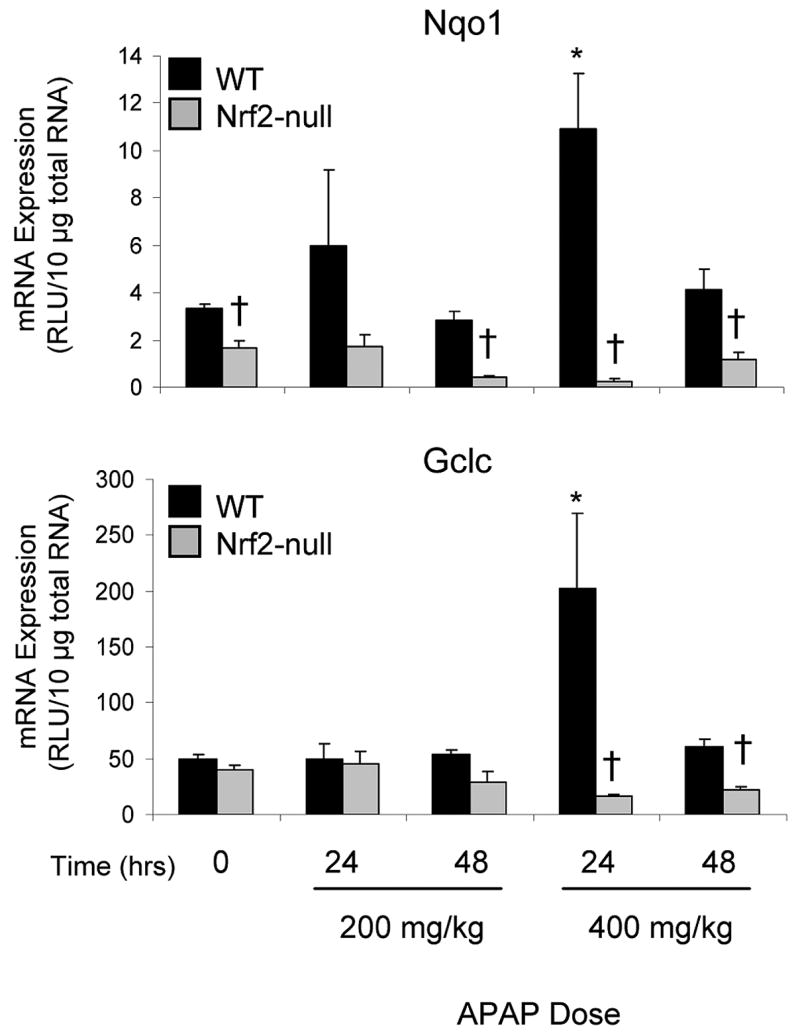
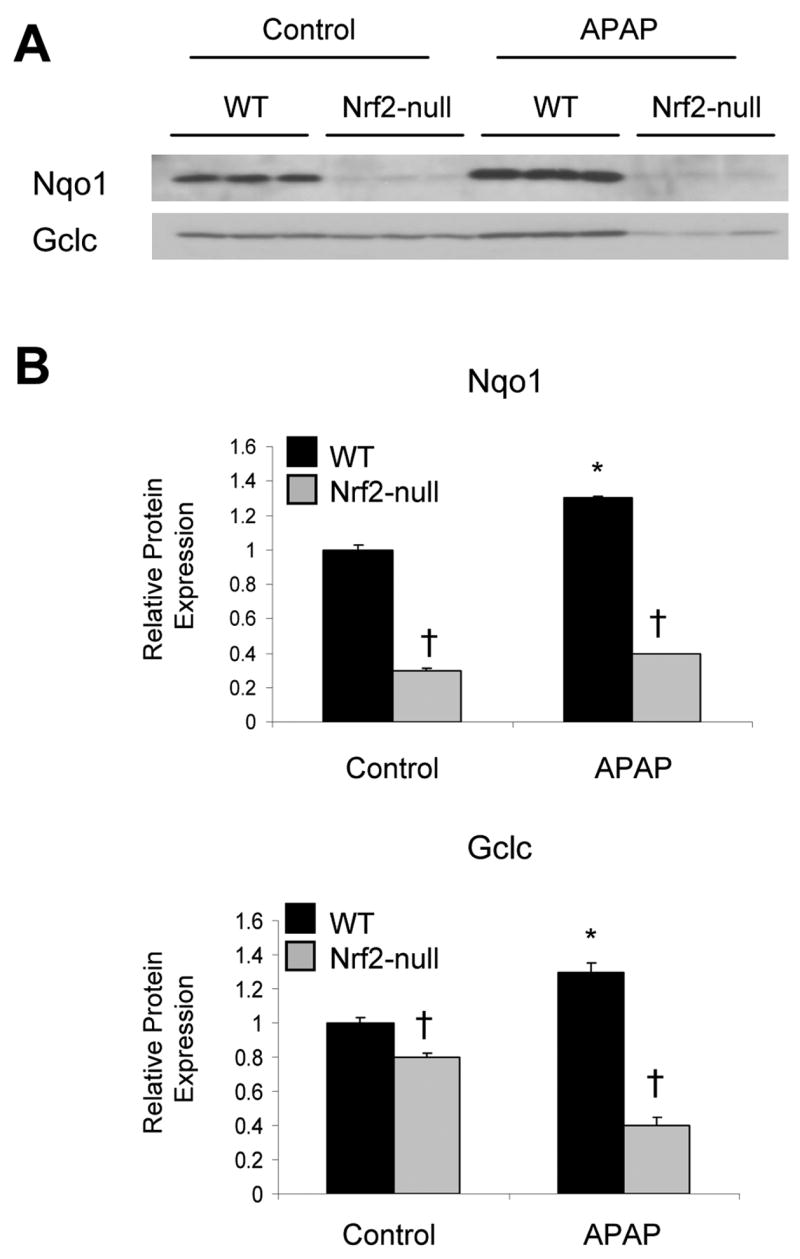
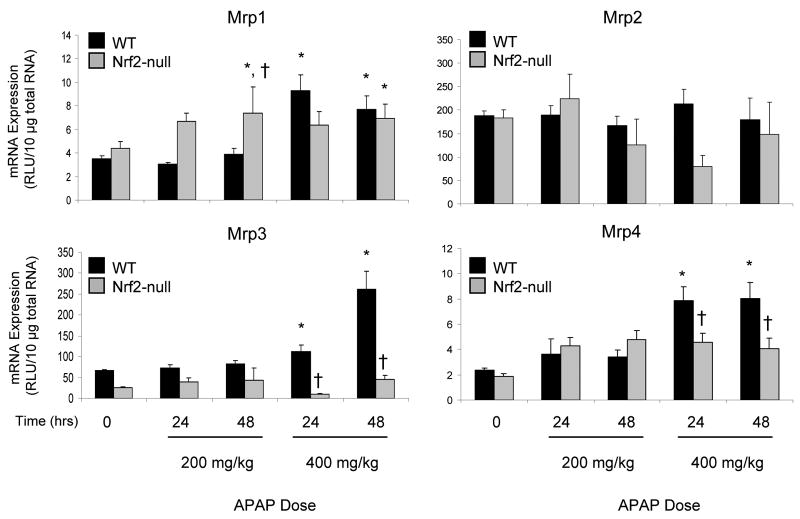
The transcription factor NFE2-related factor 2 (Nrf2) mediates detoxification and antioxidant gene transcription following electrophile exposure and oxidative stress. Mice deficient in Nrf2 (Nrf2-null) are highly susceptible to acetaminophen (APAP) hepatotoxicity and exhibit lower basal and inducible expression of cytoprotective genes, including NADPH quinone oxidoreductase 1 (Nqo1) and glutamate cysteine ligase (catalytic subunit, or Gclc). Administration of toxic APAP doses to C57BL/6J mice generates electrophilic stress and subsequently increases levels of hepatic Nqo1, Gclc and the efflux multidrug resistance-associated protein transporters 1-4 (Mrp1-4). It was hypothesized that induction of hepatic Mrp1-4 expression following APAP is Nrf2 dependent. Plasma and livers from wild-type (WT) and Nrf2-null mice were collected 4, 24 and 48 h after APAP. As expected, hepatotoxicity was greater in Nrf2-null compared to WT mice. Gene and protein expression of Mrp1-4 and the Nrf2 targets, Nqo1 and Gclc, was measured. Induction of Nqo1 and Gclc mRNA and protein after APAP was dependent on Nrf2 expression. Similarly, APAP treatment increased hepatic Mrp3 and Mrp4 mRNA and protein in WT, but not Nrf2-null mice. Mrp1 was induced in both genotypes after APAP, suggesting that elevated expression of this transporter was independent of Nrf2. Mrp2 was not induced in either genotype at the mRNA or protein levels. These results show that Nrf2 mediates induction of Mrp3 and Mrp4 after APAP but does not affect Mrp1 or Mrp2. Thus coordinated regulation of detoxification enzymes and transporters by Nrf2 during APAP hepatotoxicity is a mechanism by which hepatocytes may limit intracellular accumulation of potentially toxic chemicals.
转录因子NFE2相关因子2(Nrf2)在亲电试剂暴露和氧化应激后介导解毒和抗氧化基因转录。Nrf2基因缺失的小鼠(Nrf2基因敲除小鼠)对乙酰氨基酚(APAP)肝毒性高度敏感,并且细胞保护基因(包括NADPH醌氧化还原酶1(Nqo1)和谷氨酸半胱氨酸连接酶(催化亚基,即Gclc))的基础表达和诱导表达较低。给C57BL/6J小鼠给予毒性剂量的APAP会产生亲电应激,随后会增加肝脏中Nqo1、Gclc以及外排多药耐药相关蛋白转运体1-4(Mrp1-4)的水平。据推测,APAP后肝脏Mrp1-4表达的诱导是Nrf2依赖性的。在给予APAP后4、24和48小时收集野生型(WT)和Nrf2基因敲除小鼠的血浆和肝脏。正如预期的那样,与WT小鼠相比,Nrf2基因敲除小鼠的肝毒性更大。检测了Mrp1-4以及Nrf2靶标Nqo1和Gclc的基因和蛋白表达。APAP后Nqo1和Gclc mRNA及蛋白的诱导依赖于Nrf2的表达。同样,APAP处理增加了WT小鼠肝脏中Mrp3和Mrp4的mRNA及蛋白水平,但在Nrf2基因敲除小鼠中未增加。APAP后两种基因型的Mrp1均被诱导,表明该转运体的表达升高与Nrf2无关。Mrp2在两种基因型的mRNA或蛋白水平均未被诱导。这些结果表明,Nrf2介导了APAP后Mrp3和Mrp4的诱导,但不影响Mrp1或Mrp2。因此,在APAP肝毒性期间,Nrf2对解毒酶和转运体的协调调节是肝细胞限制潜在有毒化学物质细胞内蓄积的一种机制。