
大学运动员的腰椎位置觉与下背部损伤风险:一项前瞻性队列研究。
Lumbar position sense and the risk of low back injuries in college athletes: a prospective cohort study.
作者信息
Silfies Sheri P, Cholewicki Jacek, Reeves N Peter, Greene Hunter S
机构信息
Rehabilitation Sciences Research Laboratory, Drexel University, Philadelphia, PA, USA.
出版信息
BMC Musculoskelet Disord. 2007 Dec 31;8:129. doi: 10.1186/1471-2474-8-129.
BACKGROUND
Impaired proprioception in the lumbar spine has often been reported in people with low back pain. However, no prospective studies exist to assert the cause and effect of this association. We hypothesized that athletes with a history of low back injury (LBI) would demonstrate poorer lumbar position sense (PS) than athletes without a history of LBI, and that this deficit would be a risk factor for future LBI.
METHODS
This was a prospective cohort study with 2-3 year follow-up. Lumbar spine PS in the transverse plane was evaluated in 292 athletes using three tests: 1) passive and 2) active trunk repositioning, and 3) motion perception threshold. Mean absolute (accuracy) and variable (precision) errors were computed.
RESULTS
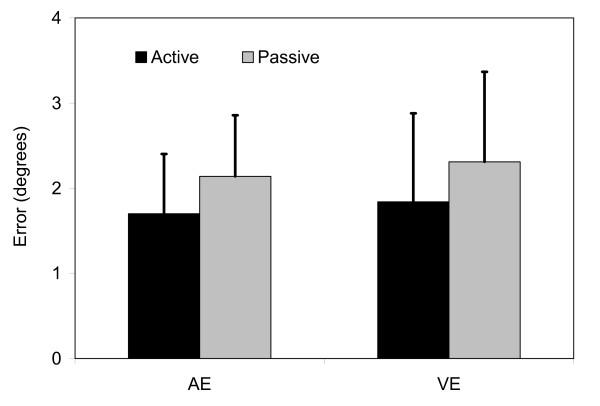
There were no significant differences in the repositioning errors or motion perception threshold between athletes with and without a history of LBI or between those who did and did not get injured during the follow-up. Active trunk repositioning resulted in smaller errors than passive repositioning (1.6 degrees +/- 0.8 degrees ) versus 2.1 degrees +/- 1.0 degrees ) and 1.7 degrees +/- 0.8 degrees ) versus 2.3 degrees +/- 1.1 degrees ) for the absolute and relative errors, respectively).
CONCLUSION
Poor trunk PS in transverse plane is not associated with LBI in athletes, nor does it appear that poor trunk PS predisposes athletes to LBI.
背景
下腰痛患者常被报道存在腰椎本体感觉受损的情况。然而,尚无前瞻性研究来证实这种关联的因果关系。我们假设,有下背部损伤(LBI)病史的运动员的腰椎位置觉(PS)比没有LBI病史的运动员差,且这种缺陷会成为未来发生LBI的一个风险因素。
方法
这是一项为期2至3年随访的前瞻性队列研究。使用三项测试对292名运动员的腰椎在横断面的PS进行评估:1)被动和2)主动躯干重新定位,以及3)运动感知阈值。计算平均绝对(准确性)和可变(精确性)误差。
结果
有LBI病史和无LBI病史的运动员之间,以及随访期间受伤和未受伤的运动员之间,在重新定位误差或运动感知阈值方面均无显著差异。主动躯干重新定位产生的误差小于被动重新定位(绝对误差分别为1.6度±0.8度对2.1度±1.0度,相对误差分别为1.7度±0.8度对2.3度±1.1度)。
结论
运动员横断面的躯干PS差与LBI无关,躯干PS差似乎也不会使运动员易患LBI。

 Zotero 插件