Yang S, Cohen C J, Peng P D, Zhao Y, Cassard L, Yu Z, Zheng Z, Jones S, Restifo N P, Rosenberg S A, Morgan R A
Surgery Branch, Center for Cancer Research, National Cancer Institute, National Institutes of Health, Bethesda, MD 20892, USA.
Gene Ther. 2008 Nov;15(21):1411-23. doi: 10.1038/gt.2008.90. Epub 2008 May 22.
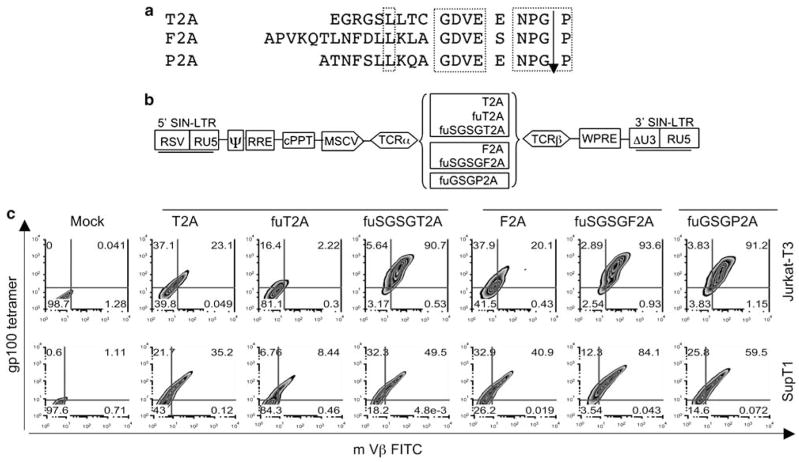
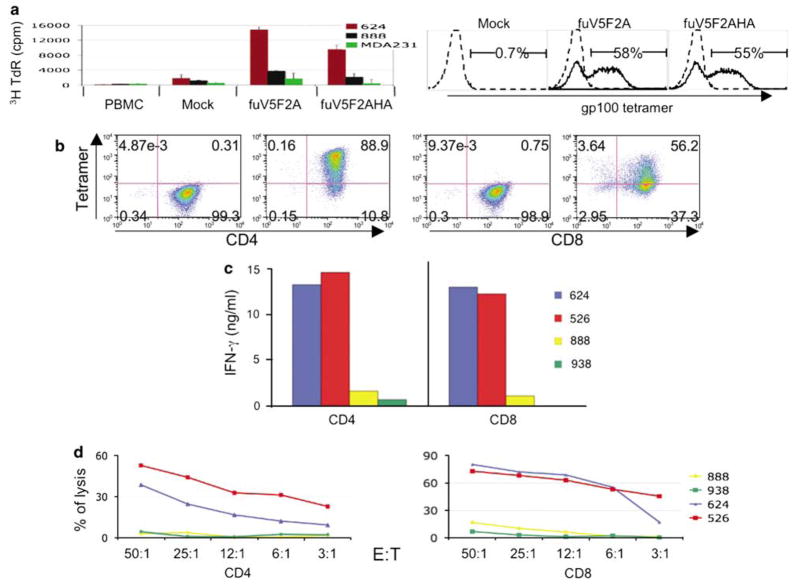
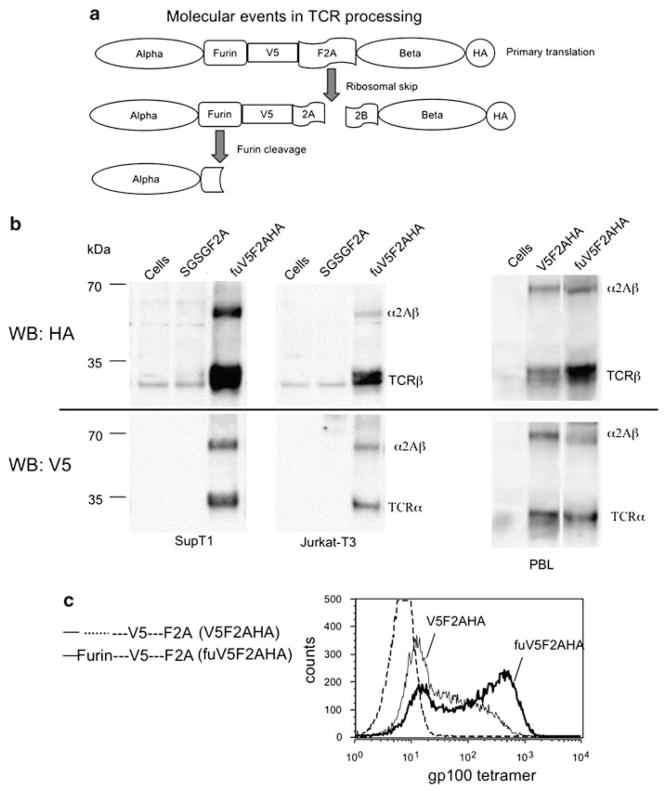
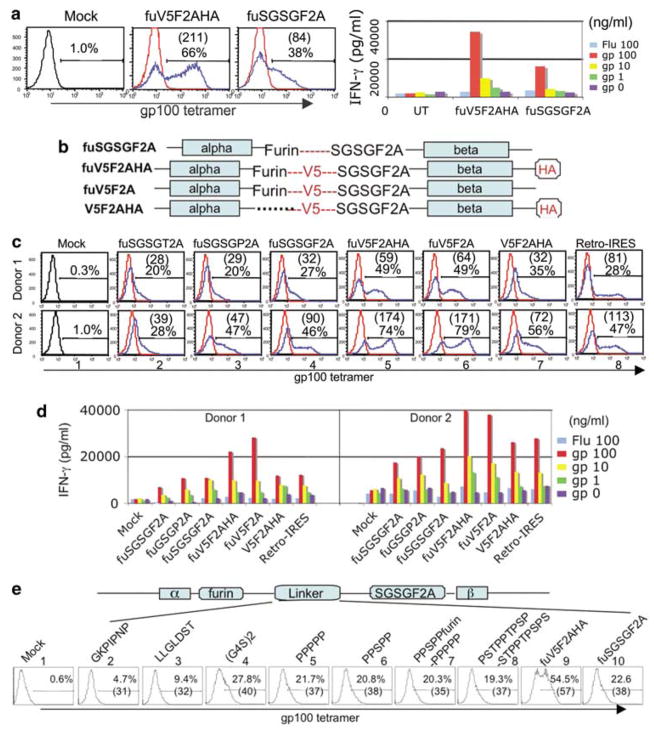
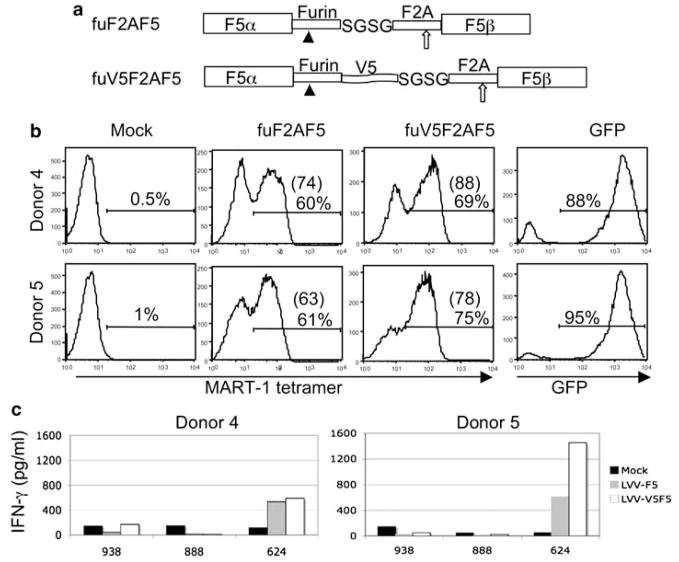
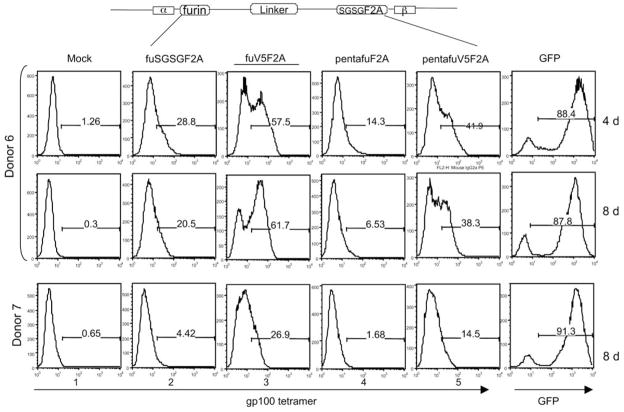
In human gene therapy applications, lentiviral vectors may have advantages over gamma-retroviral vectors in several areas, including the ability to transduce nondividing cells, resistance to gene silencing and a potentially safer integration site profile. However, unlike gamma-retroviral vectors it has been problematic to drive the expression of multiple genes efficiently and coordinately with approaches such as internal ribosome entry sites or dual promoters. Using different 2A peptides, lentiviral vectors expressing two-gene T-cell receptors directed against the melanoma differentiation antigens gp100 and MART-1 were constructed. We demonstrated that addition of amino-acid spacer sequences (GSG or SGSG) before the 2A sequence is a prerequisite for efficient synthesis of biologically active T-cell receptors and that addition of a furin cleavage site followed by a V5 peptide tag yielded optimal T-cell receptor gene expression. Furthermore, we determined that the furin cleavage site was recognized in lymphocytes and accounted for removal of residual 2A peptides at the post-translational level with an efficiency of 20-30%, which could not be increased by addition of multiple furin cleavage sites. The novel bicistronic lentiviral vector developed herein afforded robust anti-melanoma activities to engineered peripheral blood lymphocytes, including cytokine secretion, cell proliferation and lytic activity. Such optimal vectors may have immediate applications in cancer gene therapy.
在人类基因治疗应用中,慢病毒载体在几个方面可能比γ-逆转录病毒载体具有优势,包括转导非分裂细胞的能力、对基因沉默的抗性以及潜在更安全的整合位点图谱。然而,与γ-逆转录病毒载体不同的是,使用内部核糖体进入位点或双启动子等方法来有效且协调地驱动多个基因的表达一直存在问题。利用不同的2A肽,构建了表达针对黑色素瘤分化抗原gp100和MART-1的双基因T细胞受体的慢病毒载体。我们证明,在2A序列之前添加氨基酸间隔序列(GSG或SGSG)是有效合成生物活性T细胞受体的先决条件,并且添加弗林蛋白酶切割位点后接V5肽标签可产生最佳的T细胞受体基因表达。此外,我们确定弗林蛋白酶切割位点在淋巴细胞中被识别,并在翻译后水平上以20%至30%的效率去除残留的2A肽,添加多个弗林蛋白酶切割位点并不能提高该效率。本文开发的新型双顺反子慢病毒载体赋予工程化外周血淋巴细胞强大的抗黑色素瘤活性,包括细胞因子分泌、细胞增殖和裂解活性。此类优化的载体可能在癌症基因治疗中立即得到应用。