Buch M H, Boyle D L, Rosengren S, Saleem B, Reece R J, Rhodes L A, Radjenovic A, English A, Tang H, Vratsanos G, O'Connor P, Firestein G S, Emery P
Academic Unit of Musculoskeletal Disease, University of Leeds, Leeds, UK.
Ann Rheum Dis. 2009 Jul;68(7):1220-7. doi: 10.1136/ard.2008.091876. Epub 2008 Sep 4.
Abatacept is the only agent currently approved to treat rheumatoid arthritis (RA) that targets the co-stimulatory signal required for full T-cell activation. No studies have been conducted on its effect on the synovium, the primary site of pathology. The aim of this study was to determine the synovial effect of abatacept in patients with RA and an inadequate response to tumour necrosis factor alpha (TNFalpha) blocking therapy.
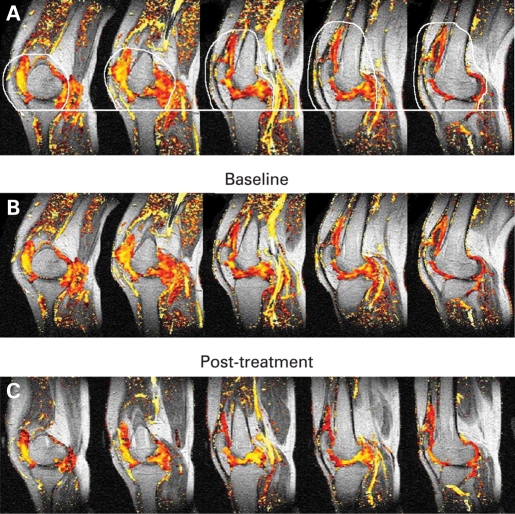
This first mechanistic study incorporated both dynamic contrast-enhanced (DCE) magnetic resonance imaging (MRI) and arthroscopy-acquired synovial biopsies before and 16 weeks after therapy, providing tissue for immunohistochemistry and quantitative real-time PCR analyses.
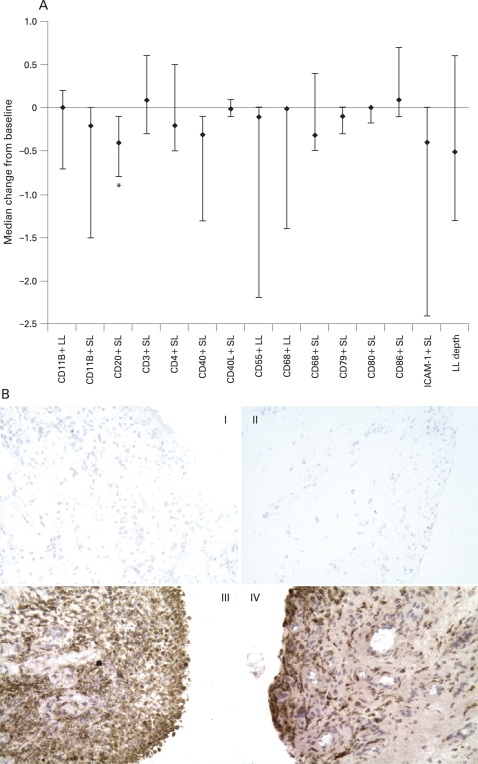
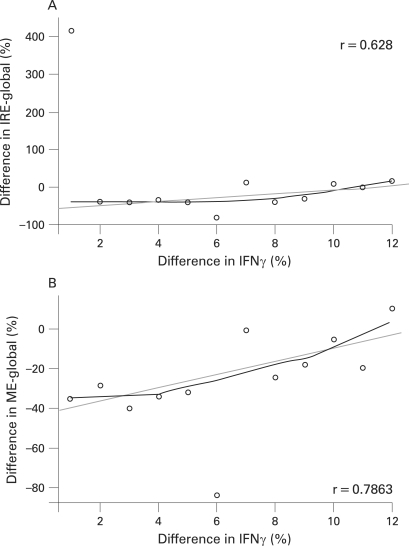
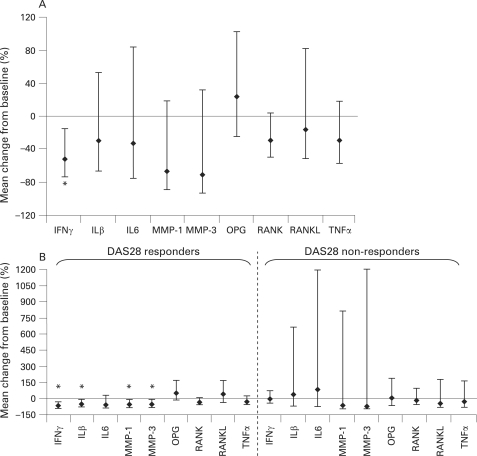
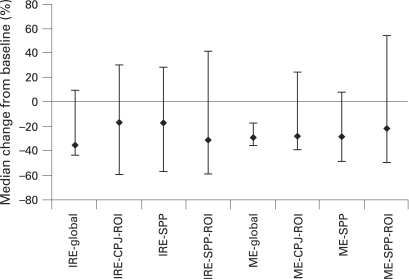
Sixteen patients (13 women) were studied; all had previously failed TNFalpha-blocking therapy. Fifteen patients completed the study. Synovial biopsies showed a small reduction in cellular content, which was significant only for B cells. The quantitative PCR showed a reduction in expression for most inflammatory genes (Wald statistic of p<0.01 indicating a significant treatment effect), with particular reduction in IFNgamma of -52% (95% CI -73 to -15, p<0.05); this correlated well with MRI improvements. In addition, favourable changes in the osteoprotegerin and receptor activator of nuclear factor kappa B levels were noted. DCE-MRI showed a reduction of 15-40% in MRI parameters.
These results indicate that abatacept reduces the inflammatory status of the synovium without disrupting cellular homeostasis. The reductions in gene expression influence bone positively and suggest a basis for the recently demonstrated radiological improvements that have been seen with abatacept treatment in patients with RA.
阿巴西普是目前唯一被批准用于治疗类风湿性关节炎(RA)的药物,它作用于完全激活T细胞所需的共刺激信号。尚未有关于其对滑膜(病理的主要部位)影响的研究。本研究的目的是确定阿巴西普对RA患者且对肿瘤坏死因子α(TNFα)阻断治疗反应不足时滑膜的影响。
这项首个机制性研究在治疗前及治疗16周后纳入了动态对比增强(DCE)磁共振成像(MRI)和通过关节镜获取的滑膜活检,为免疫组织化学和定量实时聚合酶链反应分析提供组织样本。
研究了16名患者(13名女性);所有患者先前TNFα阻断治疗均失败。15名患者完成了研究。滑膜活检显示细胞含量略有减少,仅对B细胞而言具有显著性。定量聚合酶链反应显示大多数炎症基因的表达减少(Wald统计量p<0.01表明有显著治疗效果),其中γ干扰素尤其减少了52%(95%置信区间-73至-15,p<0.05);这与MRI的改善情况良好相关。此外,还注意到骨保护素和核因子κB受体激活剂水平的有利变化。DCE-MRI显示MRI参数降低了15%-40%。
这些结果表明,阿巴西普可降低滑膜的炎症状态而不破坏细胞稳态。基因表达的降低对骨骼有积极影响,并为最近在RA患者中使用阿巴西普治疗所显示的放射学改善提供了依据。