Bjorneby J M, Leach D R, Perryman L E
Department of Veterinary Microbiology and Pathology, Washington State University, Pullman 99164-7040.
Infect Immun. 1991 Oct;59(10):3823-6. doi: 10.1128/iai.59.10.3823-3826.1991.
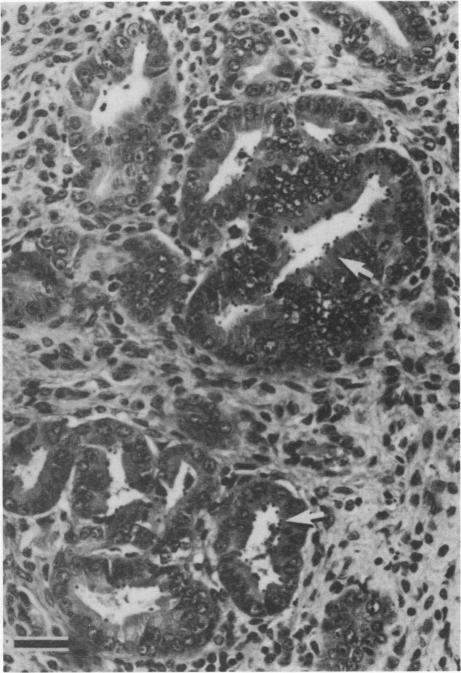
Cryptosporidial infections were established in five young foals with severe combined immunodeficiency following oral administration of 10(8) Cryptosporidium parvum oocysts. All foals shed oocysts (average of 8 x 10(6) to 2 x 10(8)/g of feces) until death. Inflammation and C. parvum organisms were observed in the common bile duct, duodenum, jejunum, and ileum. Since foals with severe combined immunodeficiency lack functional T and B lymphocytes and are incapable of antigen-specific immune responses, they are well suited for evaluating the pathogenesis and treatment of persistent cryptosporidiosis.
给5匹患有严重联合免疫缺陷的幼驹口服10⁸个微小隐孢子虫卵囊后,它们感染了隐孢子虫。所有幼驹直至死亡前都排出卵囊(平均每克粪便排出8×10⁶至2×10⁸个)。在胆总管、十二指肠、空肠和回肠中观察到炎症和微小隐孢子虫生物体。由于患有严重联合免疫缺陷的幼驹缺乏功能性T淋巴细胞和B淋巴细胞,且无法产生抗原特异性免疫反应,它们非常适合用于评估持续性隐孢子虫病的发病机制和治疗方法。