Kwak Jae, Willse Alan, Matsumura Koichi, Curran Opiekun Maryanne, Yi Weiguang, Preti George, Yamazaki Kunio, Beauchamp Gary K
Monell Chemical Senses Center, Philadelphia, Pennsylvania, USA.
PLoS One. 2008;3(10):e3591. doi: 10.1371/journal.pone.0003591. Epub 2008 Oct 31.
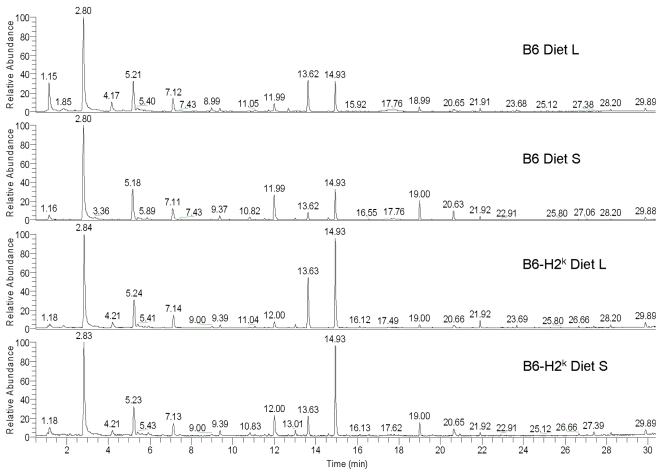
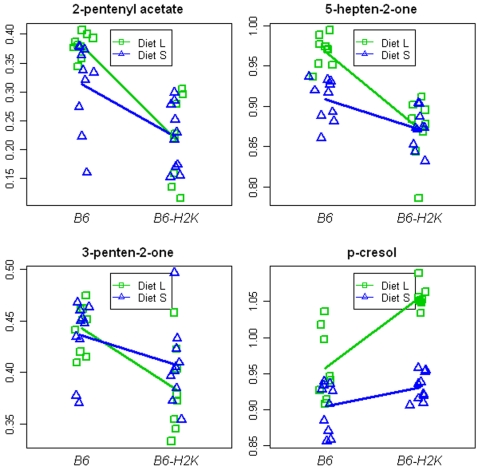
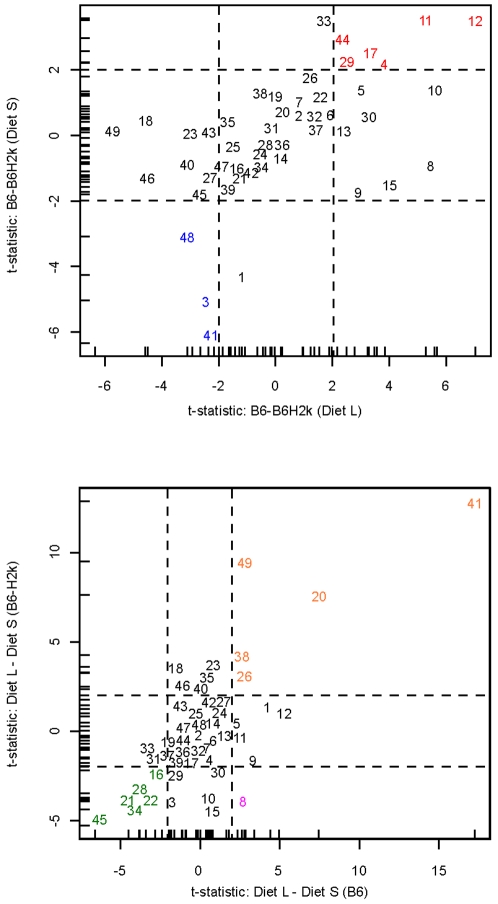
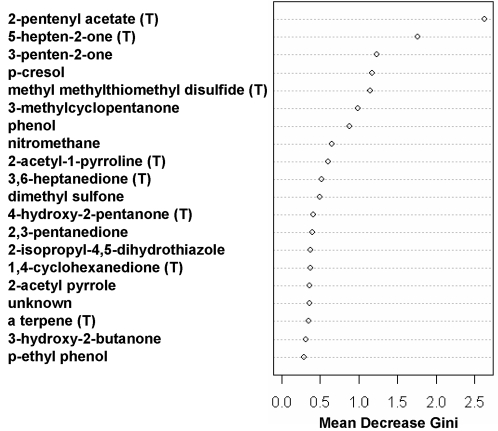
Individual mice have a unique odor, or odortype, that facilitates individual recognition. Odortypes, like other phenotypes, can be influenced by genetic and environmental variation. The genetic influence derives in part from genes of the major histocompatibility complex (MHC). A major environmental influence is diet, which could obscure the genetic contribution to odortype. Because odortype stability is a prerequisite for individual recognition under normal behavioral conditions, we investigated whether MHC-determined urinary odortypes of inbred mice can be identified in the face of large diet-induced variation. Mice trained to discriminate urines from panels of mice that differed both in diet and MHC type found the diet odor more salient in generalization trials. Nevertheless, when mice were trained to discriminate mice with only MHC differences (but on the same diet), they recognized the MHC difference when tested with urines from mice on a different diet. This indicates that MHC odor profiles remain despite large dietary variation. Chemical analyses of urinary volatile organic compounds (VOCs) extracted by solid phase microextraction (SPME) and analyzed by gas chromatography/mass spectrometry (GC/MS) are consistent with this inference. Although diet influenced VOC variation more than MHC, with algorithmic training (supervised classification) MHC types could be accurately discriminated across different diets. Thus, although there are clear diet effects on urinary volatile profiles, they do not obscure MHC effects.
每只小鼠都有一种独特的气味,即气味类型,这有助于个体识别。气味类型与其他表型一样,会受到遗传和环境变异的影响。遗传影响部分源于主要组织相容性复合体(MHC)的基因。一个主要的环境影响因素是饮食,它可能会掩盖基因对气味类型的贡献。由于气味类型的稳定性是正常行为条件下个体识别的先决条件,我们研究了在面对大量饮食诱导的变异时,能否识别近交系小鼠由MHC决定的尿液气味类型。经过训练以区分来自饮食和MHC类型都不同的小鼠组的尿液的小鼠,在泛化试验中发现饮食气味更显著。然而,当小鼠经过训练以区分仅MHC不同(但饮食相同)的小鼠时,在用来自不同饮食的小鼠的尿液进行测试时,它们识别出了MHC差异。这表明尽管饮食差异很大,但MHC气味特征仍然存在。通过固相微萃取(SPME)提取并用气相色谱/质谱(GC/MS)分析的尿液挥发性有机化合物(VOC)的化学分析与这一推断一致。尽管饮食对VOC变异的影响大于MHC,但通过算法训练(监督分类),可以在不同饮食条件下准确区分MHC类型。因此,尽管饮食对尿液挥发性特征有明显影响,但它们并没有掩盖MHC的影响。