
葡萄糖通过激活mTORC1放大脂肪酸诱导的胰腺β细胞内质网应激。
Glucose amplifies fatty acid-induced endoplasmic reticulum stress in pancreatic beta-cells via activation of mTORC1.
作者信息
Bachar Etti, Ariav Yafa, Ketzinel-Gilad Mali, Cerasi Erol, Kaiser Nurit, Leibowitz Gil
机构信息
Endocrinology and Metabolism Service, Department of Medicine, Hadassah--Hebrew University Medical Center, Jerusalem, Israel.
出版信息
PLoS One. 2009;4(3):e4954. doi: 10.1371/journal.pone.0004954. Epub 2009 Mar 23.
BACKGROUND
Palmitate is a potent inducer of endoplasmic reticulum (ER) stress in beta-cells. In type 2 diabetes, glucose amplifies fatty-acid toxicity for pancreatic beta-cells, leading to beta-cell dysfunction and death. Why glucose exacerbates beta-cell lipotoxicity is largely unknown. Glucose stimulates mTORC1, an important nutrient sensor involved in the regulation of cellular stress. Our study tested the hypothesis that glucose augments lipotoxicity by stimulating mTORC1 leading to increased beta-cell ER stress.
PRINCIPAL FINDINGS
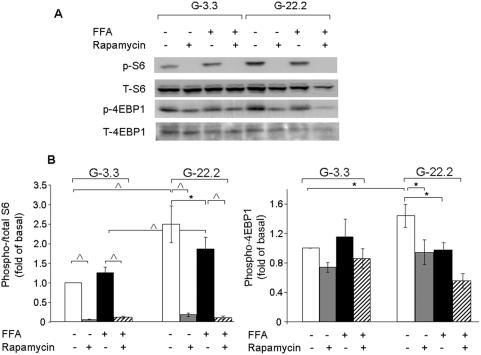
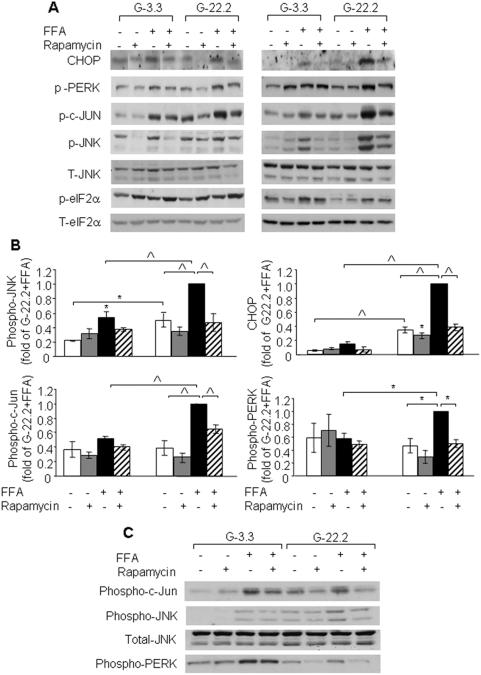
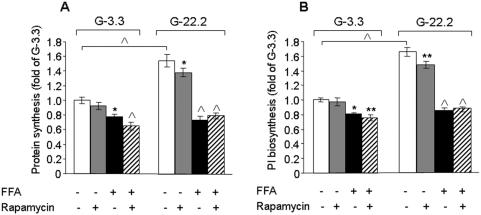
We found that glucose amplifies palmitate-induced ER stress by increasing IRE1alpha protein levels and activating the JNK pathway, leading to increased beta-cell apoptosis. Moreover, glucose increased mTORC1 activity and its inhibition by rapamycin decreased beta-cell apoptosis under conditions of glucolipotoxicity. Inhibition of mTORC1 by rapamycin did not affect proinsulin and total protein synthesis in beta-cells incubated at high glucose with palmitate. However, it decreased IRE1alpha expression and signaling and inhibited JNK pathway activation. In TSC2-deficient mouse embryonic fibroblasts, in which mTORC1 is constitutively active, mTORC1 regulated the stimulation of JNK by ER stressors, but not in response to anisomycin, which activates JNK independent of ER stress. Finally, we found that JNK inhibition decreased beta-cell apoptosis under conditions of glucolipotoxicity.
CONCLUSIONS/SIGNIFICANCE: Collectively, our findings suggest that mTORC1 mediates glucose amplification of lipotoxicity, acting through activation of ER stress and JNK. Thus, mTORC1 is an important transducer of ER stress in beta-cell glucolipotoxicity. Moreover, in stressed beta-cells mTORC1 inhibition decreases IRE1alpha protein expression and JNK activity without affecting ER protein load, suggesting that mTORC1 regulates the beta-cell stress response to glucose and fatty acids by modulating the synthesis and activity of specific proteins involved in the execution of the ER stress response. This novel paradigm may have important implications for understanding beta-cell failure in type 2 diabetes.
背景
棕榈酸酯是β细胞内质网(ER)应激的强效诱导剂。在2型糖尿病中,葡萄糖会放大脂肪酸对胰腺β细胞的毒性,导致β细胞功能障碍和死亡。葡萄糖为何会加剧β细胞脂毒性在很大程度上尚不清楚。葡萄糖可刺激mTORC1,这是一种参与细胞应激调节的重要营养传感器。我们的研究检验了以下假设:葡萄糖通过刺激mTORC1导致β细胞ER应激增加,从而增强脂毒性。
主要发现
我们发现,葡萄糖通过增加IRE1α蛋白水平和激活JNK途径来放大棕榈酸酯诱导的ER应激,导致β细胞凋亡增加。此外,葡萄糖增加了mTORC1活性,在糖脂毒性条件下,用雷帕霉素抑制mTORC1可减少β细胞凋亡。在高葡萄糖和棕榈酸酯孵育的β细胞中,雷帕霉素抑制mTORC1并不影响胰岛素原和总蛋白合成。然而,它降低了IRE1α表达和信号传导,并抑制了JNK途径激活。在TSC2缺陷的小鼠胚胎成纤维细胞中,mTORC1持续激活,mTORC1调节ER应激源对JNK的刺激,但不调节对茴香霉素的反应,茴香霉素激活JNK不依赖于ER应激。最后,我们发现JNK抑制在糖脂毒性条件下可减少β细胞凋亡。
结论/意义:总体而言,我们的研究结果表明,mTORC1介导葡萄糖对脂毒性的放大作用,通过激活ER应激和JNK发挥作用。因此,mTORC1是β细胞糖脂毒性中ER应激的重要转导因子。此外,在应激的β细胞中,抑制mTORC1可降低IRE1α蛋白表达和JNK活性,而不影响ER蛋白负荷,这表明mTORC1通过调节参与ER应激反应执行的特定蛋白质的合成和活性,来调节β细胞对葡萄糖和脂肪酸的应激反应。这一新模式可能对理解2型糖尿病中的β细胞功能衰竭具有重要意义。





 Zotero 插件