Mattle Beat, Wilson Anthony B
Zoological Museum, University of Zurich, Winterthurerstrasse 190, 8057 Zurich, Switzerland.
Behav Ecol Sociobiol. 2009 Aug;63(10):1403-1410. doi: 10.1007/s00265-009-0804-8. Epub 2009 Jun 26.
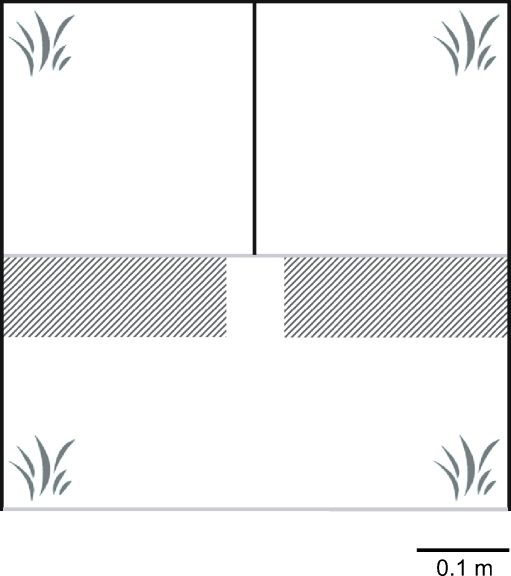
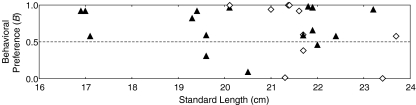
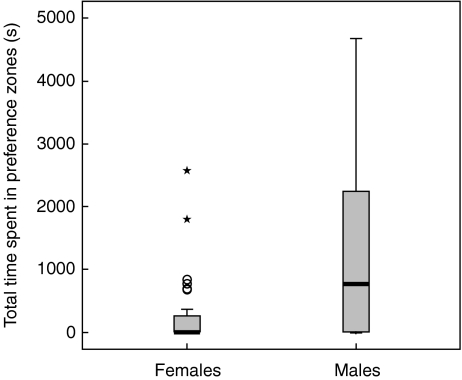
Male seahorses (genus Hippocampus) provide all post-fertilization parental care, yet despite high levels of paternal investment, these species have long been thought to have conventional sex roles, with female mate choice and male-male competition. Recent studies of the pot-bellied seahorse (Hippocampus abdominalis) have shown that sex-role reversal occurs in high-density female-biased populations, indicating that male mating preferences may lead to sexual selection on females in this species. Egg size, egg number, and offspring size all correlate positively with female body size in Hippocampus, and by choosing large mating partners, male seahorses may increase their reproductive success. While male brood size is also positively correlated with body size, small H. abdominalis males can carry exceptionally large broods, suggesting that the fecundity benefits of female preference for large partners may be limited. We investigated the importance of body size in reproductive decisions of H. abdominalis, presenting focal individuals of both sexes with potential mating partners of different sizes. Mating preferences were quantified in terms of time spent courting each potential partner. Male seahorses were highly active throughout the mate-choice trials and showed a clear behavioral preference for large partners, while females showed significantly lower levels of activity and equivocal mating preferences. The strong male preferences for large females demonstrated here suggest that sexual selection may act strongly on female body size in wild populations of H. abdominalis, consistent with predictions on the importance of female body size for reproductive output in this species.
雄性海马(海马属)承担着受精后的所有亲代抚育工作,然而,尽管雄性投入巨大,但长期以来人们一直认为这些物种具有传统的性别角色,即雌性进行配偶选择,雄性之间存在竞争。最近对大腹海马(Hippocampus abdominalis)的研究表明,在高密度的雌性偏多的种群中会发生性别角色逆转,这表明雄性的交配偏好可能导致该物种对雌性进行性选择。在海马中,卵的大小、数量和后代大小均与雌性体型呈正相关,通过选择体型大的配偶,雄性海马可能会提高其繁殖成功率。虽然雄性育儿袋的大小也与体型呈正相关,但体型小的大腹海马雄性个体能够携带异常大的育儿袋,这表明雌性偏好体型大的配偶所带来的繁殖力优势可能是有限的。我们研究了体型大小在大腹海马繁殖决策中的重要性,向不同性别的焦点个体展示不同体型的潜在配偶。根据与每个潜在配偶求偶所花费的时间来量化交配偏好。在整个配偶选择试验过程中,雄性海马都非常活跃,并且对体型大的配偶表现出明显的行为偏好,而雌性的活跃度则显著较低,交配偏好也不明确。此处所展示的雄性对大体型雌性的强烈偏好表明,性选择可能会对野生大腹海马种群中的雌性体型产生强烈影响,这与关于雌性体型对该物种繁殖产出的重要性的预测相一致。