Department of Pathology and Cell Biology, University of South Florida, Tampa, FL 33612, USA.
J Ovarian Res. 2009 Oct 25;2:16. doi: 10.1186/1757-2215-2-16.
Ovarian cancer is the most lethal gynecologic malignancy. The ovarian tumor microenvironment is comprised of tumor cells, surrounding stroma, and circulating lymphocytes, an important component of the immune response, in tumors. Previous reports have shown that the anti-apoptotic protein Bcl-2 is overexpressed in many solid neoplasms, including ovarian cancers, and contributes to neoplastic transformation and drug-resistant disease, resulting in poor clinical outcome. Likewise, studies indicate improved clinical outcome with increased presence of lymphocytes. Therefore, we sought to examine Bcl-2 expression in normal, benign, and cancerous ovarian tissues to determine the potential relationship between epithelial and stromal Bcl-2 expression in conjunction with the presence of lymphocytes for epithelial ovarian tumor progression.
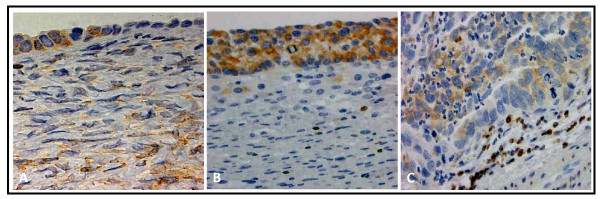
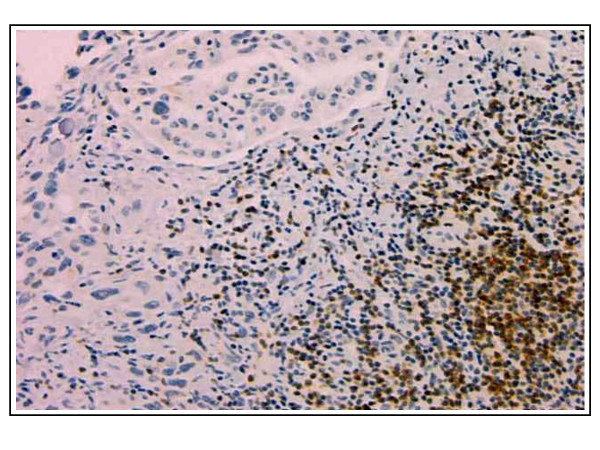
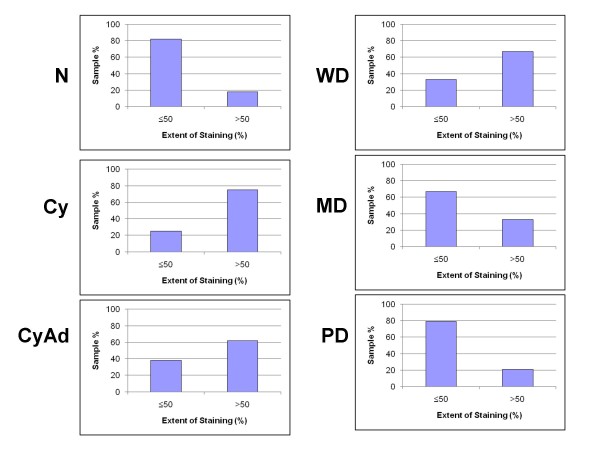
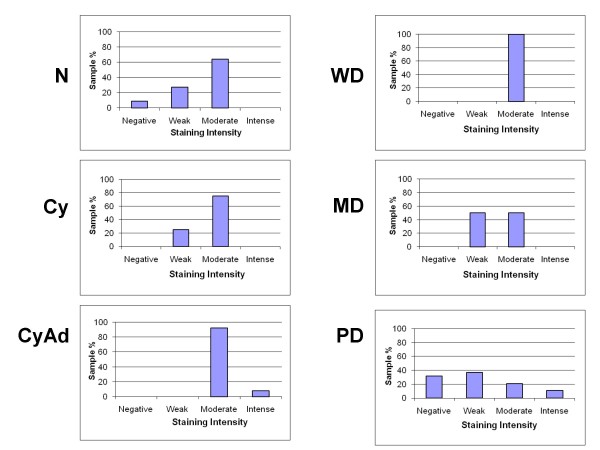
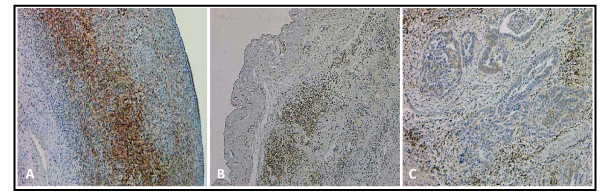
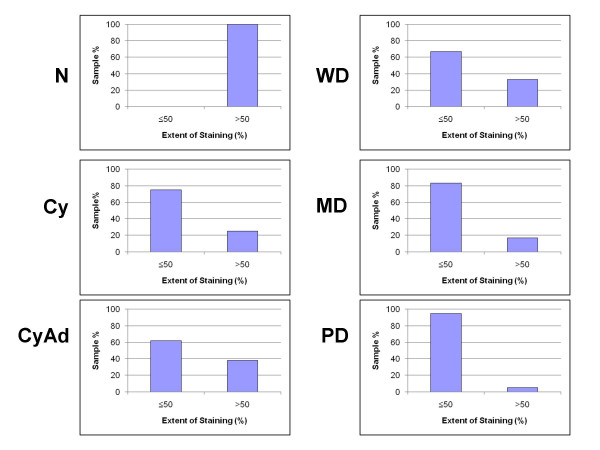
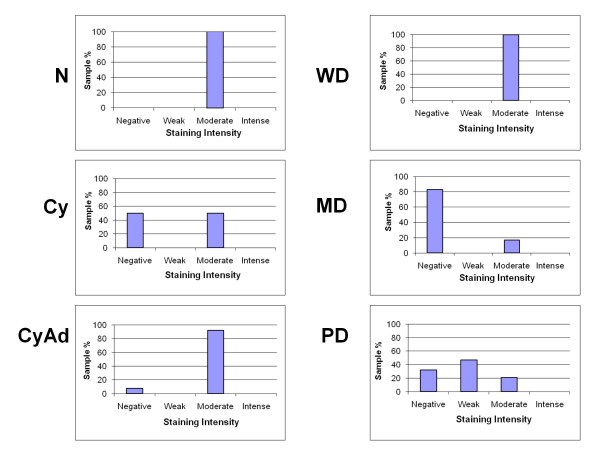
Ovarian tissue sections were classified as normal (n = 2), benign (n = 17) or cancerous (n = 28) and immunohistochemically stained for Bcl-2. Bcl-2 expression was assessed according to cellular localization, extent, and intensity of staining. The number of lymphocyte nests as well as the number of lymphocytes within these nests was counted.
While Bcl-2 staining remained cytoplasmic, both percent and intensity of epithelial and stromal Bcl-2 staining decreased with tumor progression. Further, the number of lymphocyte nests dramatically increased with tumor progression.
The data suggest alterations in Bcl-2 expression and lymphocyte infiltration correlate with epithelial ovarian cancer progression. Consequently, Bcl-2 expression and lymphocyte status may be important for prognostic outcome or useful targets for therapeutic intervention.
卵巢癌是最致命的妇科恶性肿瘤。卵巢肿瘤微环境由肿瘤细胞、周围基质和循环淋巴细胞组成,是肿瘤中免疫反应的重要组成部分。先前的报告表明,抗凋亡蛋白 Bcl-2 在许多实体瘤中过度表达,包括卵巢癌,并有助于肿瘤转化和耐药性疾病,导致临床预后不良。同样,研究表明淋巴细胞的存在增加会改善临床结果。因此,我们试图检查正常、良性和癌性卵巢组织中的 Bcl-2 表达,以确定上皮细胞和基质 Bcl-2 表达与上皮性卵巢肿瘤进展中淋巴细胞的存在之间的潜在关系。
将卵巢组织切片分类为正常(n=2)、良性(n=17)或癌症(n=28),并用 Bcl-2 免疫组织化学染色。根据细胞定位、染色程度和强度评估 Bcl-2 表达。计算淋巴细胞巢的数量以及这些巢内的淋巴细胞数量。
虽然 Bcl-2 染色仍然是细胞质的,但上皮和基质 Bcl-2 染色的百分比和强度随着肿瘤的进展而降低。此外,随着肿瘤的进展,淋巴细胞巢的数量急剧增加。
数据表明 Bcl-2 表达和淋巴细胞浸润的改变与上皮性卵巢癌的进展相关。因此,Bcl-2 表达和淋巴细胞状态可能对预后结果很重要,或者是治疗干预的有用靶点。