Laboratory of Cell Biochemistry and Biology, National Institute of Diabetes and Digestive and Kidney Diseases, National Institutes of Health, Bethesda, MD 20892, USA.
J Cell Biol. 2009 Dec 14;187(6):889-903. doi: 10.1083/jcb.200905007.
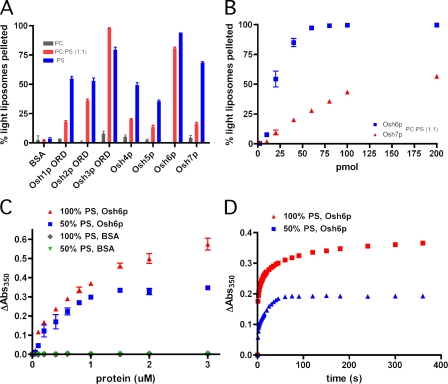
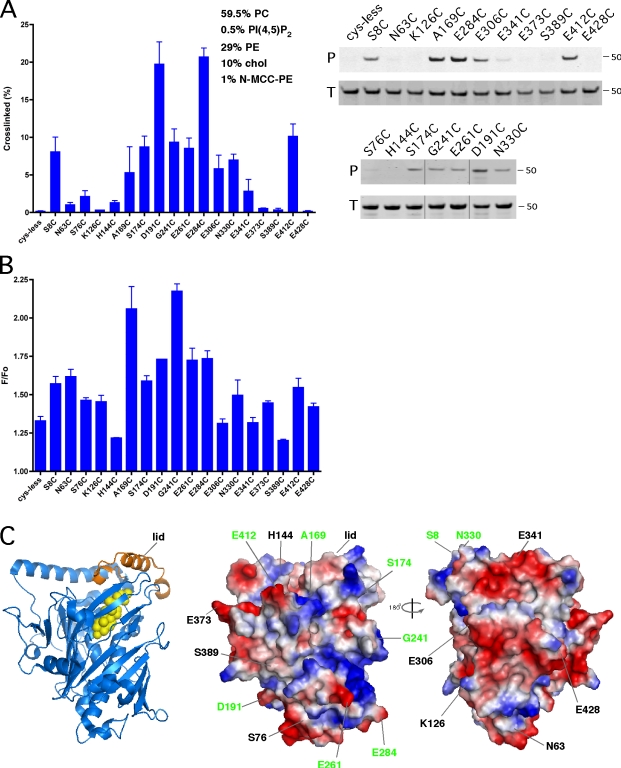
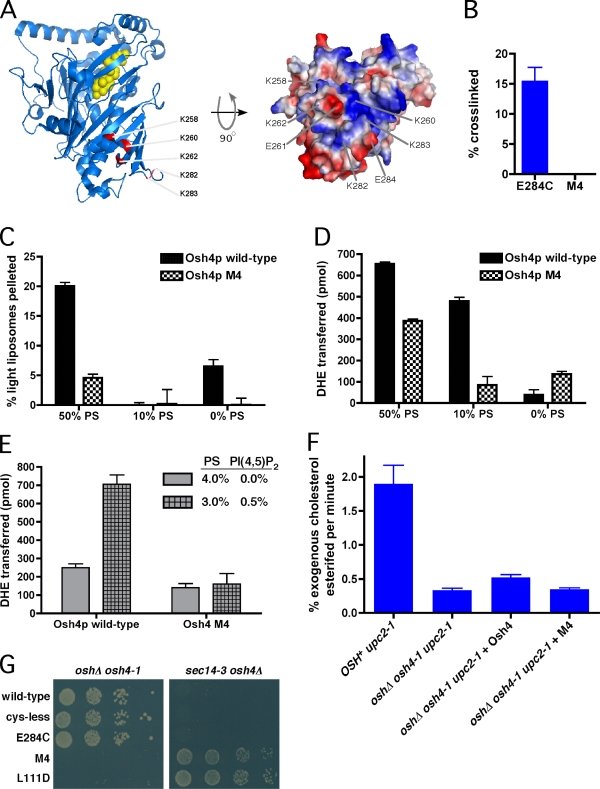
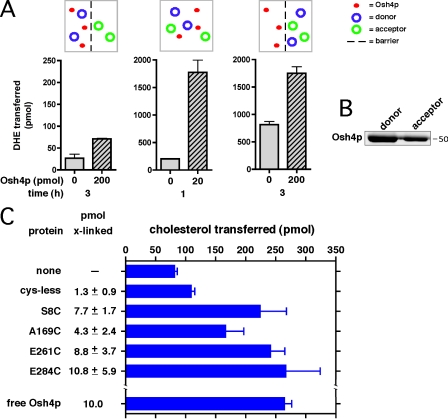
Sterols are transferred between cellular membranes by vesicular and poorly understood nonvesicular pathways. Oxysterol-binding protein-related proteins (ORPs) have been implicated in sterol sensing and nonvesicular transport. In this study, we show that yeast ORPs use a novel mechanism that allows regulated sterol transfer between closely apposed membranes, such as organelle contact sites. We find that the core lipid-binding domain found in all ORPs can simultaneously bind two membranes. Using Osh4p/Kes1p as a representative ORP, we show that ORPs have at least two membrane-binding surfaces; one near the mouth of the sterol-binding pocket and a distal site that can bind a second membrane. The distal site is required for the protein to function in cells and, remarkably, regulates the rate at which Osh4p extracts and delivers sterols in a phosphoinositide-dependent manner. Together, these findings suggest a new model of how ORPs could sense and regulate the lipid composition of adjacent membranes.
甾醇通过囊泡和尚未充分了解的非囊泡途径在细胞膜之间转移。氧化固醇结合蛋白相关蛋白(ORP)已被牵涉到固醇感应和非囊泡运输中。在这项研究中,我们表明酵母 ORP 使用一种新颖的机制,允许在紧密相邻的膜之间进行受调控的甾醇转移,例如细胞器接触部位。我们发现,所有 ORP 中都存在的核心脂质结合结构域可以同时结合两个膜。使用 Osh4p/Kes1p 作为代表性的 ORP,我们表明 ORP 具有至少两个膜结合表面;一个靠近固醇结合口袋的口部,另一个位于远端,可以结合第二个膜。远端位点对于该蛋白在细胞中的功能是必需的,而且令人惊讶的是,它以磷酸肌醇依赖性的方式调节 Osh4p 提取和输送甾醇的速度。总的来说,这些发现提出了一个新的模型,说明 ORP 如何感应和调节相邻膜的脂质组成。