Department of ORL, Head & Neck Surgery, Lund University Hospital, Lund, Sweden.
Respir Res. 2010 Feb 9;11(1):17. doi: 10.1186/1465-9921-11-17.
The CC-chemokine receptor-3 (CCR3) has emerged as a target molecule for pharmacological intervention in allergic inflammation.
To examine whether a dual CCR3 and H1-receptor antagonist (AZD3778) affects allergic inflammation and symptoms in allergic rhinitis.
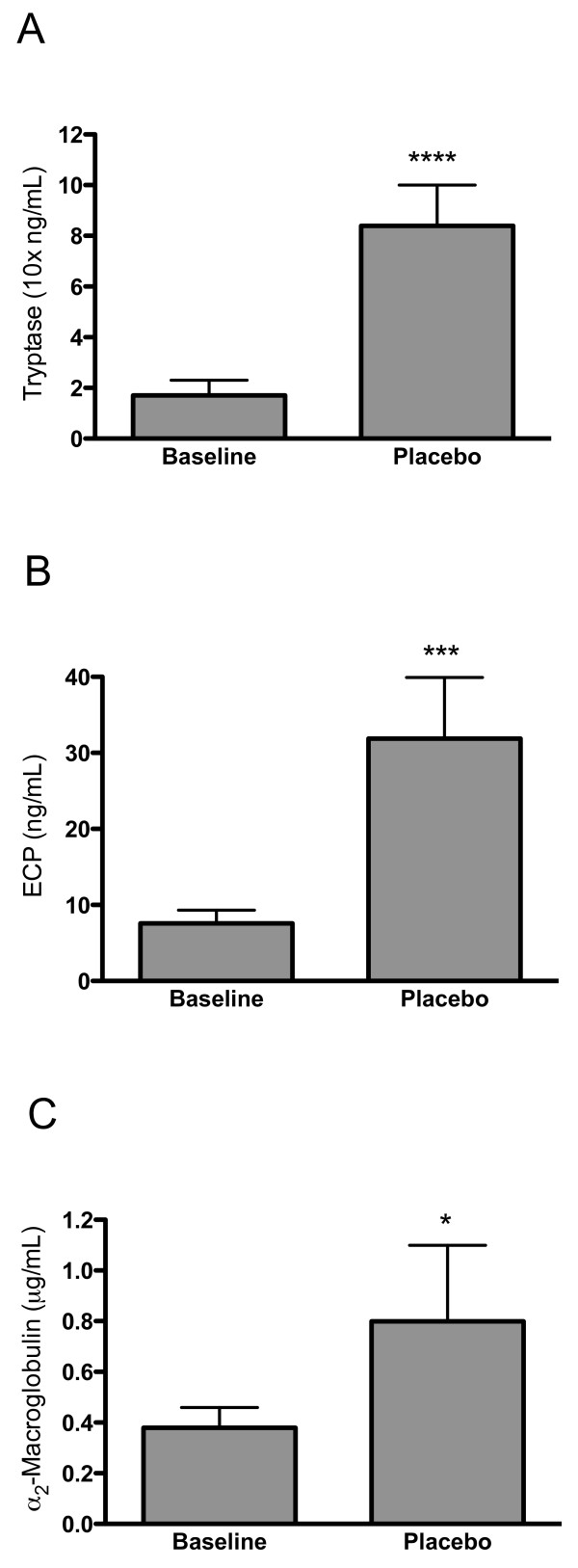
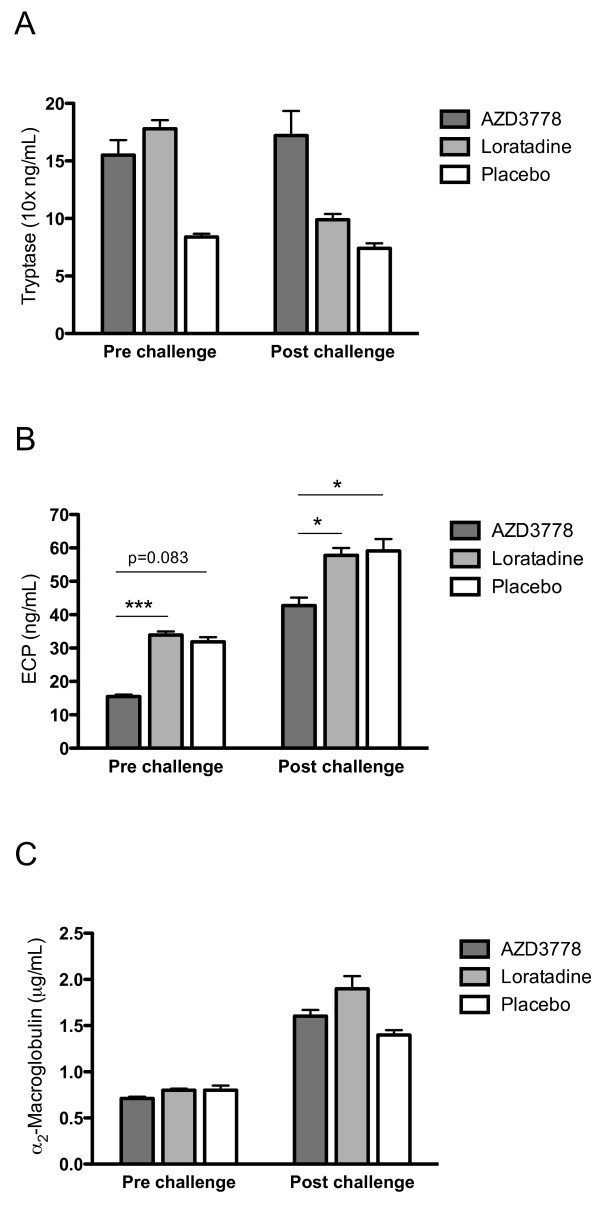
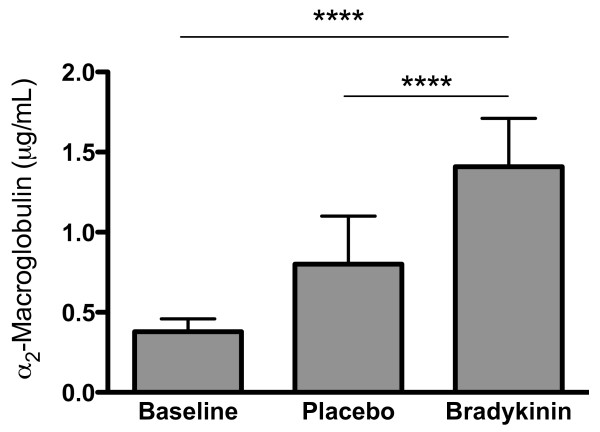
Patients with seasonal allergic rhinitis were subjected to three seven days' allergen challenge series. Treatment with AZD3778 was given in a placebo and antihistamine-controlled design. Symptoms and nasal peak inspiratory flow (PIF) were monitored in the morning, ten minutes post challenge, and in the evening. Nasal lavages were carried out at the end of each challenge series and alpha2-macroglobulin, ECP, and tryptase were monitored as indices of allergic inflammation.
Plasma levels of AZD3778 were stable throughout the treatment series. AZD3778 and the antihistamine (loratadine) reduced rhinitis symptoms recorded ten minutes post challenge during this period. AZD3778, but not the anti-histamine, also improved nasal PIF ten minutes post challenge. Furthermore, scores for morning and evening nasal symptoms from the last five days of the allergen challenge series showed statistically significant reductions for AZD3778, but not for loratadine. ECP was reduced by AZD3778, but not by loratadine.
AZD3778 exerts anti-eosinophil and symptom-reducing effects in allergic rhinitis and part of this effect can likely be attributed to CCR3-antagonism. The present data are of interest with regard to the potential use of AZD3778 in allergic rhinitis and to the relative importance of eosinophil actions to the symptomatology of allergic rhinitis.
EudraCT No: 2005-002805-21.
CC-趋化因子受体-3(CCR3)已成为过敏炎症中药物干预的靶标分子。
观察双重 CCR3 和 H1 受体拮抗剂(AZD3778)是否影响变应性鼻炎的过敏炎症和症状。
将季节性变应性鼻炎患者进行 3 个 7 天过敏原挑战系列。采用安慰剂和抗组胺药物对照设计给予 AZD3778 治疗。在早上、挑战后 10 分钟和晚上监测症状和鼻峰吸气流量(PIF)。在每个挑战系列结束时进行鼻冲洗,并监测α2-巨球蛋白、ECP 和胰蛋白酶作为过敏炎症的指标。
整个治疗系列期间,血浆 AZD3778 水平稳定。AZD3778 和抗组胺药(氯雷他定)在这段时间内减少了挑战后 10 分钟记录的鼻炎症状。AZD3778 不仅改善了鼻 PIF 挑战后 10 分钟,而且还改善了鼻 PIF 挑战后 10 分钟。此外,在过敏原挑战系列的最后 5 天中,早晨和晚上的鼻部症状评分显示 AZD3778 有统计学显著降低,但氯雷他定没有。ECP 被 AZD3778 降低,但不是氯雷他定。
AZD3778 在变应性鼻炎中具有抗嗜酸性粒细胞和减轻症状的作用,其中部分作用可能归因于 CCR3 拮抗作用。本研究结果对于 AZD3778 在变应性鼻炎中的潜在应用以及嗜酸性粒细胞作用对变应性鼻炎症状的相对重要性具有重要意义。
EudraCT 编号:2005-002805-21。