School of Optometry, College of Medical Sciences and Technology, Chung Shan Medical University, Taichung, Taiwan.
J Biomed Sci. 2011 Jan 28;18(1):9. doi: 10.1186/1423-0127-18-9.
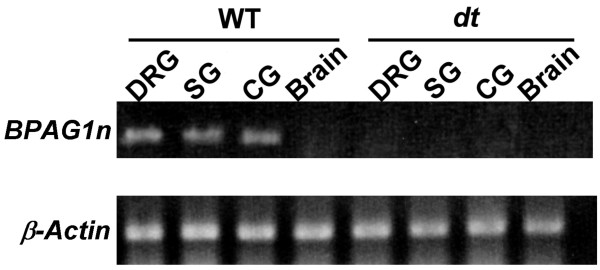
Dystonia musculorum (dt) is an autosomal recessive hereditary neuropathy with a characteristic uncoordinated movement and is caused by a defect in the bullous pemphigoid antigen 1 (BPAG1) gene. The neural isoform of BPAG1 is expressed in various neurons, including those in the central and peripheral nerve systems of mice. However, most previous studies on neuronal degeneration in BPAG1-deficient mice focused on peripheral sensory neurons and only limited investigation of the autonomic system has been conducted.
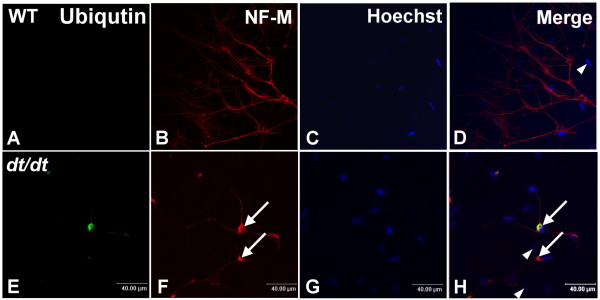
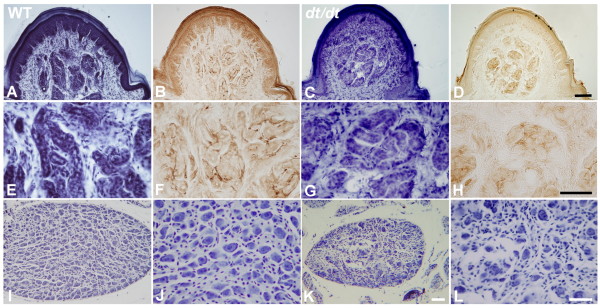
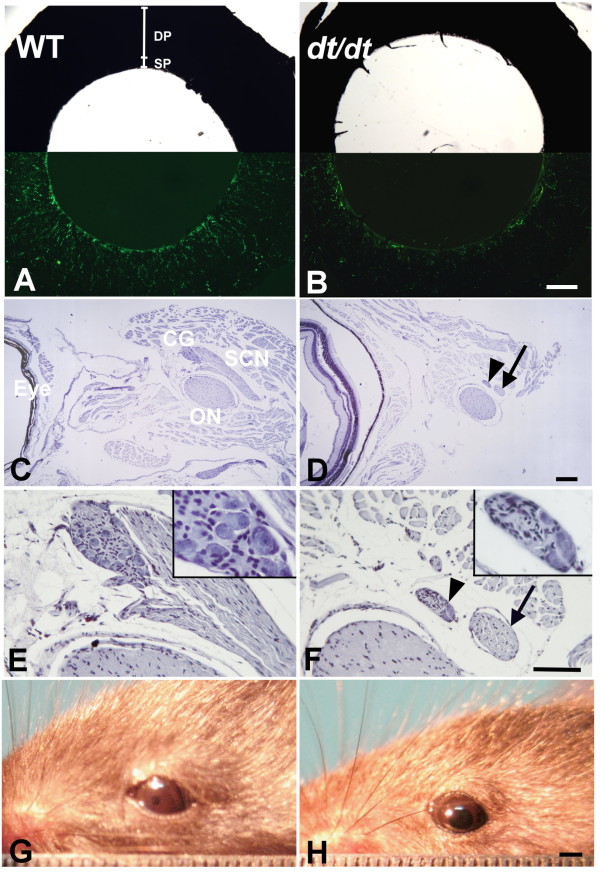
In this study, patterns of nerve innervation in cutaneous and iridial tissues were examined using general neuronal marker protein gene product 9.5 via immunohistochemistry. To perform quantitative analysis of the autonomic neuronal number, neurons within the lumbar sympathetic and parasympathetic ciliary ganglia were calculated. In addition, autonomic neurons were cultured from embryonic dt/dt mutants to elucidate degenerative patterns in vitro. Distribution patterns of neuronal intermediate filaments in cultured autonomic neurons were thoroughly studied under immunocytochemistry and conventional electron microscopy.
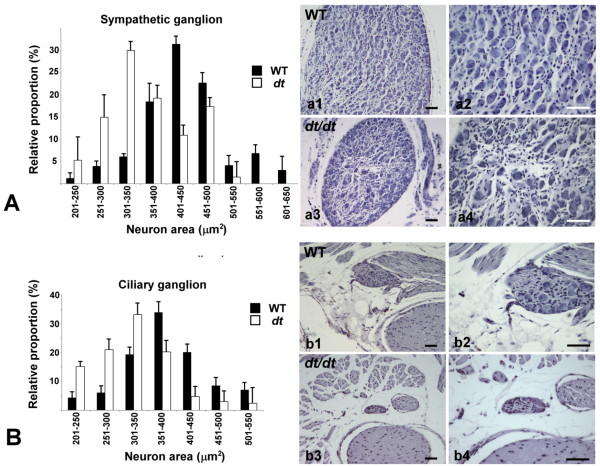
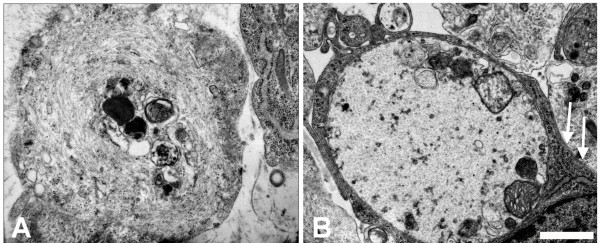
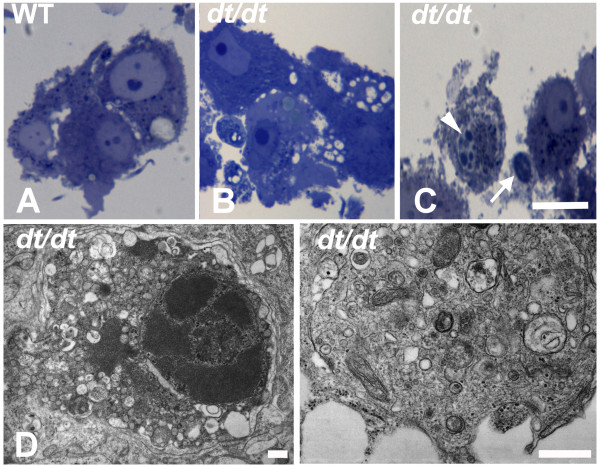
Our immunohistochemistry results indicate that peripheral sensory nerves and autonomic innervation of sweat glands and irises dominated degeneration in dt/dt mice. Quantitative results confirmed that the number of neurons was significantly decreased in the lumbar sympathetic ganglia as well as in the parasympathetic ciliary ganglia of dt/dt mice compared with those of wild-type mice. We also observed that the neuronal intermediate filaments were aggregated abnormally in cultured autonomic neurons from dt/dt embryos.
These results suggest that a deficiency in the cytoskeletal linker BPAG1 is responsible for dominant sensory nerve degeneration and severe autonomic degeneration in dt/dt mice. Additionally, abnormally aggregated neuronal intermediate filaments may participate in neuronal death of cultured autonomic neurons from dt/dt mutants.
肌紧张症(dt)是一种常染色体隐性遗传性神经病,其特征性运动不协调,是由大疱性类天疱疮抗原 1(BPAG1)基因缺陷引起的。BPAG1 的神经同工型在各种神经元中表达,包括小鼠中枢和周围神经系统的神经元。然而,大多数以前关于 BPAG1 缺陷型小鼠神经元变性的研究主要集中在外周感觉神经元,仅对自主神经系统进行了有限的研究。
本研究通过免疫组织化学方法,使用神经元标志物蛋白基因产物 9.5 检测皮肤和虹膜组织的神经支配模式。为了对自主神经元数量进行定量分析,计算了腰椎交感和副交感睫状神经节中的神经元。此外,从胚胎 dt/dt 突变体中培养自主神经元,以阐明体外的退行性模式。通过免疫细胞化学和常规电子显微镜,对培养的自主神经元中的神经元中间丝的分布模式进行了深入研究。
我们的免疫组织化学结果表明,外周感觉神经和自主神经支配的汗腺和虹膜在 dt/dt 小鼠中占主导地位。定量结果证实,与野生型小鼠相比,dt/dt 小鼠的腰椎交感神经节和副交感睫状神经节中的神经元数量明显减少。我们还观察到,培养的自主神经元中,神经元中间丝异常聚集。
这些结果表明,细胞骨架连接蛋白 BPAG1 的缺乏导致 dt/dt 小鼠的感觉神经退行性变和严重的自主神经退行性变。此外,异常聚集的神经元中间丝可能参与了来自 dt/dt 突变体的培养自主神经元的死亡。