Hidaka Masaaki, Takatsuki Mitsuhisa, Soyama Akihiko, Miyaaki Hisamitsu, Ichikawa Tatsuki, Nakao Kazuhiko, Kanematsu Takashi, Eguchi Susumu
Department of Surgery, Nagasaki University Graduate School of Biomedical Sciences, 1-7-1 Sakamoto, Nagasaki 852-8501, Japan.
J Med Case Rep. 2011 Jul 3;5:276. doi: 10.1186/1752-1947-5-276.
Selecting a marginal donor in liver transplantation (LT) remains controversial but is necessary because of the small number of available donors.
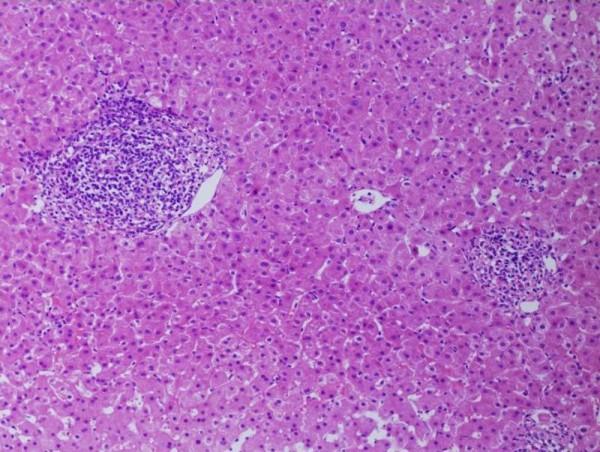
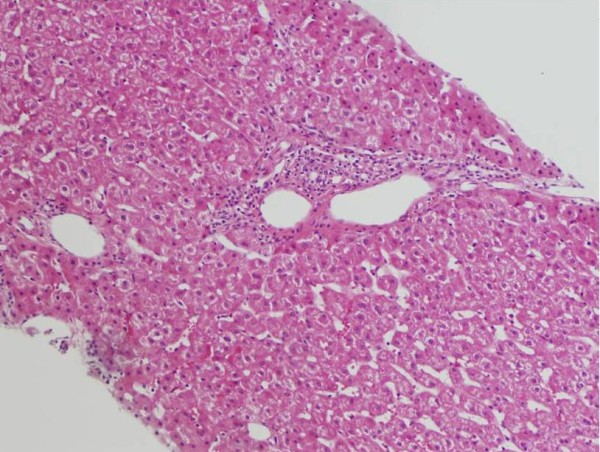
A 46-year-old Japanese woman was a candidate to donate her liver to her brother, who had decompensated liver cirrhosis of unknown origin. Eight years before the donation, she had a mild liver dysfunction that was diagnosed as a hepatitis C virus (HCV) infection (serotype 2). She had received anti-viral therapy with interferon α-2b three times weekly for 24 weeks and had a sustained viral response (SVR). A biopsy of her liver before the donation showed normal findings without any active hepatitis, and her serum was negative for HCV-RNA. Only 67 patients have undergone LT from a cadaveric donor in Japan. The family in this case decided to have living donor LT. A careful selection for the liver graft donation was made; however, since she was the only candidate, we approved her as a living donor. She was discharged nine days after the liver donation. Her liver function recovered immediately. A computed tomography scan showed sufficient liver regeneration one year later. Her brother also had good liver function after LT and had no HCV infection 48 months after surgery and no de novo malignancy. Neither of the siblings has developed an HCV infection.
A patient with SVR status after interferon therapy might be considered a candidate for living donor LT but only if there are no other possibilities of LT for the recipient. A careful follow-up of the donor after donation is needed. The recipient also must have a very close follow-up because it is difficult to predict what might happen to the graft with post-transplant immunosuppression.
在肝移植(LT)中选择边缘供体仍存在争议,但由于可用供体数量较少,这一选择是必要的。
一名46岁的日本女性成为其患有不明原因失代偿性肝硬化的哥哥的肝脏供体候选人。在捐赠前八年,她有轻度肝功能障碍,被诊断为丙型肝炎病毒(HCV)感染(血清型2)。她接受了每周三次、共24周的α-2b干扰素抗病毒治疗,并获得了持续病毒学应答(SVR)。捐赠前她的肝脏活检显示正常,无任何活动性肝炎,血清HCV-RNA阴性。在日本,仅有67例患者接受了尸体供体肝移植。该病例中的家庭决定进行活体供体肝移植。对肝脏移植供体进行了仔细筛选;然而,由于她是唯一的候选人,我们批准她作为活体供体。肝移植术后九天她出院了。她的肝功能立即恢复。一年后计算机断层扫描显示肝脏有足够的再生。她的哥哥肝移植后肝功能也良好,术后48个月未感染HCV,也未发生新发恶性肿瘤。这对兄妹均未发生HCV感染。
干扰素治疗后达到SVR状态的患者可被视为活体供体肝移植的候选人,但前提是受者没有其他肝移植可能性。供体在捐赠后需要进行仔细的随访。受者也必须进行密切随访,因为很难预测移植后免疫抑制情况下移植物会发生什么情况。