Division of Neonatology, Department of Pediatrics, University of Alabama School of Medicine, Birmingham, AL 35249, USA.
Eur J Immunol. 2012 Feb;42(2):311-9. doi: 10.1002/eji.201141847. Epub 2011 Dec 19.
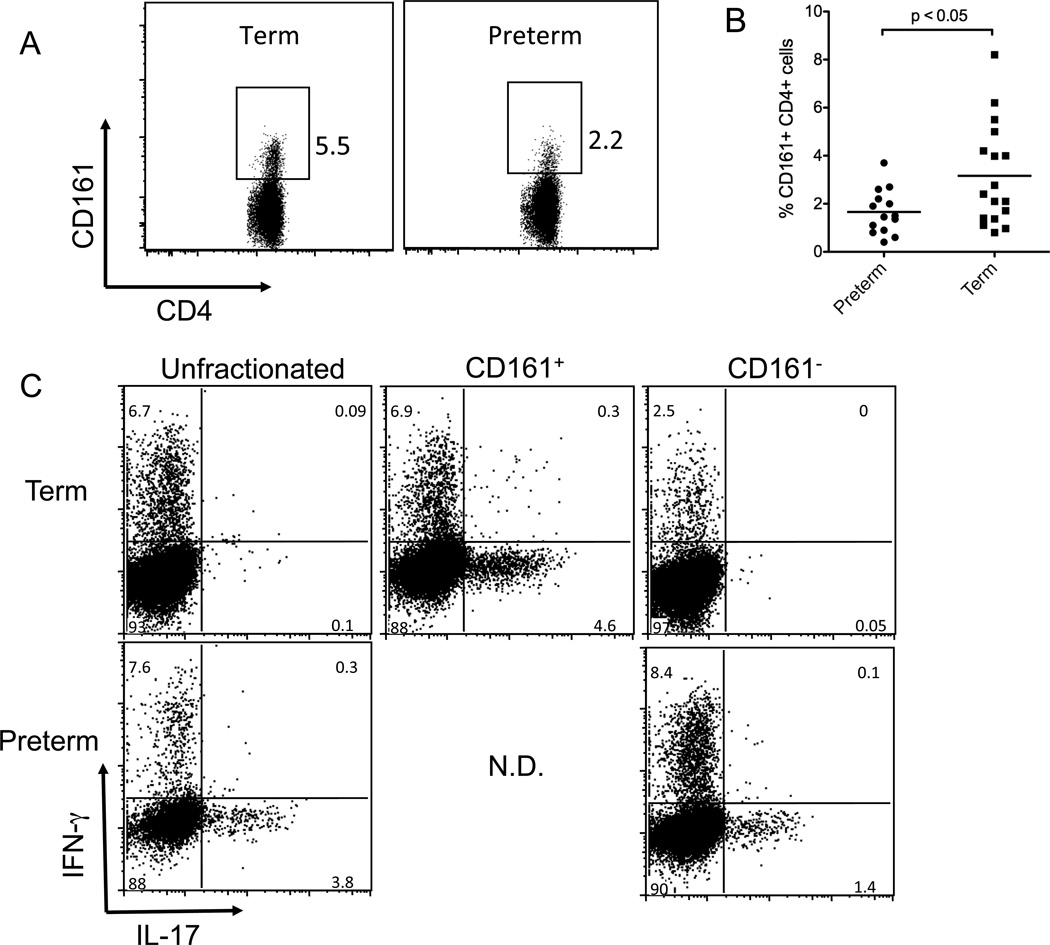
Human neonates are at significantly greater risk of serious infection than immunocompetent adults. In particular, very low birth weight infants in the neonatal intensive care nursery are at high risk of developing life-threatening bacterial and fungal infections. Recent studies have identified Th17 cells as critical mediators of immunity to bacterial and fungal infections at epithelial barriers. Little is known, however, about the ontogeny of Th17-cell responses in humans. The frequency of serious bacterial infections in preterm infants and the importance of Th17 cells in providing protection against such infections in animal studies prompted us to study Th17-cell development in human neonates. Naïve CD4(+) T cells from extremely preterm infants, term infants, and adults were assayed for their capacity to develop into Th17 effector cells. Surprisingly, Th17-cell capacity was inversely related to developmental age. Neonates expressed higher levels of IL-23R, RORγt, and STAT3 prior to activation and showed a significant Th17-cell bias after activation. In contrast, adult cells expressed more TBX21 with a corresponding Th1-cell bias. CD161 expression on Th17-cell precursors was also developmentally regulated. Our results suggest there is significant developmental regulation of CD4(+) effector lineages with a strong bias toward Th17-cell development early in life.
人类新生儿发生严重感染的风险明显高于免疫功能正常的成年人。特别是在新生儿重症监护病房中的极低出生体重儿,发生危及生命的细菌和真菌感染的风险很高。最近的研究表明,Th17 细胞是上皮屏障细菌和真菌感染免疫的关键介质。然而,关于人类 Th17 细胞反应的个体发生知之甚少。早产儿严重细菌感染的频率以及 Th17 细胞在动物研究中提供针对此类感染的保护作用的重要性促使我们研究人类新生儿 Th17 细胞的发育。从极早产儿、足月婴儿和成年人的幼稚 CD4(+)T 细胞中检测其分化为 Th17 效应细胞的能力。令人惊讶的是,Th17 细胞的能力与发育年龄呈反比。在激活之前,新生儿表达更高水平的 IL-23R、RORγt 和 STAT3,并在激活后表现出明显的 Th17 细胞偏向。相比之下,成人细胞表达更多的 TBX21,表现出 Th1 细胞偏向。Th17 细胞前体上的 CD161 表达也受发育调节。我们的结果表明,CD4(+)效应谱系存在显著的发育调节,生命早期强烈偏向 Th17 细胞发育。