MRC Human Genetics Unit, Institute of Genetics and Molecular Medicine, Edinburgh, United Kingdom.
PLoS One. 2011;6(11):e27433. doi: 10.1371/journal.pone.0027433. Epub 2011 Nov 16.
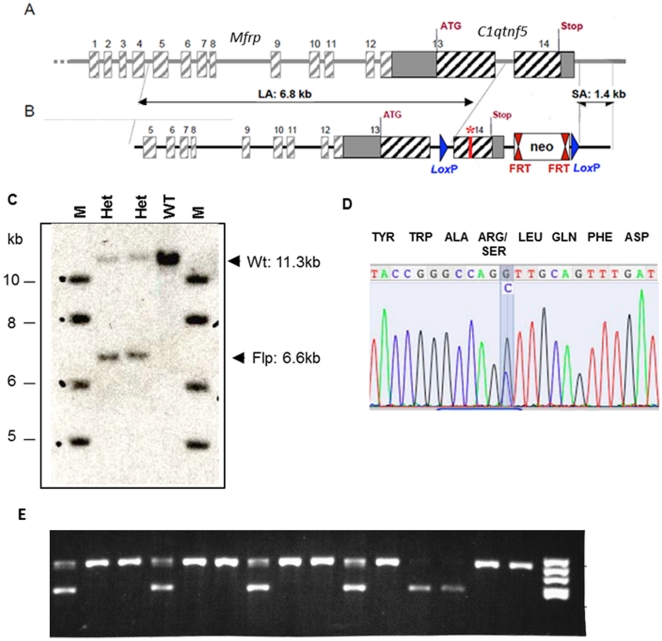
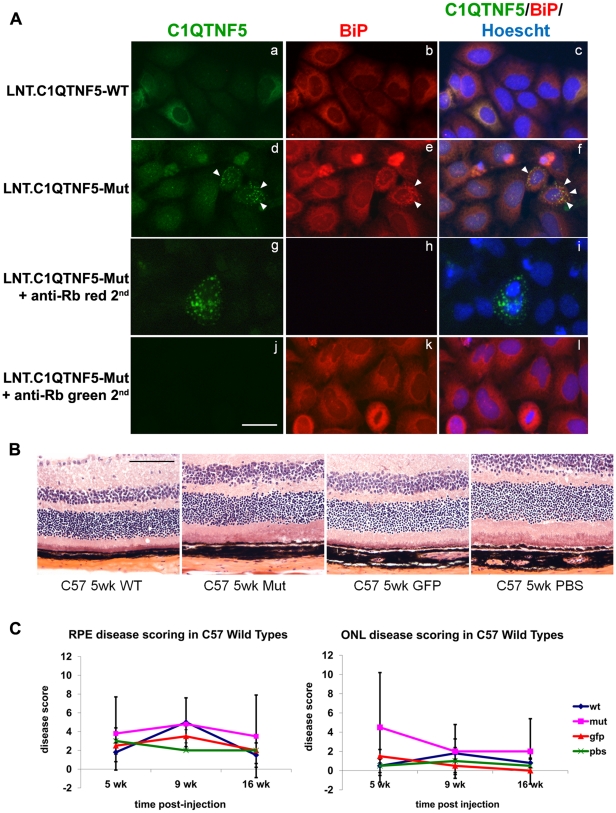
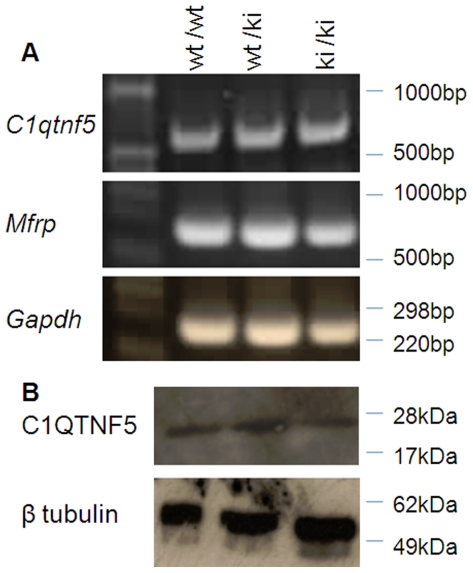
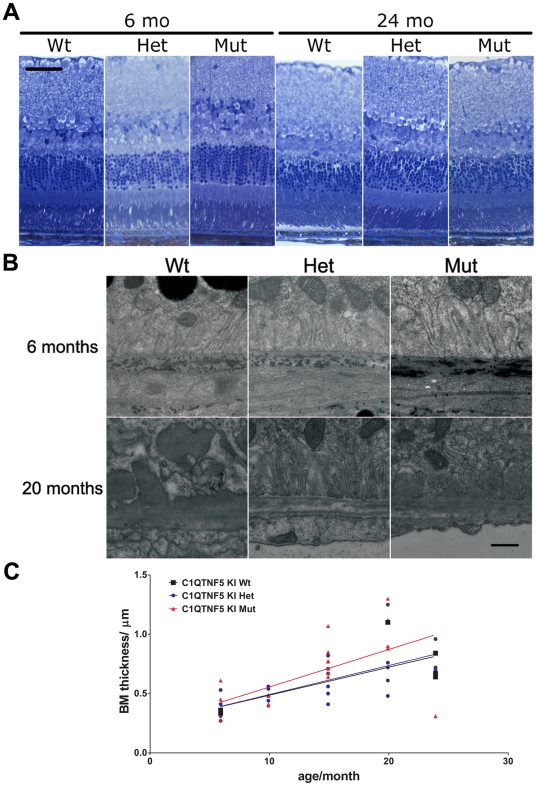
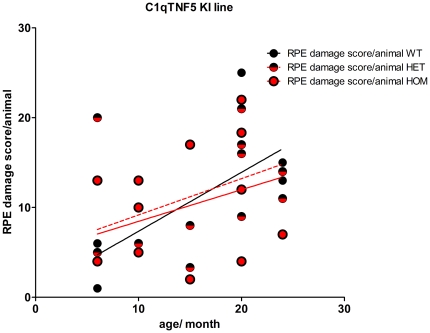
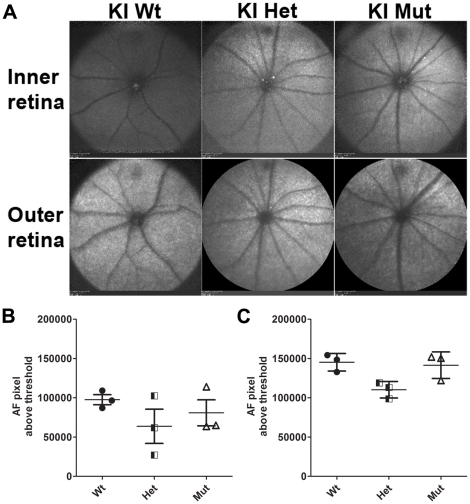
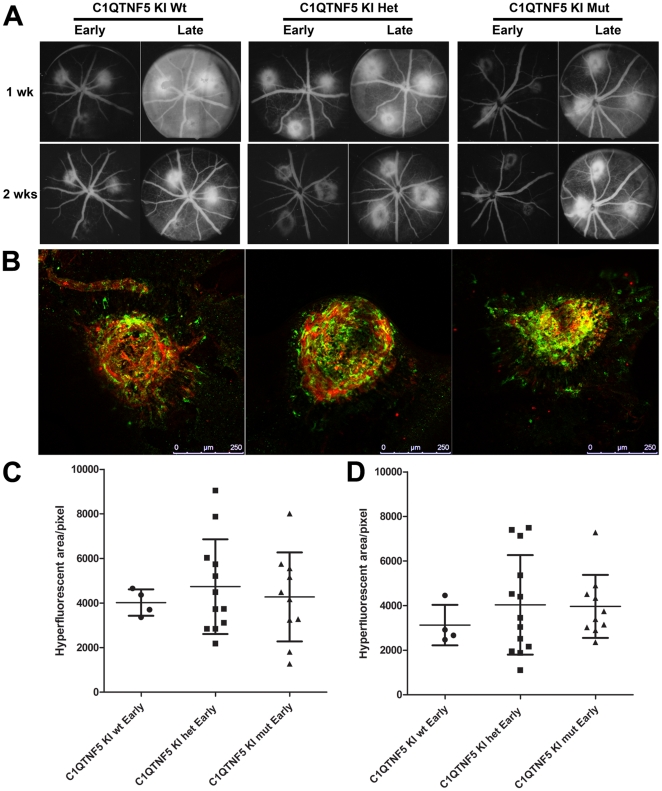
A single founder mutation resulting in a Ser163Arg substitution in the C1QTNF5 gene product causes autosomal dominant late-onset retinal macular degeneration (L-ORMD) in humans, which has clinical and pathological features resembling age-related macular degeneration. We generated and characterised a mouse "knock-in" model carrying the Ser163Arg mutation in the orthologous murine C1qtnf5 gene by site-directed mutagenesis and homologous recombination into mouse embryonic stem cells. Biochemical, immunological, electron microscopic, fundus autofluorescence, electroretinography and laser photocoagulation analyses were used to characterise the mouse model. Heterozygous and homozygous knock-in mice showed no significant abnormality in any of the above measures at time points up to 2 years. This result contrasts with another C1qtnf5 Ser163Arg knock-in mouse which showed most of the features of L-ORMD but differed in genetic background and targeting construct.
一个导致 C1QTNF5 基因突变的 Ser163Arg 取代,引起常染色体显性遗传晚发性视网膜黄斑变性(L-ORMD),其临床和病理特征与年龄相关性黄斑变性相似。我们通过定点诱变和同源重组到小鼠胚胎干细胞中,在同源的小鼠 C1qtnf5 基因中产生并表征了携带 Ser163Arg 突变的小鼠“敲入”模型。使用生化、免疫、电子显微镜、眼底自发荧光、视网膜电图和激光光凝分析来表征该小鼠模型。杂合子和纯合子敲入小鼠在 2 年时间点之前的上述所有指标中均未表现出明显异常。这一结果与另一个 C1qtnf5 Ser163Arg 敲入小鼠形成对比,后者显示出 L-ORMD 的大部分特征,但在遗传背景和靶向构建上有所不同。