The Cancer Institute of New Jersey, Department of Radiation Oncology, Robert Wood Johnson Medical School, New Brunswick, New Jersey, United States of America.
PLoS One. 2012;7(1):e30638. doi: 10.1371/journal.pone.0030638. Epub 2012 Jan 24.
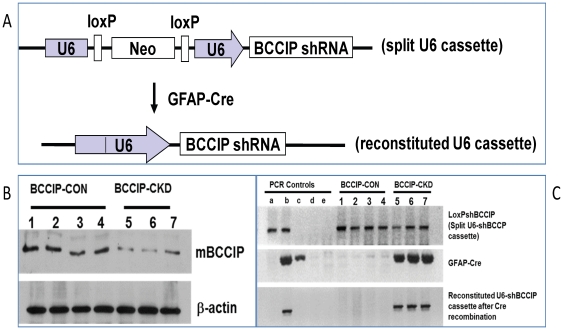
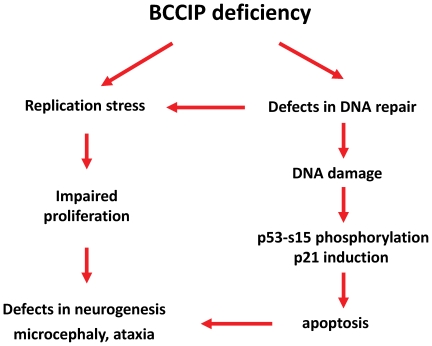
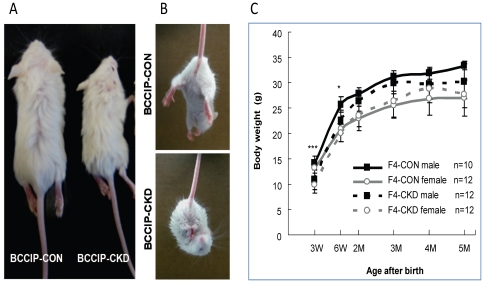
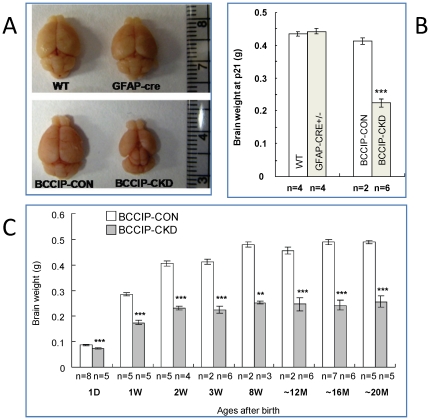
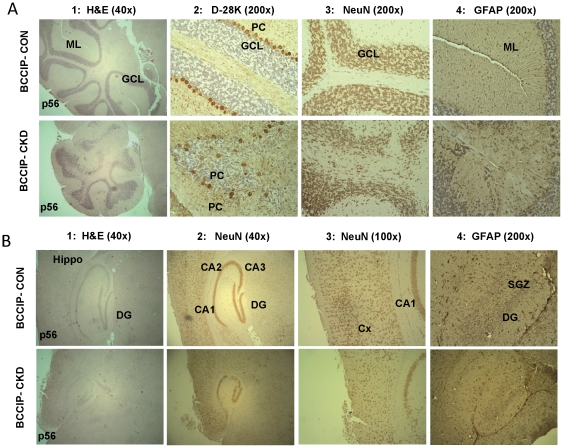
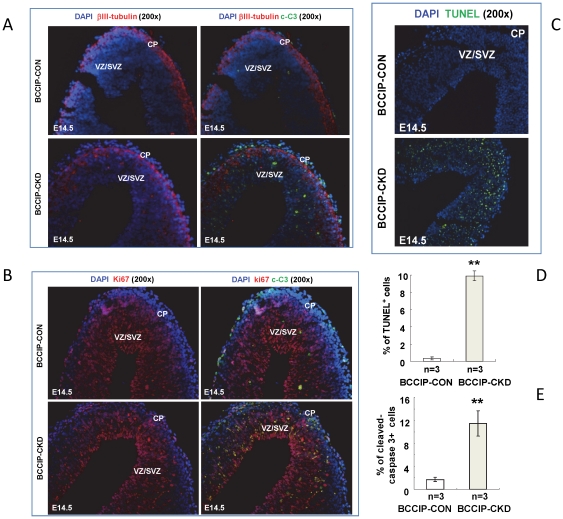
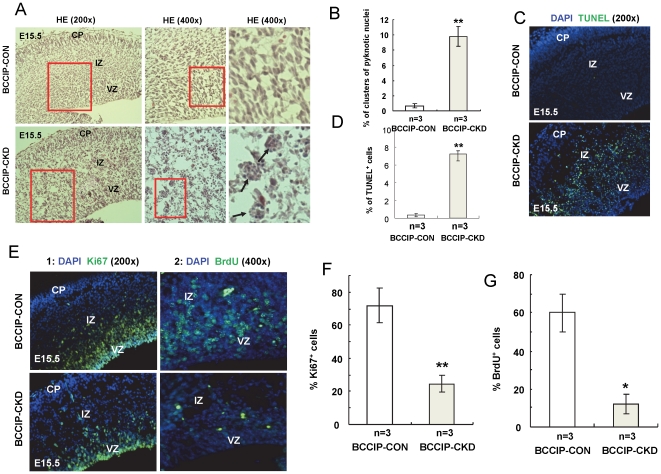
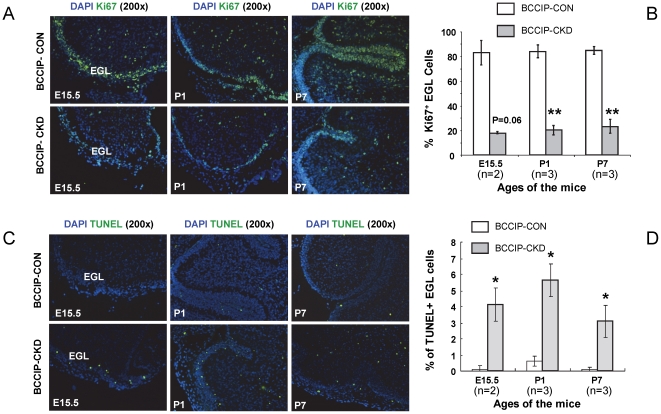
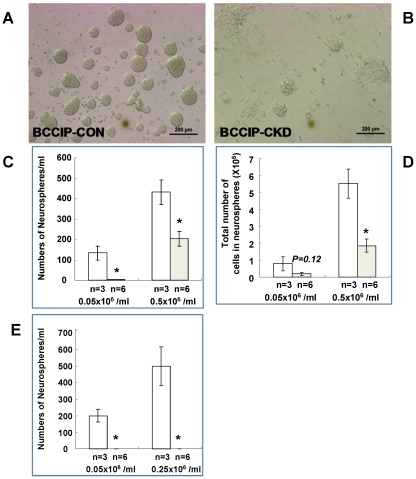
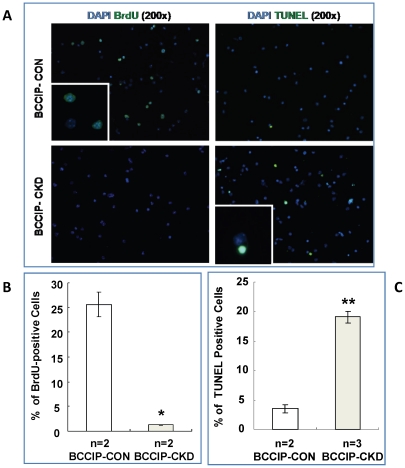
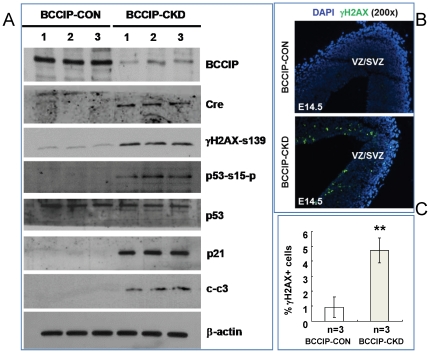
Multiple DNA repair pathways are involved in the orderly development of neural systems at distinct stages. The homologous recombination (HR) pathway is required to resolve stalled replication forks and critical for the proliferation of progenitor cells during neural development. BCCIP is a BRCA2 and CDKN1A interacting protein implicated in HR and inhibition of DNA replication stress. In this study, we determined the role of BCCIP in neural development using a conditional BCCIP knock-down mouse model. BCCIP deficiency impaired embryonic and postnatal neural development, causing severe ataxia, cerebral and cerebellar defects, and microcephaly. These development defects are associated with spontaneous DNA damage and subsequent cell death in the proliferative cell populations of the neural system during embryogenesis. With in vitro neural spheroid cultures, BCCIP deficiency impaired neural progenitor's self-renewal capability, and spontaneously activated p53. These data suggest that BCCIP and its anti-replication stress functions are essential for normal neural development by maintaining an orderly proliferation of neural progenitors.
多种 DNA 修复途径参与了不同阶段神经系统的有序发育。同源重组(HR)途径对于解决停滞的复制叉至关重要,并且对于神经发育过程中的祖细胞增殖至关重要。BCCIP 是一种与 HR 和抑制 DNA 复制应激相关的 BRCA2 和 CDKN1A 相互作用蛋白。在这项研究中,我们使用条件性 BCCIP 敲低小鼠模型来确定 BCCIP 在神经发育中的作用。BCCIP 缺乏会损害胚胎和出生后神经发育,导致严重的共济失调、大脑和小脑缺陷以及小头畸形。这些发育缺陷与胚胎发生过程中神经系统增殖细胞群中的自发 DNA 损伤和随后的细胞死亡有关。通过体外神经球体培养,BCCIP 缺乏会损害神经祖细胞的自我更新能力,并自发激活 p53。这些数据表明,BCCIP 及其抗复制应激功能对于维持神经祖细胞的有序增殖对于正常的神经发育至关重要。