Institute of Physiology and Zürich Center for Integrative Human Physiology, University of Zürich, Zürich, Switzerland.
PLoS One. 2012;7(2):e31856. doi: 10.1371/journal.pone.0031856. Epub 2012 Feb 27.
All globins belong to one of three families: the F (flavohemoglobin) and S (sensor) families that exhibit the canonical 3/3 α-helical fold, and the T (truncated 3/3 fold) globins characterized by a shortened 2/2 α-helical fold. All eukaryote 3/3 hemoglobins are related to the bacterial single domain F globins. It is known that Fungi contain flavohemoglobins and single domain S globins. Our aims are to provide a census of fungal globins and to examine their relationships to bacterial globins.
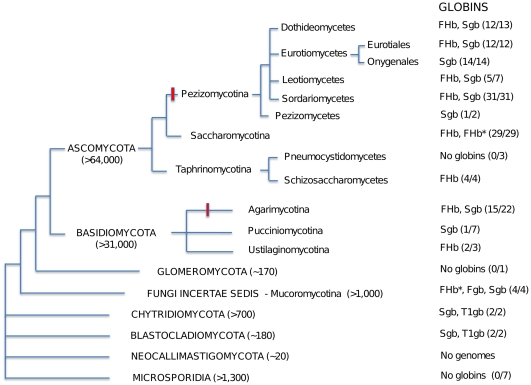
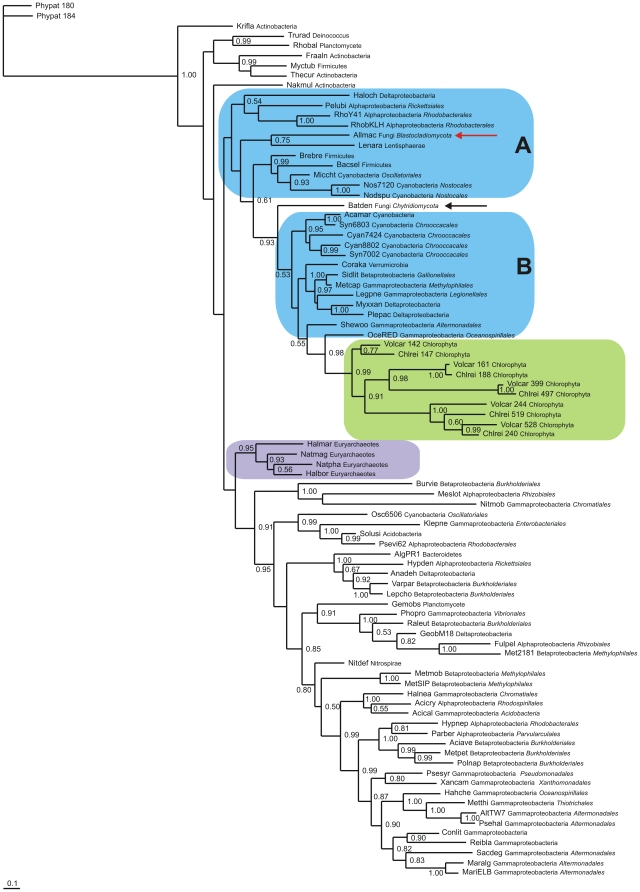
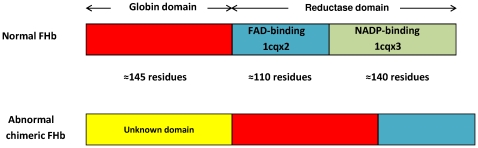
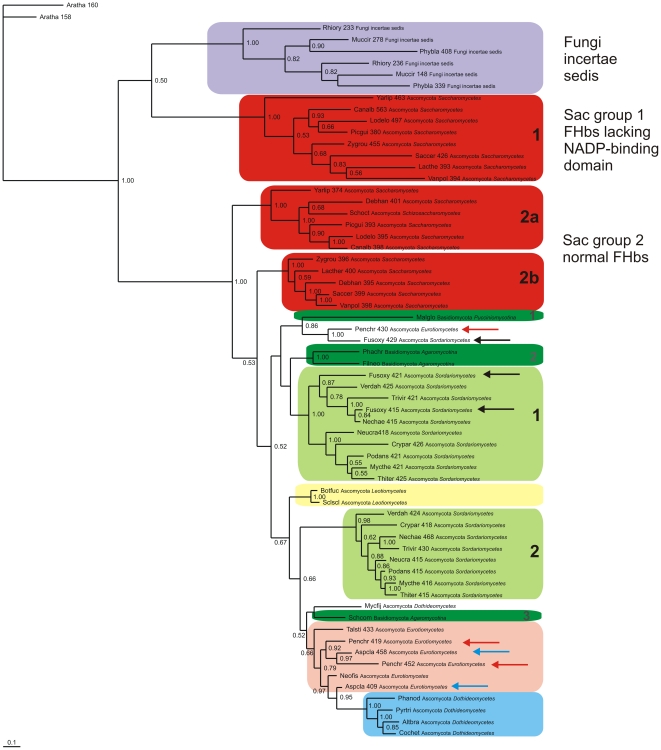
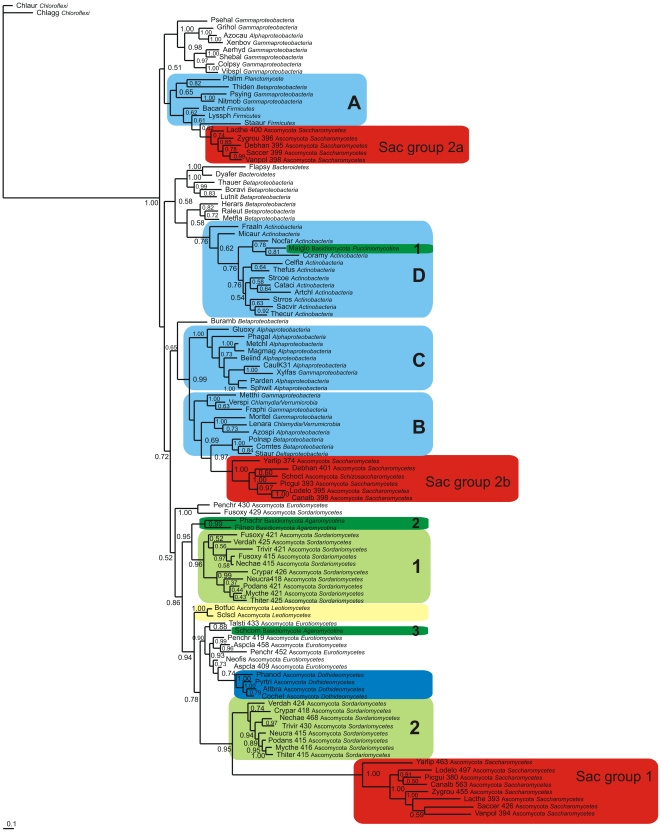
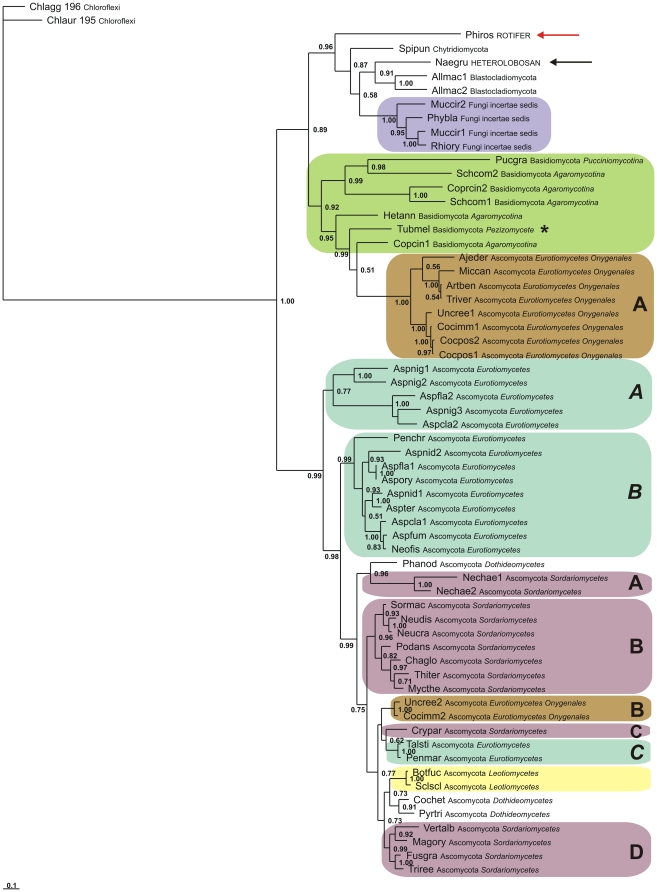
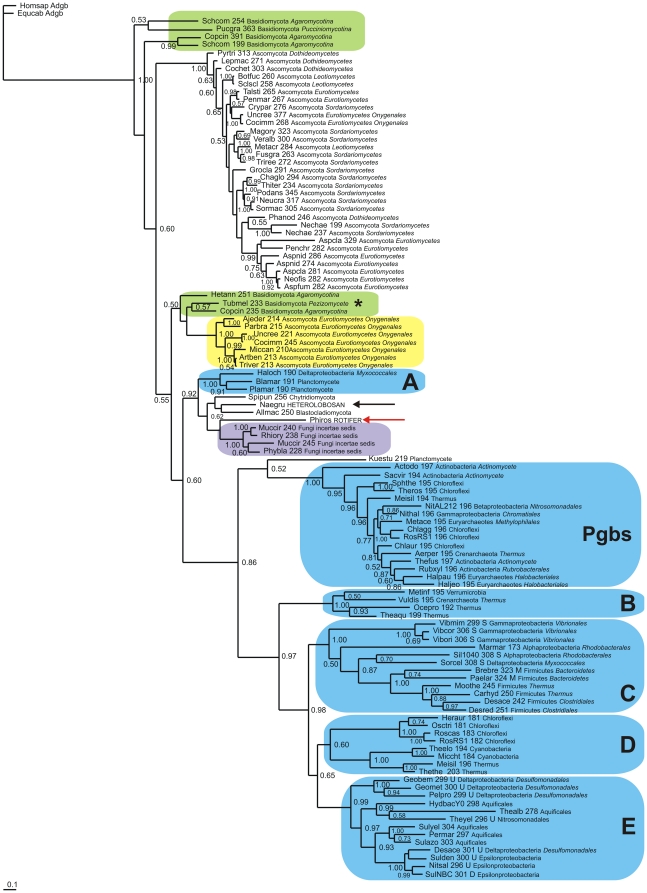
Examination of 165 genomes revealed that globins are present in >90% of Ascomycota and ~60% of Basidiomycota genomes. The S globins occur in Blastocladiomycota and Chytridiomycota in addition to the phyla that have FHbs. Unexpectedly, group 1 T globins were found in one Blastocladiomycota and one Chytridiomycota genome. Phylogenetic analyses were carried out on the fungal globins, alone and aligned with representative bacterial globins. The Saccharomycetes and Sordariomycetes with two FHbs form two widely divergent clusters separated by the remaining fungal sequences. One of the Saccharomycete groups represents a new subfamily of FHbs, comprising a previously unknown N-terminal and a FHb missing the C-terminal moiety of its reductase domain. The two Saccharomycete groups also form two clusters in the presence of bacterial FHbs; the surrounding bacterial sequences are dominated by Proteobacteria and Bacilli (Firmicutes). The remaining fungal FHbs cluster with Proteobacteria and Actinobacteria. The Sgbs cluster separately from their bacterial counterparts, except for the intercalation of two Planctomycetes and a Proteobacterium between the Fungi incertae sedis and the Blastocladiomycota and Chytridiomycota.
Our results are compatible with a model of globin evolution put forward earlier, which proposed that eukaryote F, S and T globins originated via horizontal gene transfer of their bacterial counterparts to the eukaryote ancestor, resulting from the endosymbiotic events responsible for the origin of mitochondria and chloroplasts.
所有球蛋白都属于三个家族之一:F(黄素血红蛋白)和 S(传感器)家族,它们具有典型的 3/3α-螺旋折叠,以及 T(截断 3/3 折叠)球蛋白,其特征是缩短的 2/2α-螺旋折叠。所有真核生物 3/3 血红蛋白都与细菌单域 F 球蛋白有关。已知真菌含有黄素血红蛋白和单域 S 球蛋白。我们的目的是提供真菌球蛋白的普查,并研究它们与细菌球蛋白的关系。
对 165 个基因组的检查表明,球蛋白存在于 90%以上的子囊菌和~60%的担子菌基因组中。S 球蛋白除了具有 FHbs 的门中外,还存在于芽枝菌纲和壶菌纲中。出乎意料的是,第 1 组 T 球蛋白存在于一个芽枝菌纲和一个壶菌纲基因组中。对真菌球蛋白进行了单独的系统发育分析,并与代表性的细菌球蛋白进行了比对。具有两个 FHbs 的酿酒酵母纲和 Sordariomycetes 形成两个广泛分化的聚类,由其余真菌序列隔开。酿酒酵母纲的一个组代表了 FHbs 的一个新亚科,包括一个以前未知的 N 端和一个缺失其还原酶结构域 C 端部分的 FHb。在存在细菌 FHbs 的情况下,这两个酿酒酵母纲也形成了两个聚类;周围的细菌序列主要由变形菌门和芽孢杆菌门(厚壁菌门)组成。其余的真菌 FHbs 与变形菌门和放线菌门聚类。Sgbs 与它们的细菌对应物分开聚类,除了两个浮霉菌门和一个变形菌门之间插入的两个 Planctomycetes 和一个变形菌门之外。
我们的结果与早期提出的球蛋白进化模型相兼容,该模型提出,真核生物 F、S 和 T 球蛋白是通过其细菌对应物的水平基因转移到真核生物祖先中产生的,这是导致线粒体和叶绿体起源的内共生事件的结果。