Department of Neurology, Saint Louis, Missouri 63110, USA.
Mol Neurodegener. 2012 Apr 18;7:14. doi: 10.1186/1750-1326-7-14.
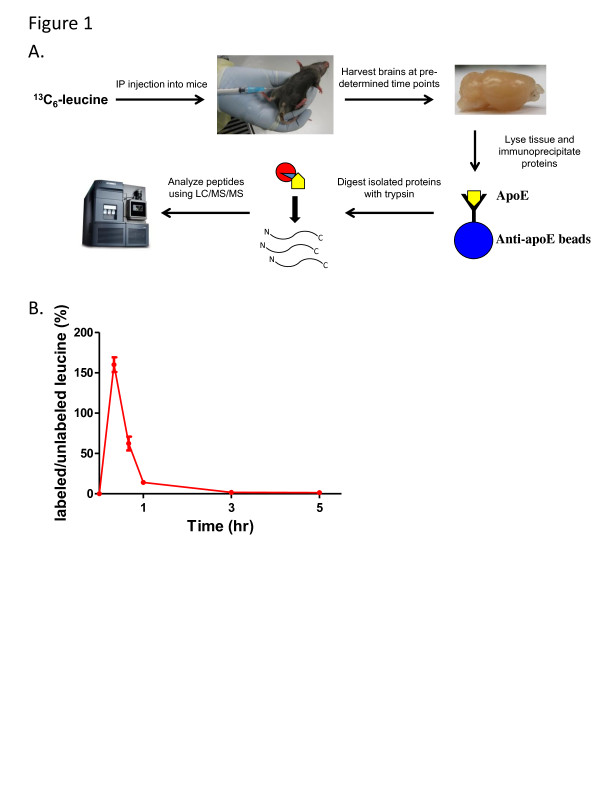
Abnormal proteostasis due to alterations in protein turnover has been postulated to play a central role in several neurodegenerative diseases. Therefore, the development of techniques to quantify protein turnover in the brain is critical for understanding the pathogenic mechanisms of these diseases. We have developed a bolus stable isotope-labeling kinetics (SILK) technique coupled with multiple reaction monitoring mass spectrometry to measure the clearance of proteins in the mouse brain.
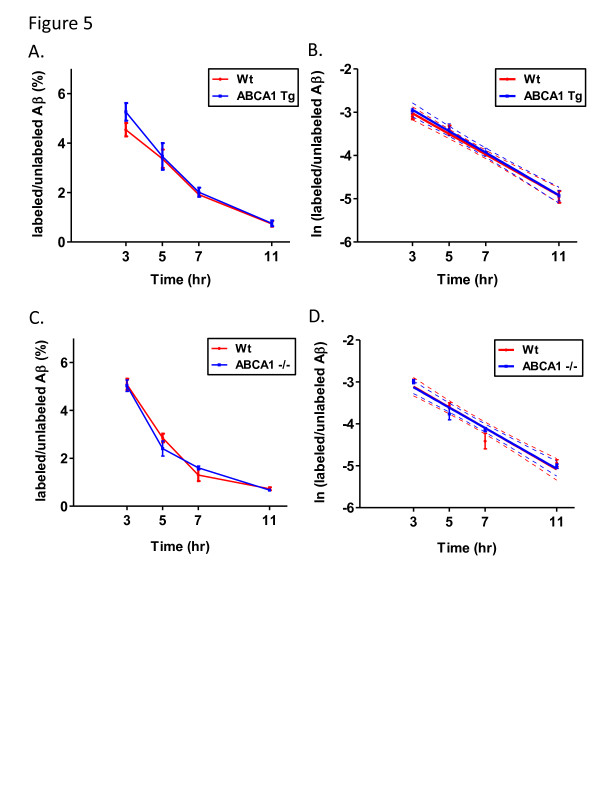
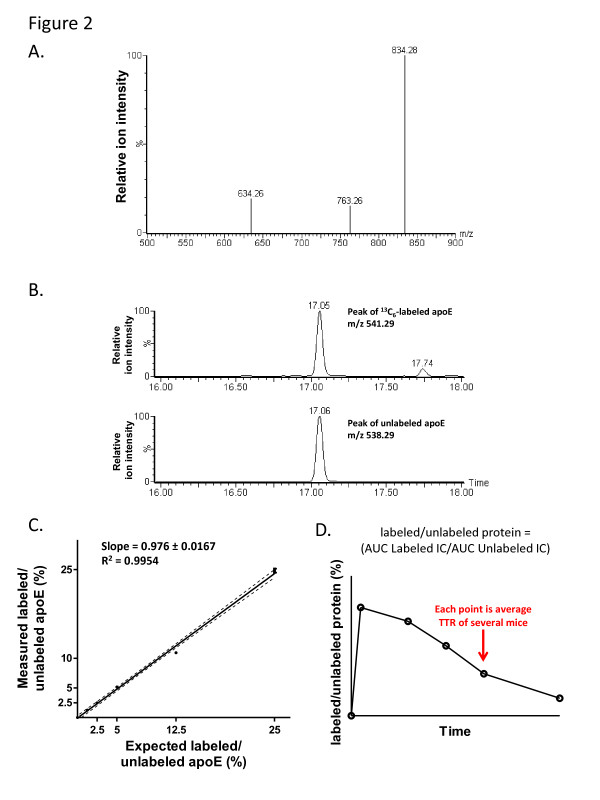
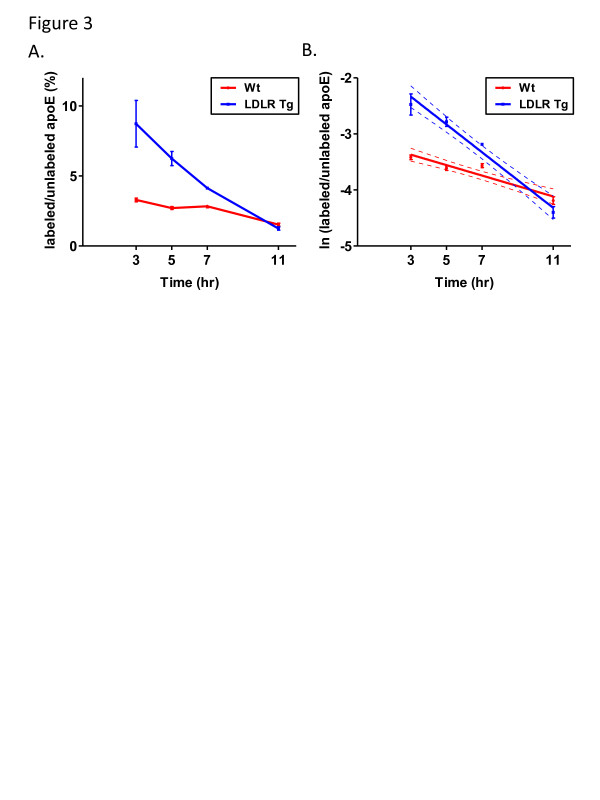
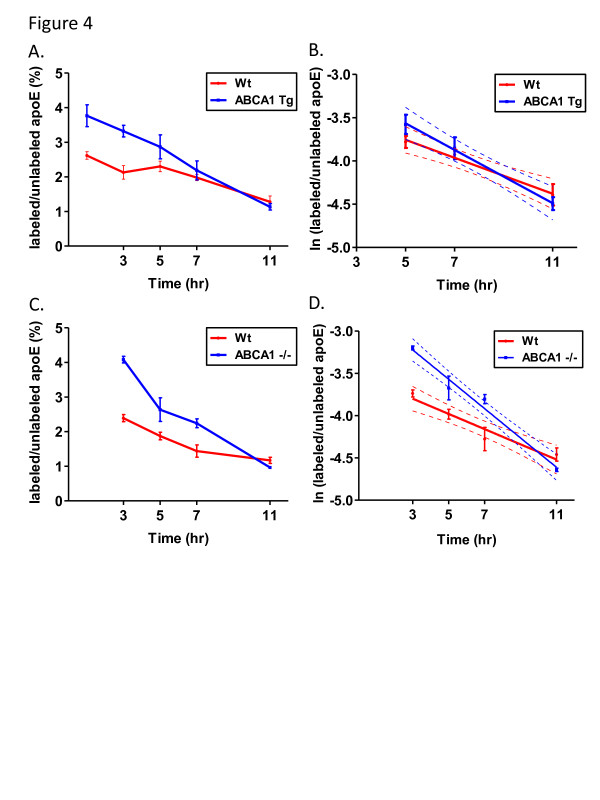
Cohorts of mice were pulse labeled with 13C6-leucine and the brains were isolated after pre-determined time points. The extent of label incorporation was measured over time using mass spectrometry to measure the ratio of labeled to unlabeled apolipoprotein E (apoE) and amyloid β (Aβ). The fractional clearance rate (FCR) was then calculated by analyzing the time course of disappearance for the labeled protein species. To validate the technique, apoE clearance was measured in mice that overexpress the low-density lipoprotein receptor (LDLR). The FCR in these mice was 2.7-fold faster than wild-type mice. To demonstrate the potential of this technique for understanding the pathogenesis of neurodegenerative disease, we applied our SILK technique to determine the effect of ATP binding cassette A1 (ABCA1) on both apoE and Aβ clearance. ABCA1 had previously been shown to regulate both the amount of apoE in the brain, along with the extent of Aβ deposition, and represents a potential molecular target for lowering brain amyloid levels in Alzheimer's disease patients. The FCR of apoE was increased by 1.9- and 1.5-fold in mice that either lacked or overexpressed ABCA1, respectively. However, ABCA1 had no effect on the FCR of Aβ, suggesting that ABCA1 does not regulate Aβ metabolism in the brain.
Our SILK strategy represents a straightforward, cost-effective, and efficient method to measure the clearance of proteins in the mouse brain. We expect that this technique will be applicable to the study of protein dynamics in the pathogenesis of several neurodegenerative diseases, and could aid in the evaluation of novel therapeutic agents.
由于蛋白质周转率的改变导致的异常蛋白质稳态被认为在几种神经退行性疾病中起核心作用。因此,开发技术来量化大脑中的蛋白质周转率对于理解这些疾病的发病机制至关重要。我们开发了一种脉冲稳定同位素标记动力学(SILK)技术,结合多重反应监测质谱法来测量小鼠大脑中的蛋白质清除率。
用 13C6-亮氨酸脉冲标记小鼠,在预定的时间点后分离大脑。使用质谱法随时间测量标记的掺入程度,以测量载脂蛋白 E(apoE)和淀粉样 β(Aβ)的标记与未标记的比率。然后通过分析标记蛋白物质的消失时间过程来计算分数清除率(FCR)。为了验证该技术,在过表达低密度脂蛋白受体(LDLR)的小鼠中测量 apoE 清除率。这些小鼠的 FCR 比野生型小鼠快 2.7 倍。为了证明该技术在理解神经退行性疾病发病机制方面的潜力,我们应用我们的 SILK 技术来确定 ATP 结合盒转运蛋白 A1(ABCA1)对 apoE 和 Aβ 清除的影响。ABCA1 先前被证明调节大脑中的 apoE 含量以及 Aβ 沉积的程度,并且代表了降低阿尔茨海默病患者大脑中淀粉样蛋白水平的潜在分子靶标。在缺乏或过表达 ABCA1 的小鼠中,apoE 的 FCR 分别增加了 1.9 倍和 1.5 倍。然而,ABCA1 对 Aβ 的 FCR 没有影响,这表明 ABCA1 不调节大脑中的 Aβ 代谢。
我们的 SILK 策略代表了一种简单、经济高效且有效的方法来测量小鼠大脑中蛋白质的清除率。我们预计,该技术将适用于几种神经退行性疾病发病机制中蛋白质动力学的研究,并有助于评估新型治疗剂。