Department of Integrative Physiology and Bio-System Control, Shinshu University School of Medicine, 3-1-1 Asahi, Matsumoto, Nagano 390-8621, Japan.
PPAR Res. 2012;2012:362361. doi: 10.1155/2012/362361. Epub 2012 May 29.
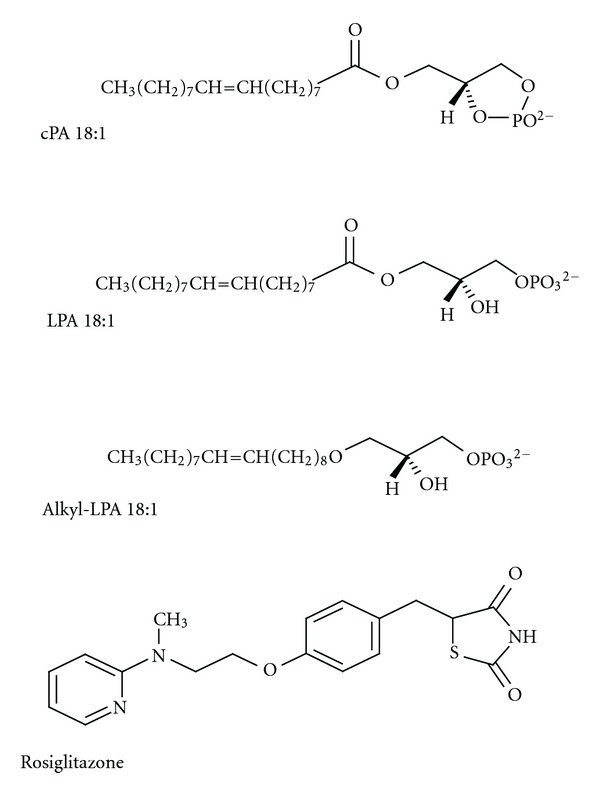
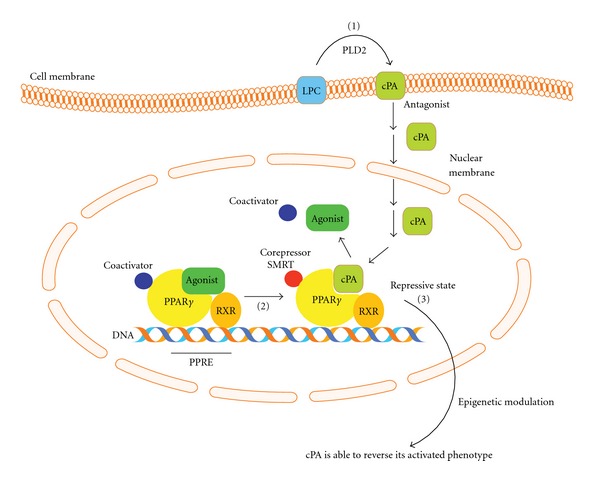
In recent years, peroxisome proliferator-activated receptor gamma (PPARγ) has been reported to be a target for the treatment of type II diabetes. Furthermore, it has received attention for its therapeutic potential in many other human diseases, including atherosclerosis, obesity, and cancers. Recent studies have provided evidence that the endogenously produced PPARγ antagonist, 2,3-cyclic phosphatidic acid (cPA), which is similar in structure to lysophosphatidic acid (LPA), inhibits cancer cell invasion and metastasis in vitro and in vivo. We recently observed that cPA negatively regulates PPARγ function by stabilizing the binding of the corepressor protein, silencing mediator of retinoic acid and thyroid hormone receptor. We also showed that cPA prevents neointima formation, adipocyte differentiation, lipid accumulation, and upregulation of PPARγ target gene transcription. We then analyzed the molecular mechanism of cPA's action on PPARγ. In this paper, we summarize the current knowledge on the mechanism of PPARγ-mediated transcriptional activity and transcriptional repression in response to novel lipid-derived ligands, such as cPA.
近年来,过氧化物酶体增殖物激活受体 γ (PPARγ) 已被报道为治疗 II 型糖尿病的靶点。此外,它在许多其他人类疾病中的治疗潜力也引起了关注,包括动脉粥样硬化、肥胖症和癌症。最近的研究提供了证据,即内源性产生的 PPARγ 拮抗剂 2,3-环磷酸脂酸 (cPA),其结构与溶血磷脂酸 (LPA) 相似,可抑制体外和体内癌细胞的侵袭和转移。我们最近观察到,cPA 通过稳定核心抑制蛋白的结合来负调控 PPARγ 功能,沉默调节剂的视黄酸和甲状腺激素受体。我们还表明,cPA 可防止新内膜形成、脂肪细胞分化、脂质积累和 PPARγ 靶基因转录的上调。然后,我们分析了 cPA 对 PPARγ 作用的分子机制。在本文中,我们总结了目前关于新型脂质衍生配体(如 cPA)对 PPARγ 介导的转录活性和转录抑制作用的机制的知识。