Department of Biochemistry, University of Washington, Seattle, WA 98195, USA.
Structure. 2012 Oct 10;20(10):1681-91. doi: 10.1016/j.str.2012.07.011. Epub 2012 Aug 16.
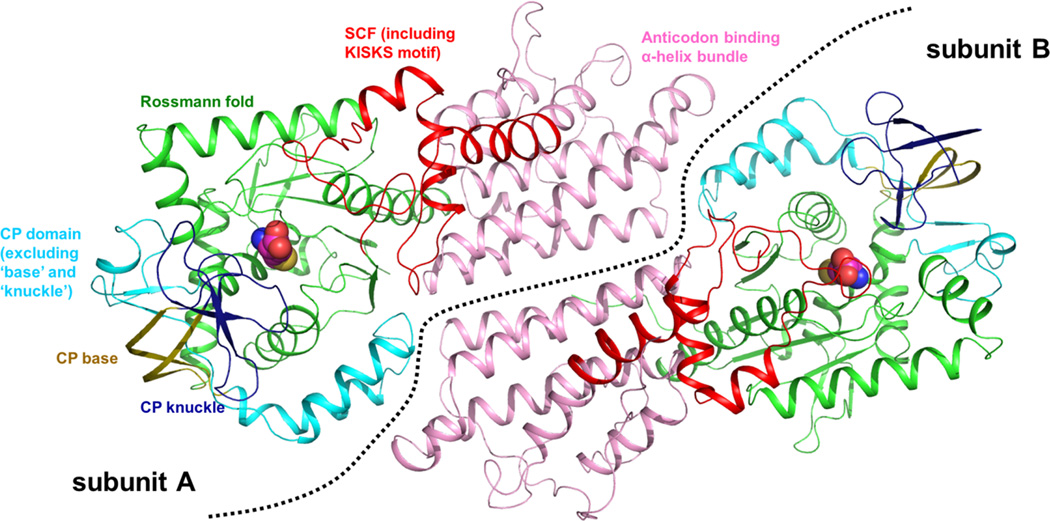
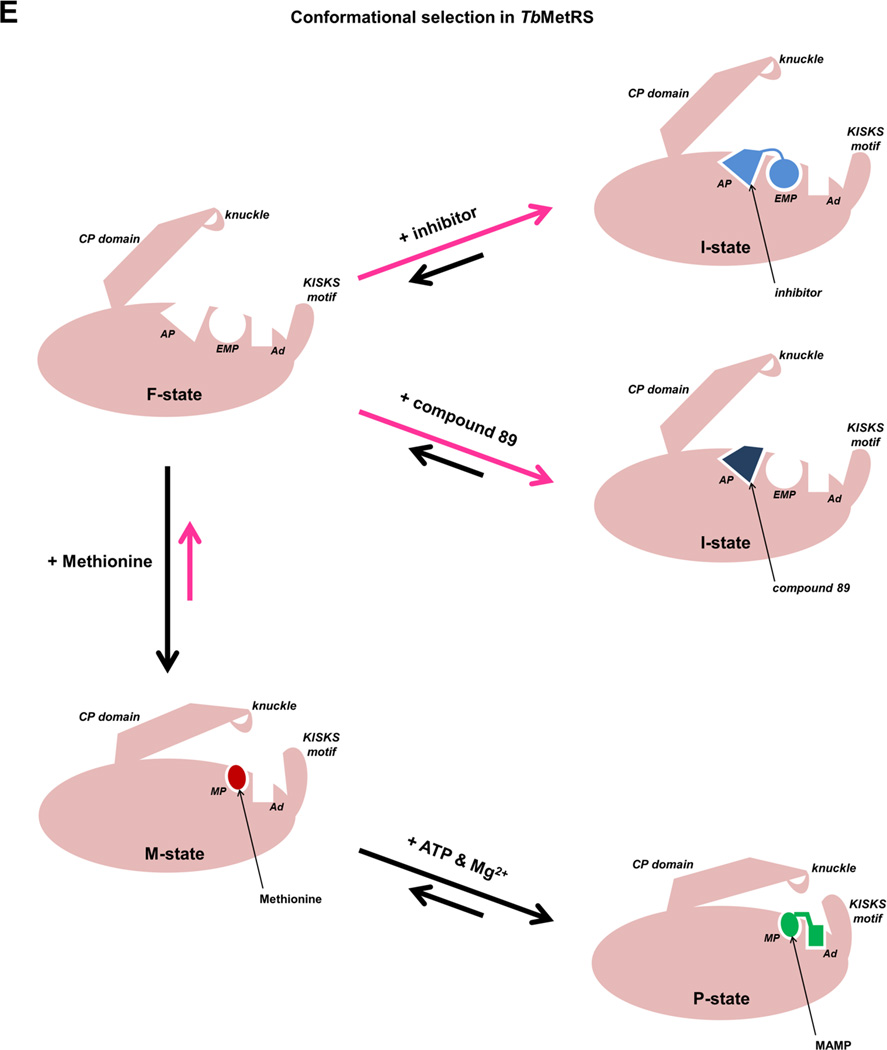
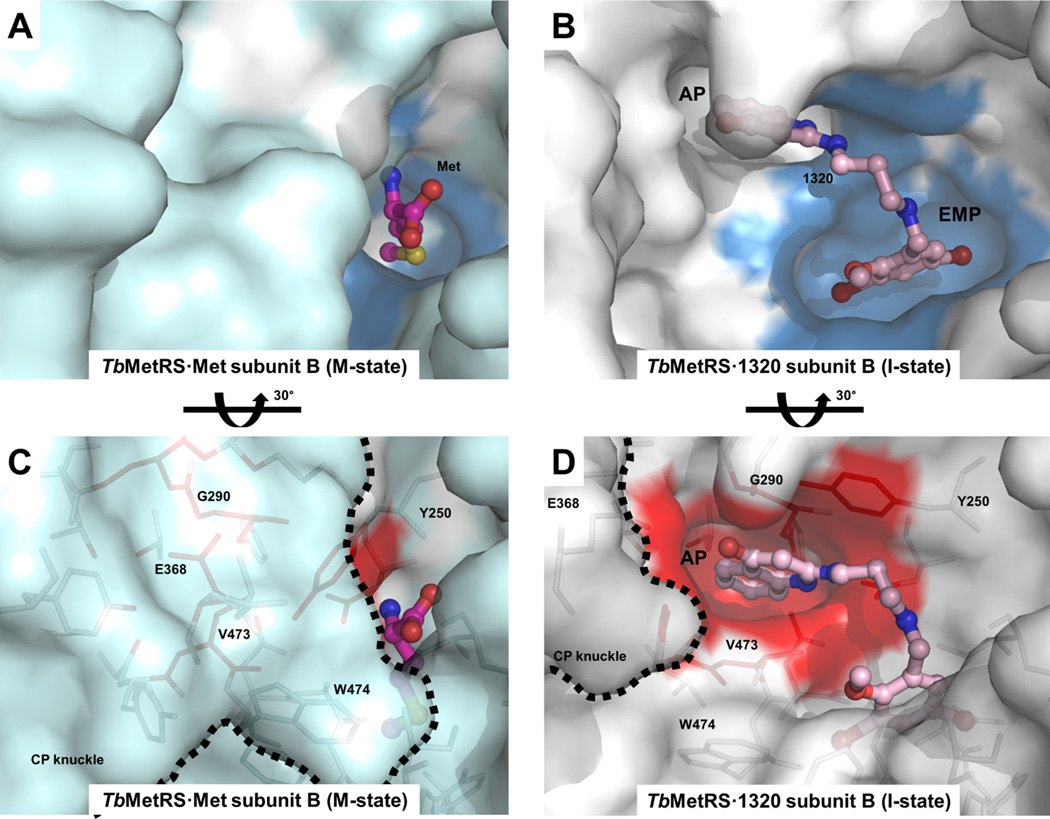
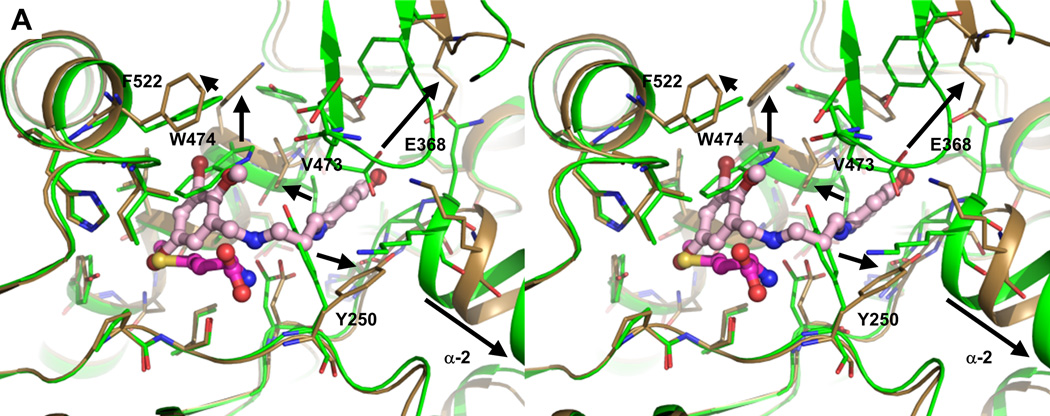
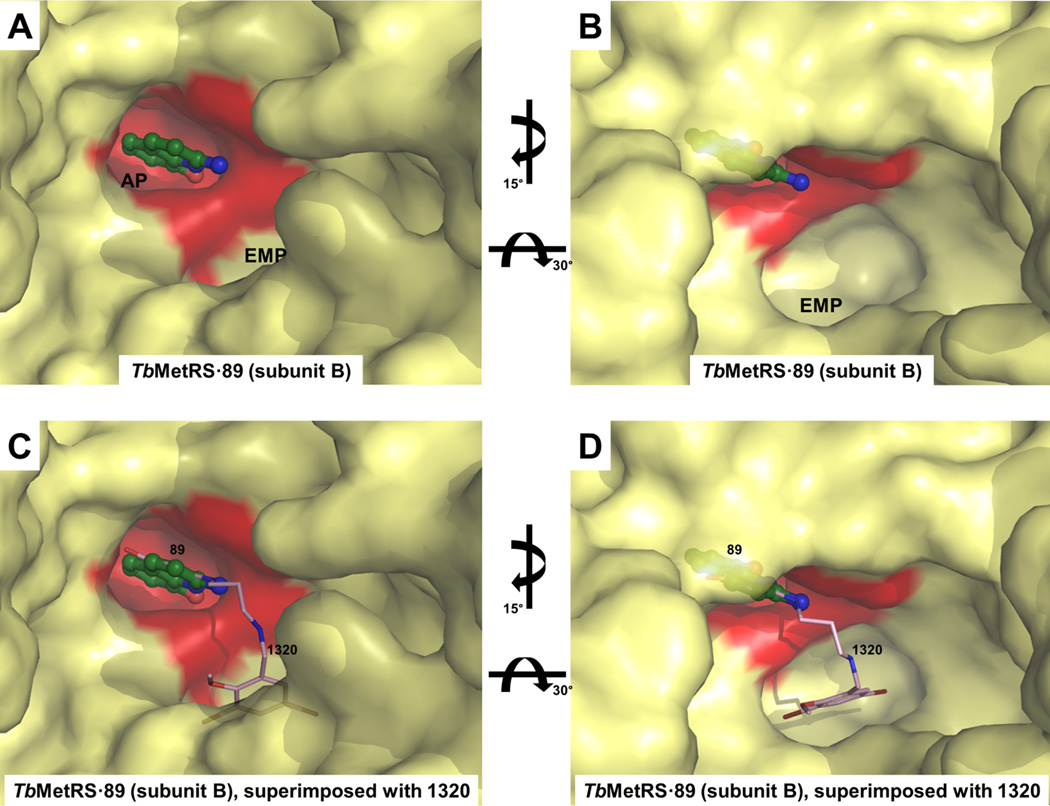
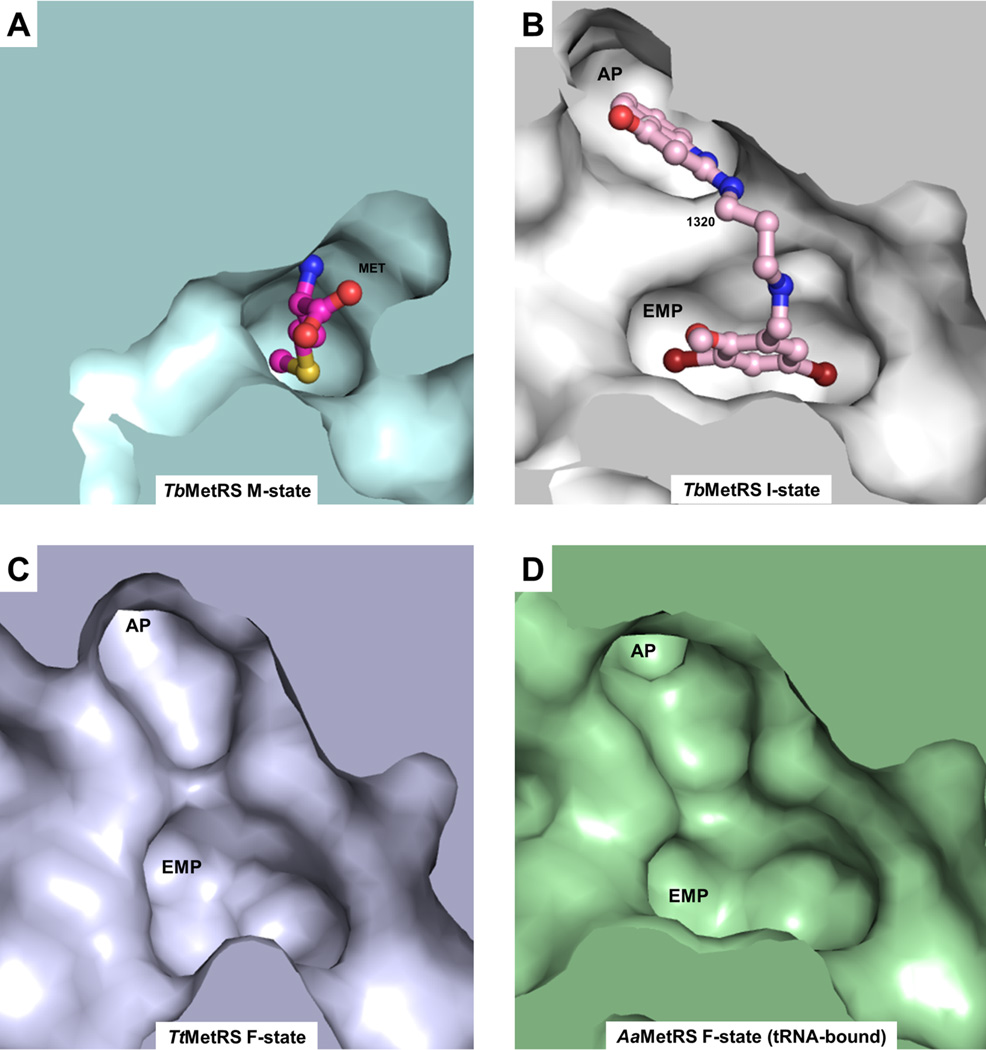
To guide development of new drugs targeting methionyl-tRNA synthetase (MetRS) for treatment of human African trypanosomiasis, crystal structure determinations of Trypanosoma brucei MetRS in complex with its substrate methionine and its intermediate product methionyl-adenylate were followed by those of the enzyme in complex with high-affinity aminoquinolone inhibitors via soaking experiments. Drastic changes in conformation of one of the two enzymes in the asymmetric unit allowed these inhibitors to occupy an enlarged methionine pocket and a new so-called auxiliary pocket. Interestingly, a small low-affinity compound caused the same conformational changes, removed the methionine without occupying the methionine pocket, and occupied the previously not existing auxiliary pocket. Analysis of these structures indicates that the binding of the inhibitors is the result of conformational selection, not induced fit.
为了指导针对甲硫氨酰-tRNA 合成酶(MetRS)的新型药物的开发,以治疗人类非洲锥虫病,我们通过浸泡实验,相继测定了与底物蛋氨酸及其中间产物甲硫酰腺苷酸形成复合物的布氏锥虫 MetRS 晶体结构,以及与高亲和力氨基喹啉类抑制剂形成复合物的酶晶体结构。在不对称单元中的两个酶之一的构象发生剧烈变化,使得这些抑制剂能够占据一个扩大的蛋氨酸口袋和一个新的所谓辅助口袋。有趣的是,一个小的低亲和力化合物引起相同的构象变化,将蛋氨酸移出但不占据蛋氨酸口袋,并占据以前不存在的辅助口袋。这些结构的分析表明,抑制剂的结合是构象选择的结果,而不是诱导契合。