Department of Cell Biology and Neuroscience, University of California Riverside, Riverside, California, United States of America.
PLoS One. 2012;7(8):e43477. doi: 10.1371/journal.pone.0043477. Epub 2012 Aug 17.
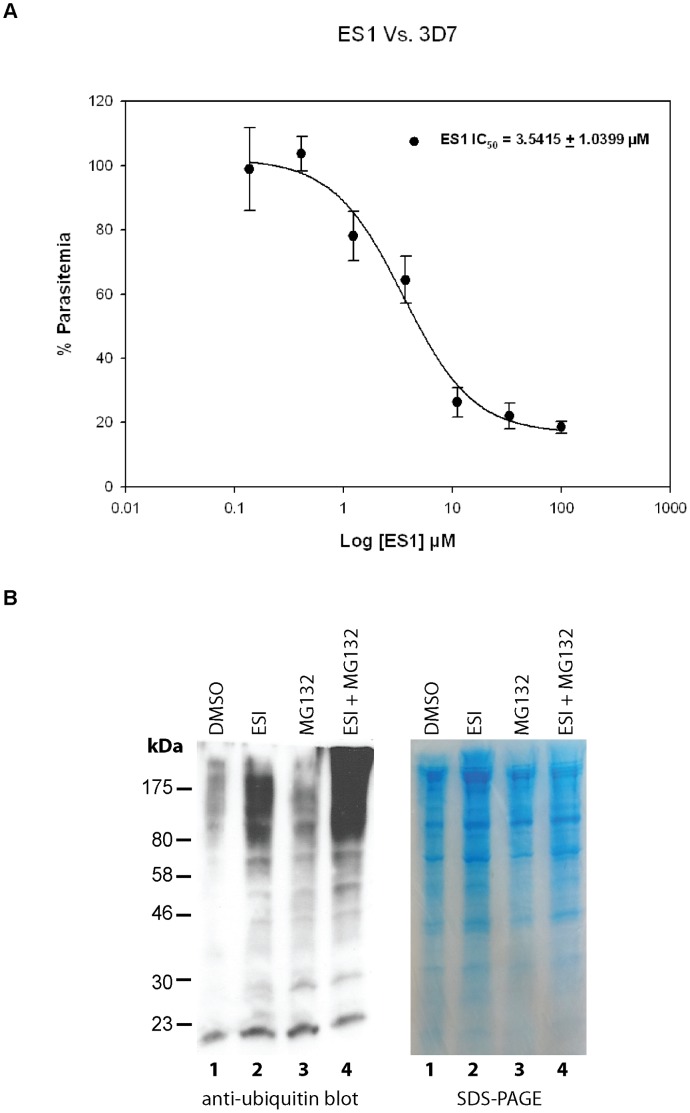
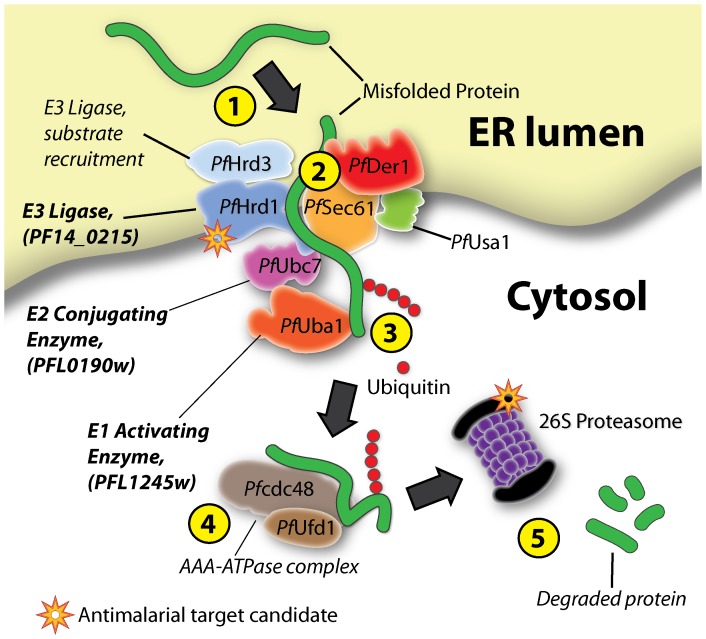
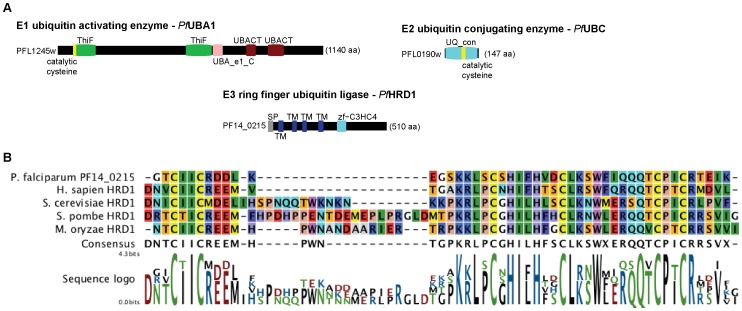
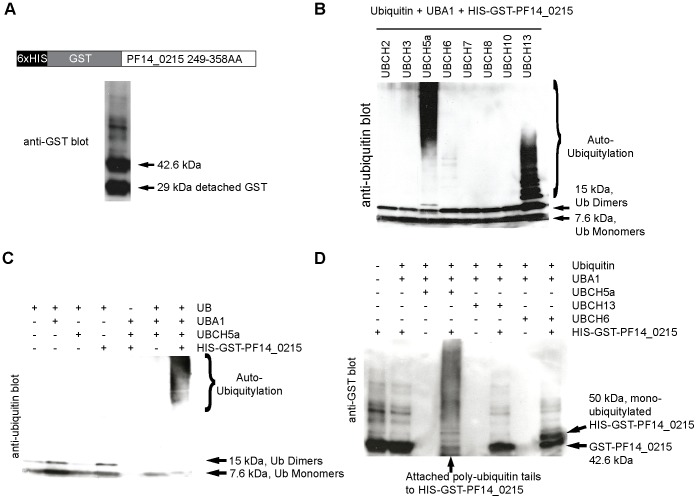
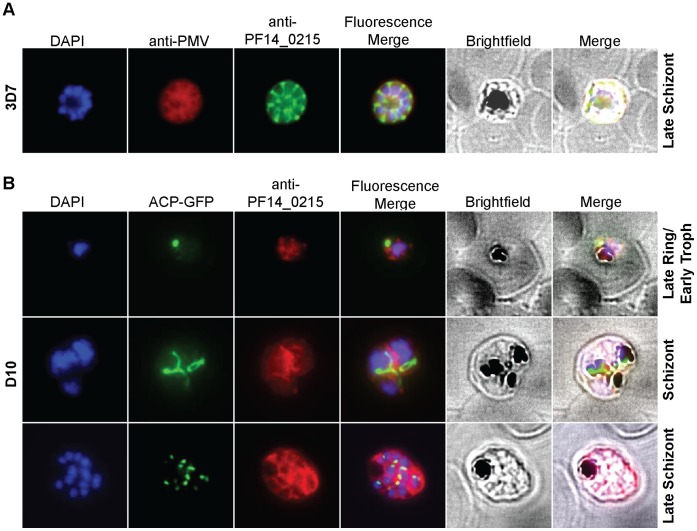
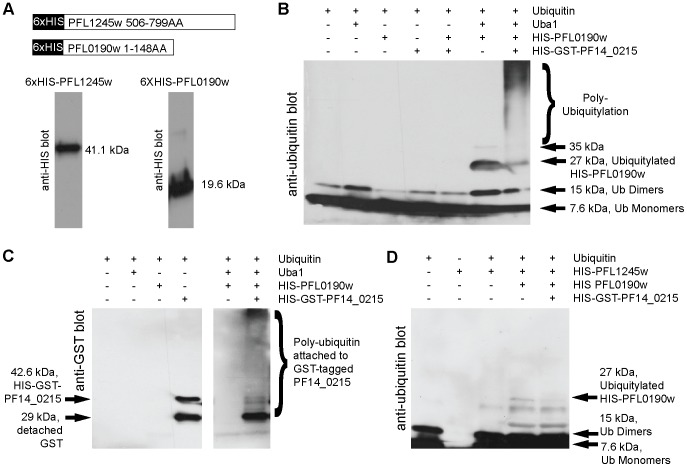
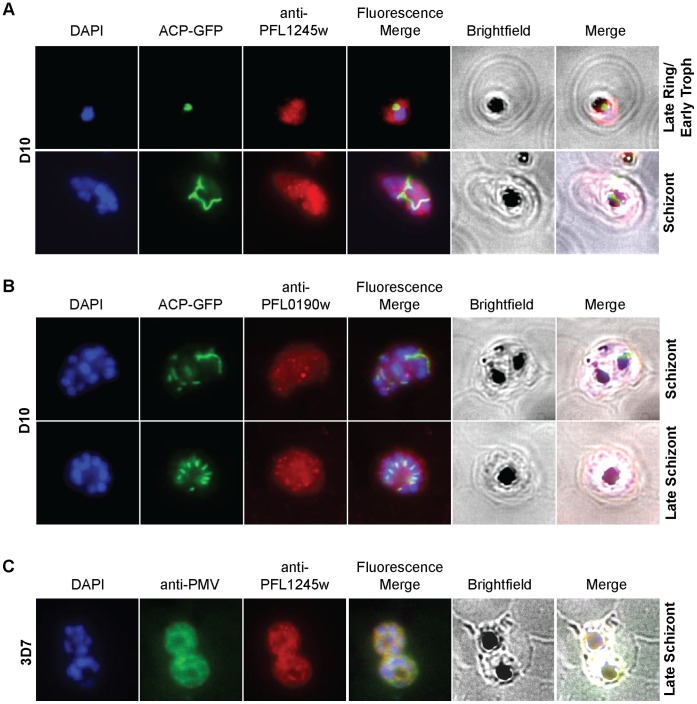
Ubiquitin-dependent protein degradation within malarial parasites is a burgeoning field of interest due to several encouraging reports of proteasome inhibitors that were able to confer antimalarial activity. Despite the growing interest in the Plasmodium proteasome system, relatively little investigation has been done to actually characterize the parasite degradation machinery. In this report, we provide an initial biological investigation of the ubiquitylating components of the endoplasmic reticulum-associated degradation (ERAD) system, which is a major pathway in targeting misfolded proteins from the ER to the cytosol for proteasome degradation. We are able to show that the ERAD system is essential for parasite survival and that the putative Plasmodium HRD1 (E3 ubiquitin ligase), UBC (E2 ubiquitin conjugating enzyme) and UBA1 (E1 ubiquitin activating enzyme) are able to mediate in vitro ubiquitylation. Furthermore, by using immunofluorescence, we report that Plasmodium HRD1 localizes to the ER membranes, while the Plasmodium UBC and UBA1 localize to the cytosol. In addition, our gene disruption experiments indicate that the Plasmodium HRD1 is likely essential. We have conducted an initial characterization of the ubiquitylating components of the Plasmodium ERAD system, a major pathway for protein degradation and parasite maintenance. In conjunction with promising proteasome inhibitor studies, we explore the possibility of targeting the Plasmodium ERAD system for future bottom-up drug development approaches.
疟原虫中泛素依赖性蛋白降解是一个新兴的研究领域,这主要是因为有几项令人鼓舞的报道称蛋白酶体抑制剂能够发挥抗疟活性。尽管人们对疟原虫蛋白酶体系统越来越感兴趣,但实际上对寄生虫降解机制的研究相对较少。在本报告中,我们首次对内质网相关降解(ERAD)系统的泛素化成分进行了生物学研究,该系统是一种将内质网中错误折叠的蛋白质靶向到细胞质中进行蛋白酶体降解的主要途径。我们能够证明 ERAD 系统对寄生虫的生存是必不可少的,并且假定的疟原虫 HRD1(E3 泛素连接酶)、UBC(E2 泛素缀合酶)和 UBA1(E1 泛素激活酶)能够介导体外泛素化。此外,通过免疫荧光,我们报告 HRD1 定位于内质网膜,而 UBC 和 UBA1 定位于细胞质。此外,我们的基因敲除实验表明 HRD1 可能是必需的。我们已经对疟原虫 ERAD 系统的泛素化成分进行了初步表征,这是一种主要的蛋白质降解和寄生虫维持途径。结合有前途的蛋白酶体抑制剂研究,我们探讨了靶向疟原虫 ERAD 系统进行未来自下而上药物开发方法的可能性。