
巴尔索卡斯-帕帕斯综合征:首例报道的埃及家族中的异常发现。
Bartsocas-papas syndrome: unusual findings in the first reported egyptian family.
作者信息
Abdalla E M, Morsy H
机构信息
Department of Human Genetics, Medical Research Institute, Alexandria University, 165 El-Horreya Avenue, El-Hadra, Alexandria 21561, Egypt.
出版信息
Case Rep Genet. 2011;2011:428714. doi: 10.1155/2011/428714. Epub 2011 Nov 2.
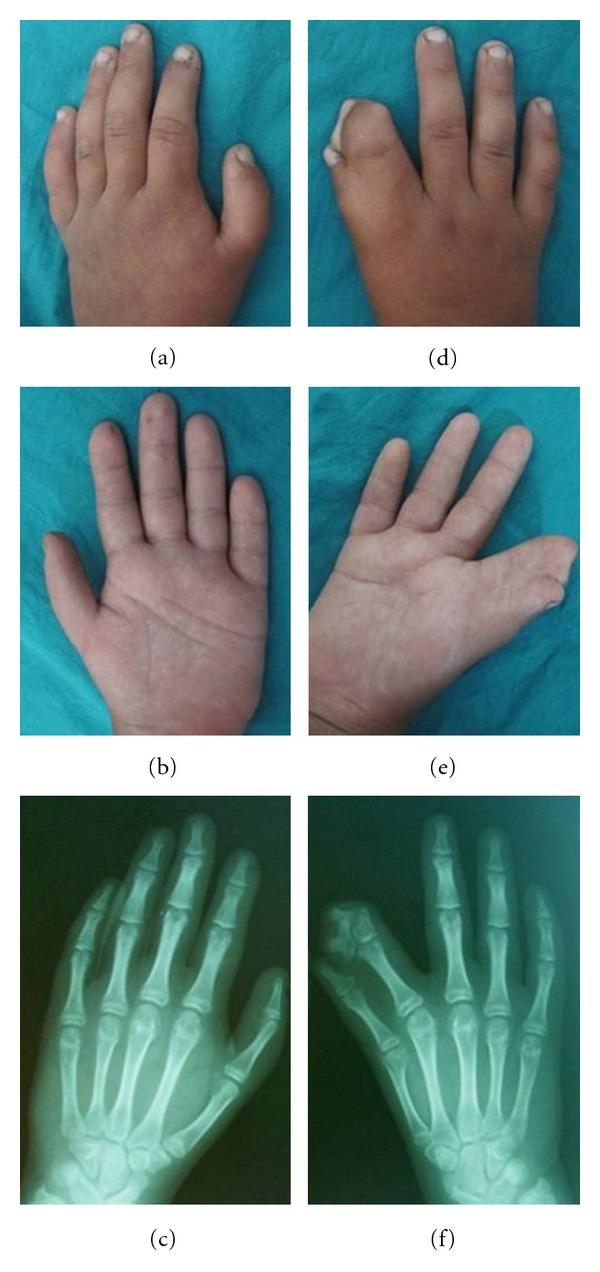
Bartsocas-Papas syndrome (BPS) is an autosomal recessive syndrome with severe craniofacial, limb, and genital abnormalities. As of 2011, 24 published cases and families were registered in the Orphanet Report Series. Compared to other disorders characterized by pterygia, the condition is usually more severe and often lethal: most affected patients die in utero or shortly after birth. We report the first Egyptian family with Bartsocas-Papas syndrome comprising three cases; our proband who was a female infant with severe craniofacial and limb anomalies typical of Bartsocas-Papas syndrome, a similarly affected female fetus which died in utero at the 7th gestational month, and a 16-year-old mentally retarded uncle who presented with some of the typical features of Bartsocas-Papas syndrome, including syndactyly, thumb hypoplasia, and microphthalmia. This male patient actually did not present with pterygia, however, we find his clinical description noteworthy.
巴尔索卡斯-帕帕斯综合征(BPS)是一种常染色体隐性综合征,伴有严重的颅面、肢体和生殖器异常。截至2011年,《罕见病报告系列》中登记了24例已发表的病例和家庭。与其他以翼状胬肉为特征的疾病相比,这种情况通常更严重,且往往致命:大多数受影响的患者在子宫内或出生后不久死亡。我们报告了第一例患有巴尔索卡斯-帕帕斯综合征的埃及家庭,包括三例;我们的先证者是一名患有巴尔索卡斯-帕帕斯综合征典型严重颅面和肢体异常的女婴,一名在妊娠第7个月死于子宫内的同样受影响的女胎,以及一名16岁智力发育迟缓的叔叔,他表现出一些巴尔索卡斯-帕帕斯综合征的典型特征,包括并指、拇指发育不全和小眼症。然而,这名男性患者实际上并没有出现翼状胬肉,不过,我们认为他的临床描述值得关注。


 Zotero 插件