
腺相关病毒 2/白细胞介素 12 基因转导树突状细胞(DC)增强 CTL 刺激高于其他白细胞介素 12 的应用:证据表明白细胞介素 12 内在活性在 DC 中。
AAV2/IL-12 gene delivery into dendritic cells (DC) enhances CTL stimulation above other IL-12 applications: Evidence for IL-12 intracrine activity in DC.
机构信息
Department of Oncology; Nanfang Hospital; Southern Medical University; Guangzhou, China. ; Department of Obstetrics and Gynecology; University of Arkansas for Medical Sciences; Little Rock, AR USA.
出版信息
Oncoimmunology. 2012 Sep 1;1(6):847-855. doi: 10.4161/onci.20504.
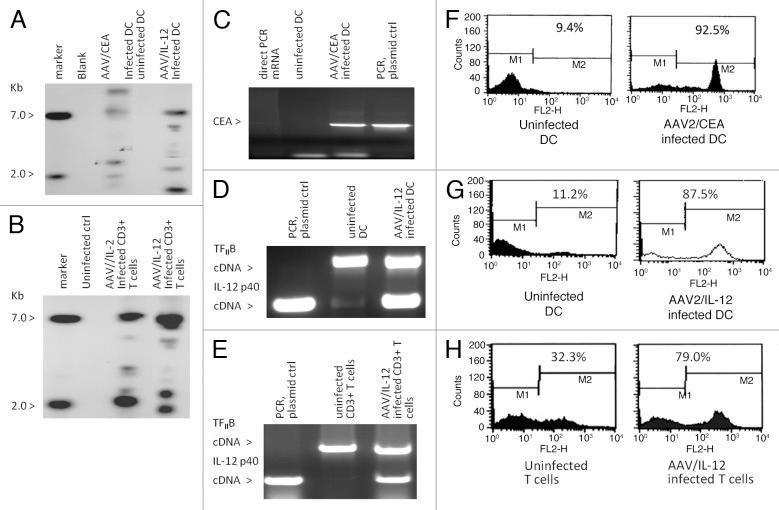
Adoptive transfer of antigen-specific cytotoxic T lymphocytes (CTL) holds significant promise in treating cancer and Th1 response cytokines are critical for their stimulation. Recently we reported that interleukin 7-(IL-7) and interferongamma-(IFNγ) autocrine/T cell gene delivery resulted in superior ex vivo CTL stimulation over paracrine/DC delivery. IL-12 is yet another important Th1 cytokine which affects both DC and T cells. Here, using adeno-associated virus Type 2 (AAV2) gene delivery, IL-12-paracrine/DC gene delivery gave significantly superior stimulation of carcinoembryonic antigen (CEA)-specific CTL killing over that induced by autocrine gene delivery (or exogenous IL-12 addition). This is surprising as both AAV2/IL-12-treated T cells and DC secreted approximately the same level of IL-12. Paracrine IL-12 gene delivery also resulted in highest IL-12/IL-10 secretion ratio by DC and highest CD40, CD80, CD83 and CD86 expression. Moreover, AAV2/IL-12-DC stimulated the highest T-cell IFNγ production, highest T cell proliferation, highest CD69+/CD8+ levels, and lowest level of CD25+/CD4+ Treg. These data strongly suggest that the primary activity of IL-12 during CTL generation is upon the DC. These data are also consistent with there being novel activity for IL-12 within the DC itself, not involving its surface receptor; an "intracrine" activity. Given the plethora of IL-12 studies, these data also suggest that this gene delivery comparison approach could be useful for uncovering new cytokine activities and mechanism(s) of action gone unrecognized by conventional immunologic assays. Finally, these data further suggest AAV2/IL-12 intracrine gene delivery into DC may have utility in immunotherapy protocols involving antigen-specific CTL.
抗原特异性细胞毒性 T 淋巴细胞(CTL)的过继转移在癌症治疗中具有重要意义,Th1 反应细胞因子对其刺激至关重要。最近我们报道,白细胞介素 7(IL-7)和干扰素γ(IFNγ)自分泌/T 细胞基因转导导致体外 CTL 刺激优于旁分泌/DC 转导。IL-12 是另一种重要的 Th1 细胞因子,影响 DC 和 T 细胞。在这里,使用腺相关病毒 2 型(AAV2)基因转导,IL-12 旁分泌/DC 基因转导显著优于自分泌基因转导(或外源性 IL-12 添加)诱导的癌胚抗原(CEA)特异性 CTL 杀伤。这令人惊讶,因为 AAV2/IL-12 处理的 T 细胞和 DC 分泌的 IL-12 水平大致相同。旁分泌 IL-12 基因转导也导致 DC 分泌的 IL-12/IL-10 分泌比例最高,CD40、CD80、CD83 和 CD86 表达最高。此外,AAV2/IL-12-DC 刺激产生最高水平的 T 细胞 IFNγ、最高的 T 细胞增殖、最高的 CD69+/CD8+水平和最低水平的 CD25+/CD4+Treg。这些数据强烈表明,IL-12 在 CTL 生成过程中的主要活性是在 DC 上。这些数据也与 IL-12 在 DC 本身中存在新的活性一致,不涉及其表面受体;一种“细胞内”活性。鉴于大量的 IL-12 研究,这些数据还表明,这种基因转导比较方法可能有助于揭示传统免疫测定方法未识别的新细胞因子活性和作用机制。最后,这些数据进一步表明,AAV2/IL-12 细胞内基因转导到 DC 可能在涉及抗原特异性 CTL 的免疫治疗方案中具有实用性。




 Zotero 插件