
15-脂氧合酶-1在氧诱导的缺血性视网膜病变中的过表达通过下调血管内皮生长因子-A的表达来抑制视网膜新生血管形成。
Overexpression of 15-lipoxygenase-1 in oxygen-induced ischemic retinopathy inhibits retinal neovascularization via downregulation of vascular endothelial growth factor-A expression.
作者信息
Li Zhi, He Tao, Du Ke, Xing Yi-Qiao, Yan Ying, Chen Zhen, Zhang Hao, Shen Yin
机构信息
Eye Center, Renmin Hospital of Wuhan University, Wuhan, China.
出版信息
Mol Vis. 2012;18:2847-59. Epub 2012 Nov 30.
PURPOSE
15-Lipoxygenase-1 (15-LOX-1) plays an important role in regulating angiogenesis, but the mechanism to date is controversial, even contradictory. The goal of our study was to investigate whether 15-LOX-1 plays a role in inhibiting retinal neovascularization (RNV) in a mouse model of oxygen-induced retinopathy (OIR) and the underlying mechanism.
METHODS
Experiments were performed using retinas from a mouse model of OIR that was treated with and without intravitreous injection of adenoviral-15-lipoxygenase-1 (Ad-15-LOX-1) or adenoviral-green fluorescence protein (Ad-GFP) at postnatal day 12 (P12). At P17, the efficacy of the gene transfer was assessed with immunofluorescence staining. RNV was evaluated with fluorescein angiography on flatmounted retinas and quantified by counting the preretinal neovascular cells. Expression of 15-LOX-1 and vascular endothelial growth factor-A (VEGF-A) were determined with real-time PCR and western blot.
RESULTS
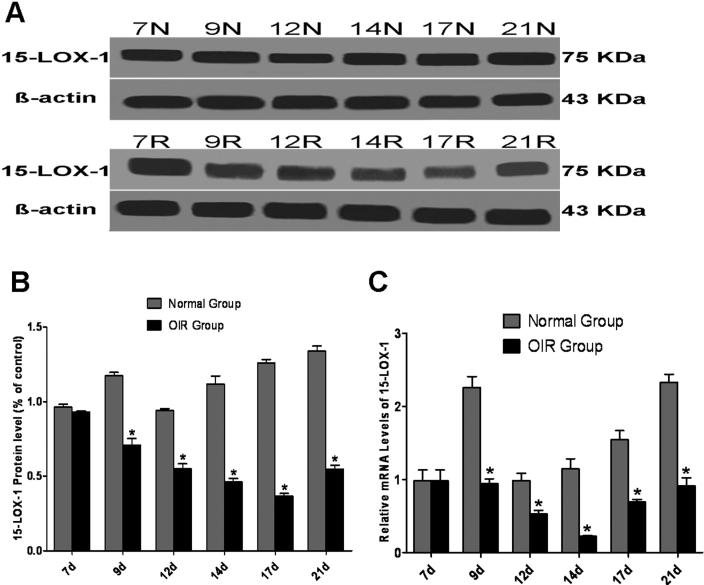
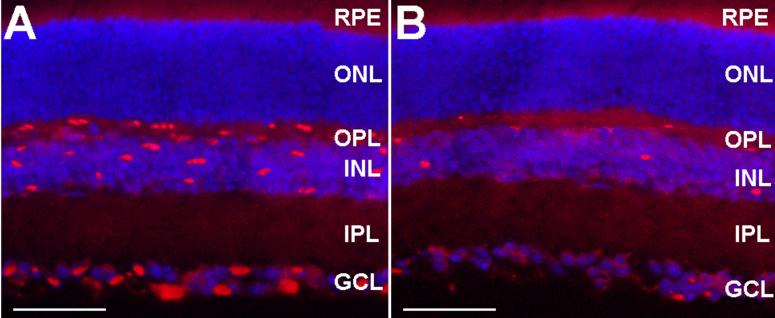
RNV during OIR was associated with decreased 15-LOX-1 expression, and retinal 15-LOX-1 levels were negatively correlated with the progression of RNV. In the intravitreous injected Ad-15-LOX-1 mice with OIR, retinal 15-LOX-1 expression was significantly increased at the protein and mRNA levels at P17. 15-LOX-1 expression was clearly demonstrated, primarily in the outer plexiform layer, inner nuclear layer, and ganglion cell layer retinas, five days after gene delivery. Fluorescein retinal angiography and quantification of the preretinal neovascular cells demonstrated that RNV was significantly inhibited. Meanwhile, the expression levels of VEGF-A were significantly decreased at the transcriptional and translational levels.
CONCLUSIONS
Our results suggest that overexpression of 15-LOX-1 inhibits RNV in a mouse model of OIR via downregulation of VEGF-A expression, and 15-LOX-1 may be a novel therapeutic target for ocular neovascularization diseases.
目的
15-脂氧合酶-1(15-LOX-1)在调节血管生成中起重要作用,但迄今为止其机制存在争议,甚至相互矛盾。我们研究的目的是探讨15-LOX-1在氧诱导性视网膜病变(OIR)小鼠模型中是否对抑制视网膜新生血管形成(RNV)起作用及其潜在机制。
方法
实验使用OIR小鼠模型的视网膜,在出生后第12天(P12)对其进行玻璃体内注射腺病毒-15-脂氧合酶-1(Ad-15-LOX-1)或腺病毒绿色荧光蛋白(Ad-GFP)处理与未处理的情况。在P17时,通过免疫荧光染色评估基因转移的效果。通过对平铺视网膜进行荧光素血管造影评估RNV,并通过计数视网膜前新生血管细胞进行量化。用实时PCR和蛋白质印迹法测定15-LOX-1和血管内皮生长因子-A(VEGF-A)的表达。
结果
OIR期间的RNV与15-LOX-1表达降低有关,视网膜15-LOX-1水平与RNV的进展呈负相关。在玻璃体内注射Ad-15-LOX-1的OIR小鼠中,P17时视网膜15-LOX-1在蛋白质和mRNA水平上显著增加。基因递送五天后,15-LOX-1表达明显可见,主要在视网膜的外丛状层、内核层和神经节细胞层。荧光素视网膜血管造影和视网膜前新生血管细胞的量化显示RNV受到显著抑制。同时,VEGF-A的表达水平在转录和翻译水平上均显著降低。
结论
我们的结果表明,15-LOX-1的过表达通过下调VEGF-A表达在OIR小鼠模型中抑制RNV,并且15-LOX-1可能是眼部新生血管疾病的一个新的治疗靶点。



 Zotero 插件