
巨大脱硫弧菌二聚体黄素氧还蛋白的晶体结构表明了电子传递伙伴的潜在结合区域。
Crystal structure of dimeric flavodoxin from Desulfovibrio gigas suggests a potential binding region for the electron-transferring partner.
作者信息
Hsieh Yin-Cheng, Chia Tze Shyang, Fun Hoong-Kun, Chen Chun-Jung
机构信息
Life Science Group, Scientific Research Division, National Synchrotron Radiation Research Center, Hsinchu 30076, Taiwan.
出版信息
Int J Mol Sci. 2013 Jan 15;14(1):1667-83. doi: 10.3390/ijms14011667.
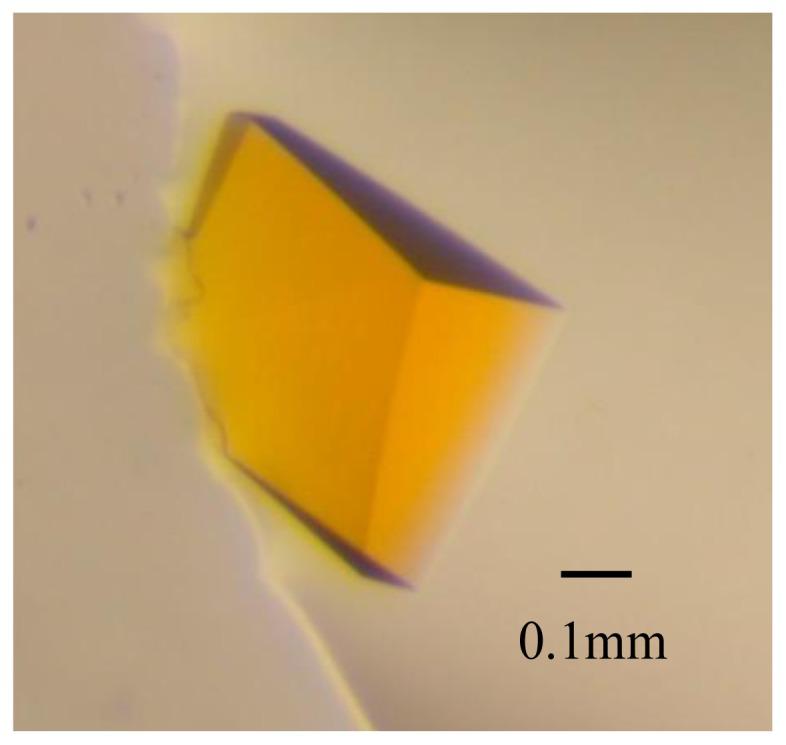
Flavodoxins, which exist widely in microorganisms, have been found in various pathways with multiple physiological functions. The flavodoxin (Fld) containing the cofactor flavin mononucleotide (FMN) from sulfur-reducing bacteria Desulfovibrio gigas (D. gigas) is a short-chain enzyme that comprises 146 residues with a molecular mass of 15 kDa and plays important roles in the electron-transfer chain. To investigate its structure, we purified this Fld directly from anaerobically grown D. gigas cells. The crystal structure of Fld, determined at resolution 1.3 Å, is a dimer with two FMN packing in an orientation head to head at a distance of 17 Å, which generates a long and connected negatively charged region. Two loops, Thr59-Asp63 and Asp95-Tyr100, are located in the negatively charged region and between two FMN, and are structurally dynamic. An analysis of each monomer shows that the structure of Fld is in a semiquinone state; the positions of FMN and the surrounding residues in the active site deviate. The crystal structure of Fld from D. gigas agrees with a dimeric form in the solution state. The dimerization area, dynamic characteristics and structure variations between monomers enable us to identify a possible binding area for its functional partners.
黄素氧还蛋白广泛存在于微生物中,已发现其存在于多种具有多种生理功能的途径中。来自脱硫弧菌(Desulfovibrio gigas,D. gigas)的含有辅因子黄素单核苷酸(FMN)的黄素氧还蛋白(Fld)是一种短链酶,由146个残基组成,分子量为15 kDa,在电子传递链中起重要作用。为了研究其结构,我们直接从厌氧培养的D. gigas细胞中纯化了这种Fld。Fld的晶体结构在1.3 Å分辨率下测定,是一种二聚体,两个FMN以头对头的方向堆积,距离为17 Å,形成一个长且相连的带负电荷区域。两个环,即Thr59 - Asp63和Asp95 - Tyr100,位于带负电荷区域且在两个FMN之间,结构上具有动态性。对每个单体的分析表明,Fld的结构处于半醌状态;活性位点中FMN及其周围残基的位置发生了偏移。来自D. gigas的Fld的晶体结构与溶液状态下的二聚体形式一致。二聚化区域、动态特征以及单体之间的结构变化使我们能够确定其功能伙伴可能的结合区域。



 Zotero 插件