Department of Otolaryngology, Medical University of South Carolina, Charleston, SC 29425, United States.
Int Immunopharmacol. 2013 Jun;16(2):224-31. doi: 10.1016/j.intimp.2013.04.002. Epub 2013 Apr 13.
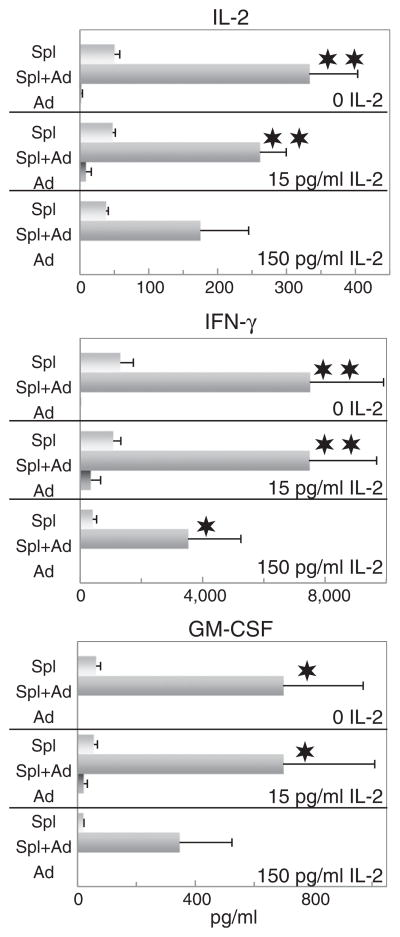
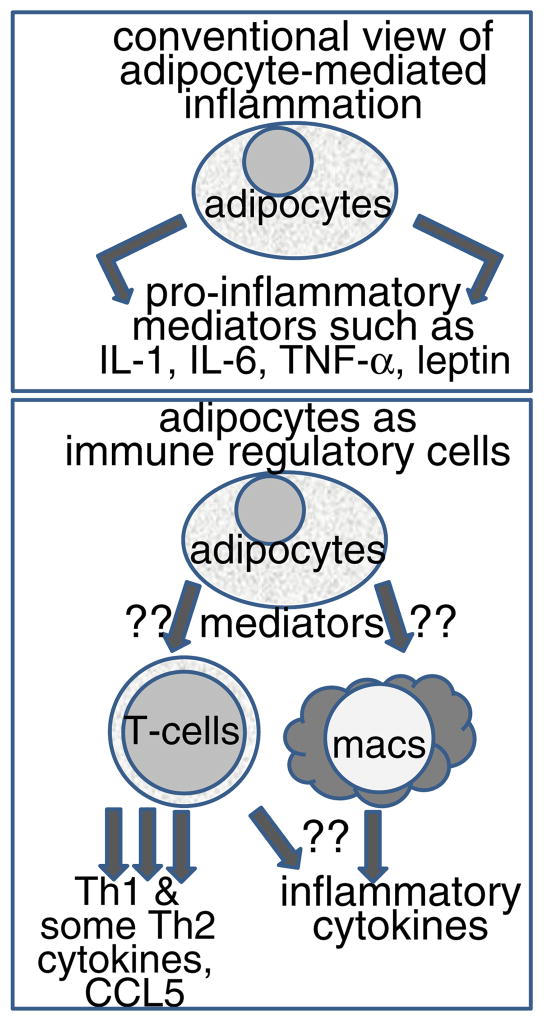
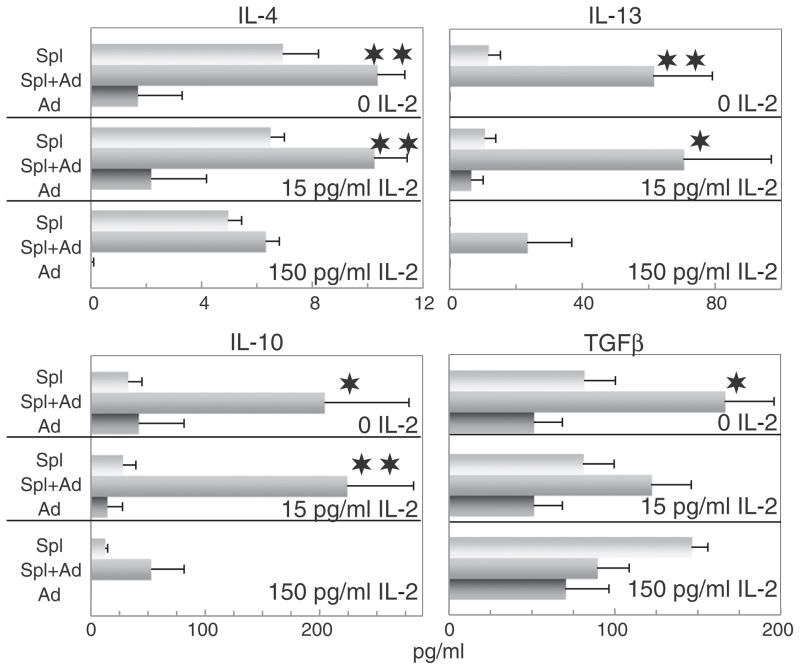
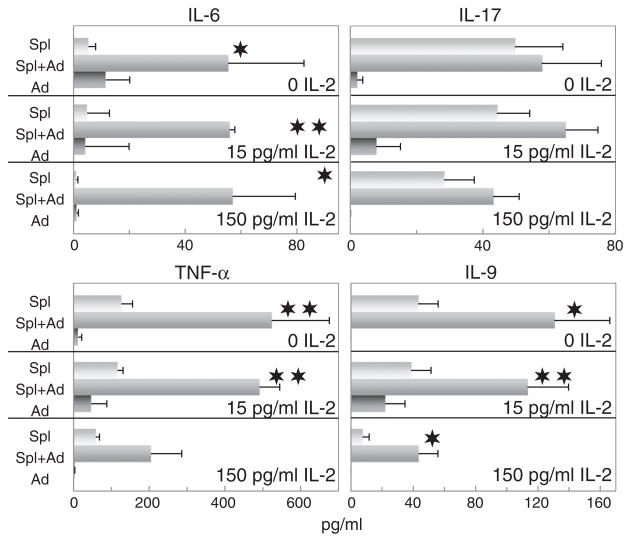
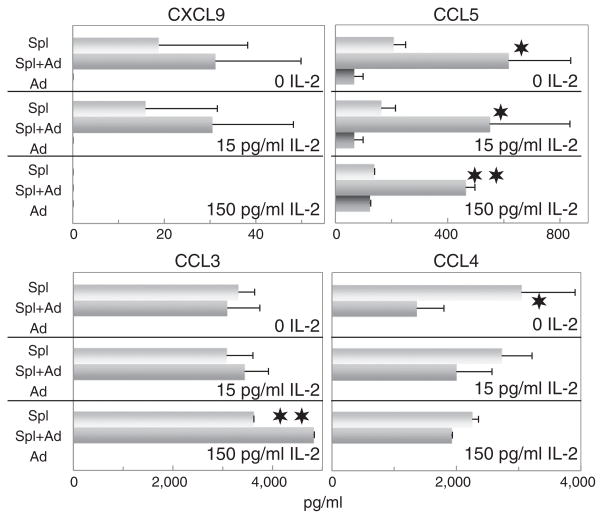
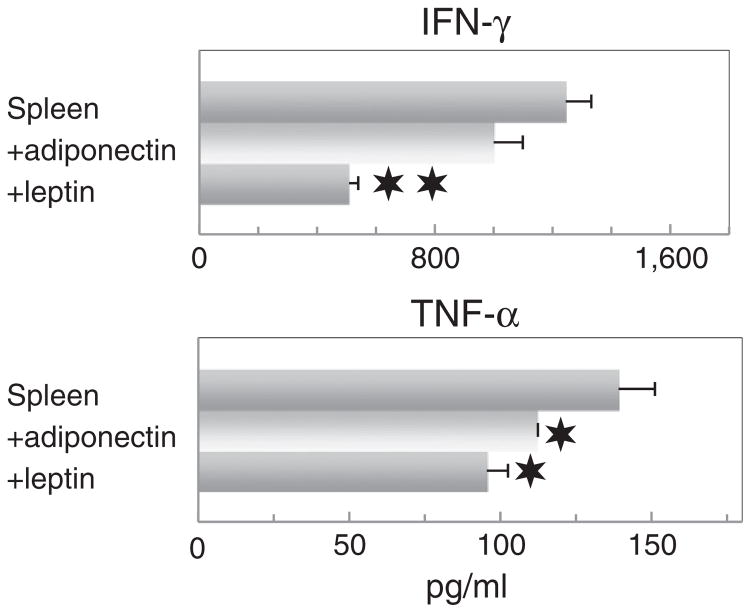
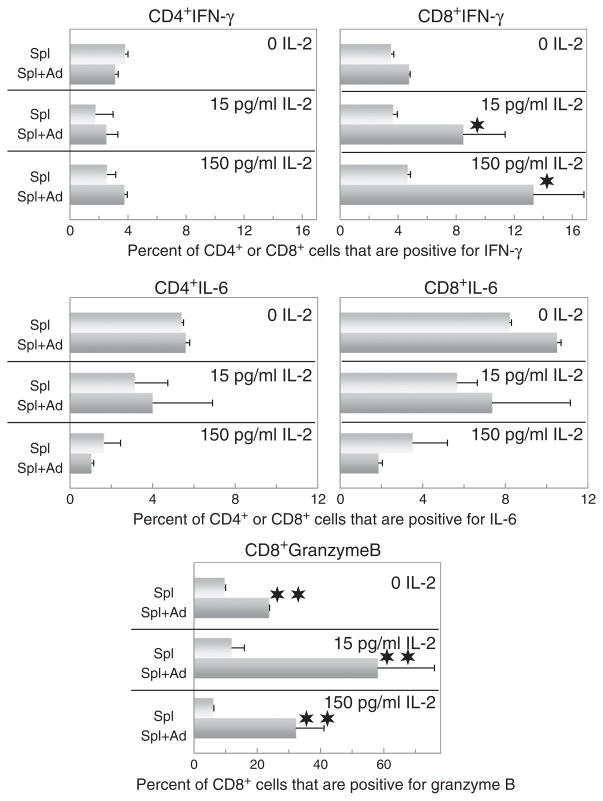
Obesity is a chronic inflammatory state and adipocytes are capable of contributing to this inflammation by their production of inflammatory mediators. The present study used fibroblast-derived adipocytes and normal spleen cells as a model to determine if adipocytes can also serve as immune regulatory cells by modulating the functions of conventional immune cells. Media conditioned by the adipocytes stimulated release of the Th1-type cytokines IL-2, IFN-γ and GM-CSF from cultures of normal spleen cells. The adipocytes also stimulated spleen cell release of inhibitory cytokines, although to varying degrees. This included IL-10, IL-13 and, to a lesser extent, IL-4. Spleen cell production of the inflammatory cytokines IL-6, TNF-α and IL-9 was stimulated by adipocytes, although production of the Th17-derived cytokine, IL-17, was not stimulated. The adipocyte-conditioned medium did not stimulate production of predominantly monocytes-derived chemokines CXCL9, CCL2, CCL3, CCL4, but stimulated production of the predominantly T-cell-derived chemokine CCL5. In all cases where cytokine/chemokine production from spleen cells was stimulated by adipocytes, it was to a far greater level than was produced by the adipocytes themselves. Studies initiated to determine the identity of the adipocyte-derived mediators showed that the spleen cell modulation could not be attributed to solely adiponectin or leptin. Studies to determine the source of some of the cytokines whose production was stimulated by adipocytes showed that expression of the inflammatory cytokine IL-6 was not increased in either CD4(+) or CD8(+) T-cell. When the splenic T-cells were examined for IFN-γ, the adipocyte stimulation of IFN-γ was within CD8(+) T-cells, not CD4(+) T-cells. These studies show that adipocytes may be able to serve as immune regulatory cells to stimulate conventional immune cells to release a spectrum of immune mediators.
肥胖是一种慢性炎症状态,脂肪细胞能够通过产生炎症介质来促进这种炎症。本研究使用成纤维细胞来源的脂肪细胞和正常脾细胞作为模型,以确定脂肪细胞是否也可以通过调节常规免疫细胞的功能而作为免疫调节细胞。脂肪细胞条件培养基刺激正常脾细胞培养物中 Th1 型细胞因子 IL-2、IFN-γ 和 GM-CSF 的释放。脂肪细胞还刺激脾细胞释放抑制性细胞因子,尽管程度不同。这包括 IL-10、IL-13 和在较小程度上的 IL-4。脂肪细胞刺激脾细胞产生促炎细胞因子 IL-6、TNF-α 和 IL-9,但不刺激 Th17 衍生细胞因子 IL-17 的产生。脂肪细胞条件培养基不会刺激主要由单核细胞衍生的趋化因子 CXCL9、CCL2、CCL3、CCL4 的产生,但会刺激主要由 T 细胞衍生的趋化因子 CCL5 的产生。在脂肪细胞刺激脾细胞产生细胞因子/趋化因子的所有情况下,刺激产生的水平都远远高于脂肪细胞自身产生的水平。为确定脂肪细胞衍生的介质的身份而进行的研究表明,脾细胞的调节不能仅仅归因于脂联素或瘦素。为确定一些细胞因子的来源进行了研究,这些细胞因子的产生受到脂肪细胞的刺激,结果显示炎症细胞因子 IL-6 的表达在 CD4(+)或 CD8(+)T 细胞中均未增加。当检查脾 T 细胞中的 IFN-γ 时,脂肪细胞刺激 IFN-γ 是在 CD8(+)T 细胞中,而不是在 CD4(+)T 细胞中。这些研究表明,脂肪细胞可能能够作为免疫调节细胞,刺激常规免疫细胞释放一系列免疫介质。