Institute of Biology Valrose, CNRS UMR 7707, INSERM UMR 1091, Université Nice-Sophia Antipolis Nice, France ; Institut de Pharmacologie Moléculaire et Cellulaire, CNRS, and Université de Nice Sophia-Antipolis Sophia-Antipolis, Valbonne, France ; Laboratories of Excellence, Ion Channel Science and Therapeutics Nice, France.
Front Mol Neurosci. 2013 Apr 11;6:6. doi: 10.3389/fnmol.2013.00006. eCollection 2013.
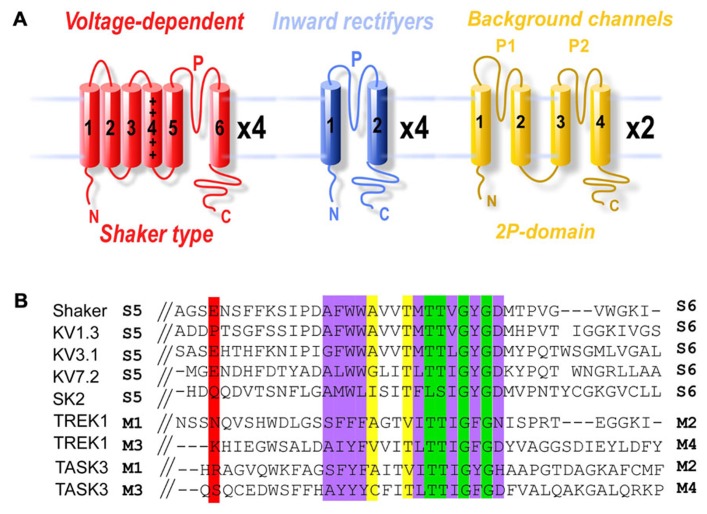
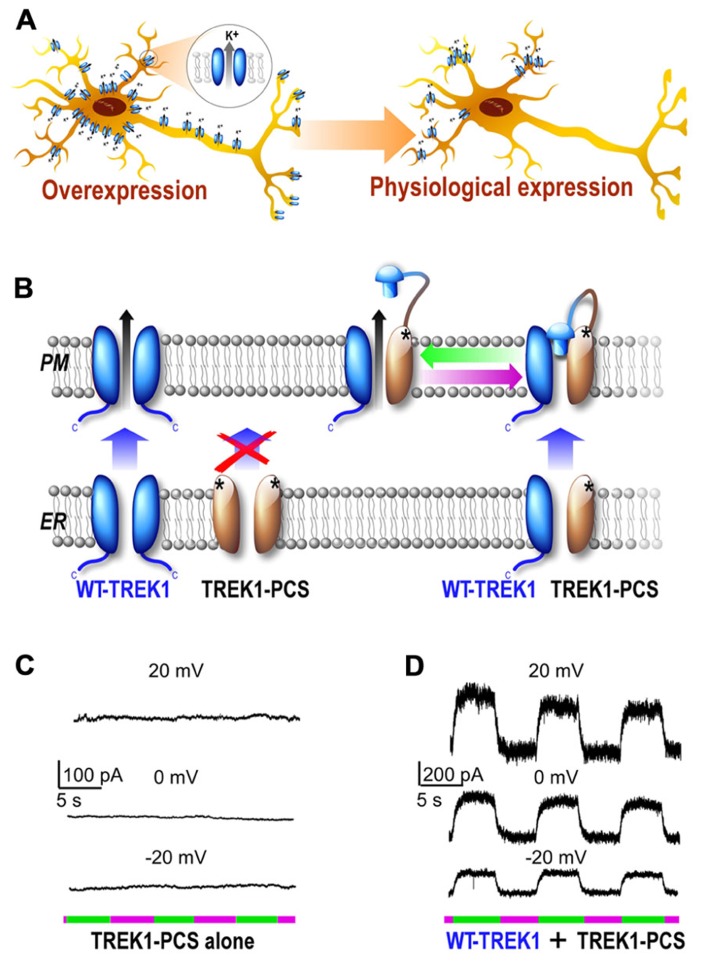
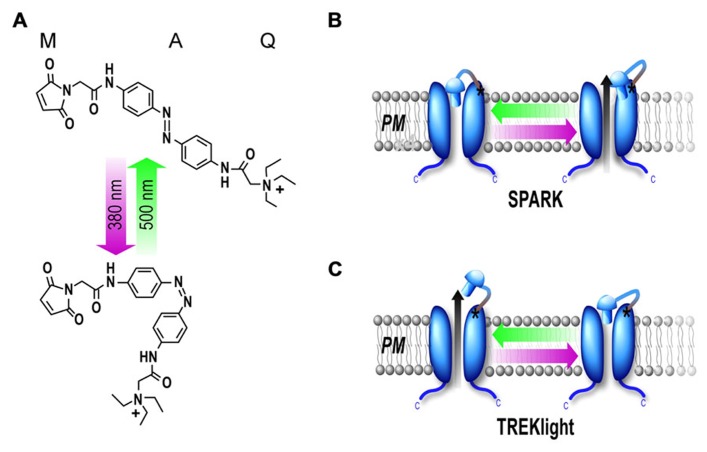
Optogenetic tools were originally designed to target specific neurons for remote control of their activity by light and have largely been built around opsin-based channels and pumps. These naturally photosensitive opsins are microbial in origin and are unable to mimic the properties of native neuronal receptors and channels. Over the last 8 years, photoswitchable tethered ligands (PTLs) have enabled fast and reversible control of mammalian ion channels, allowing optical control of neuronal activity. One such PTL, maleimide-azobenzene-quaternary ammonium (MAQ), contains a maleimide (M) to tether the molecule to a genetically engineered cysteine, a photoisomerizable azobenzene (A) linker and a pore-blocking quaternary ammonium group (Q). MAQ was originally used to photocontrol SPARK, an engineered light-gated potassium channel derived from Shaker. Potassium channel photoblock by MAQ has recently been extended to a diverse set of mammalian potassium channels including channels in the voltage-gated and K2P families. Photoswitchable potassium channels, which maintain native properties, pave the way for the optical control of specific aspects of neuronal function and for high precision probing of a specific channel's physiological functions. To extend optical control to natively expressed channels, without overexpression, one possibility is to develop a knock-in mouse in which the wild-type channel gene is replaced by its light-gated version. Alternatively, the recently developed photoswitchable conditional subunit technique provides photocontrol of the channel of interest by molecular replacement of wild-type complexes. Finally, photochromic ligands also allow photocontrol of potassium channels without genetic manipulation using soluble compounds. In this review we discuss different techniques for optical control of native potassium channels and their associated advantages and disadvantages.
光遗传学工具最初是为了通过光远程控制特定神经元的活动而设计的,主要围绕基于视蛋白的通道和泵构建。这些天然光敏视蛋白源自微生物,无法模拟内源性神经元受体和通道的特性。在过去的 8 年中,光可切换的 tethered ligands(PTLs)使快速和可逆地控制哺乳动物离子通道成为可能,从而实现对神经元活动的光学控制。其中一种 PTL,马来酰亚胺-偶氮苯-季铵盐(MAQ),包含一个马来酰亚胺(M)将分子连接到基因工程半胱氨酸上,一个光异构化的偶氮苯(A)接头和一个孔阻塞的季铵基团(Q)。MAQ 最初用于光控 SPARK,这是一种源自 Shaker 的工程化光门控钾通道。MAQ 对钾通道的光阻断最近已扩展到多种哺乳动物钾通道,包括电压门控和 K2P 家族的通道。保持天然特性的光可切换钾通道为特定神经元功能方面的光学控制和特定通道生理功能的高精度探测铺平了道路。为了在不进行过表达的情况下将光学控制扩展到天然表达的通道,一种可能性是开发一种 knock-in 小鼠,其中野生型通道基因被其光门控版本取代。或者,最近开发的光可切换条件性亚基技术通过对野生型复合物的分子置换来提供对感兴趣通道的光控。最后,光致变色配体也允许使用可溶性化合物在不进行遗传操作的情况下对钾通道进行光控。在这篇综述中,我们讨论了用于光学控制天然钾通道的不同技术及其相关的优缺点。