Choudhary Samiksha, Burnham Lorrie, Thompson Jeffrey M, Shukla Deepak, Tiwari Vaibhav
Department of Basic Medical Sciences, Western University of Health Sciences, Pomona, CA 91766, USA.
Open Virol J. 2013 Apr 5;7:41-8. doi: 10.2174/1874357901307010041. Print 2013.
Heparan sulfate proteoglycans (HSPGs) modified by zebrafish (ZF) encoded glucosaminyl 3-O sulfotransferase-3 (3-OST-3) generate a receptor for herpes simplex virus type-1 (HSV-1) entry and spread. In order to elucidate the mechanism by which HSV-1 enters into ZF-3-OST-3 cells, we investigated the mode of viral entry.
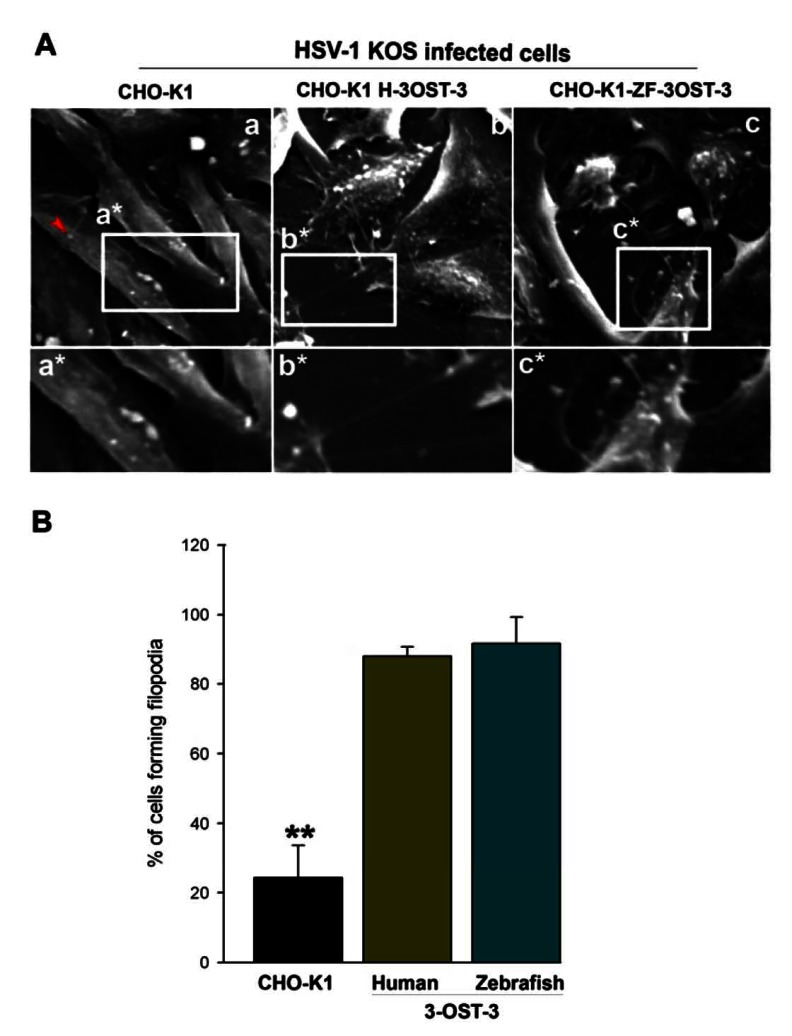
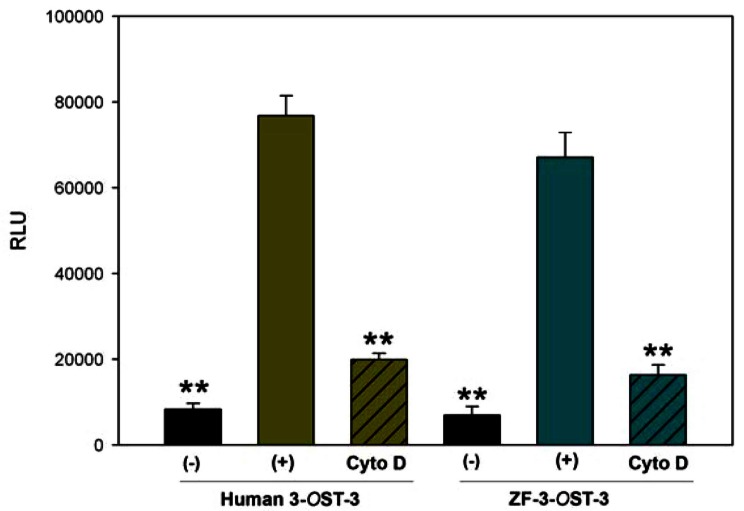
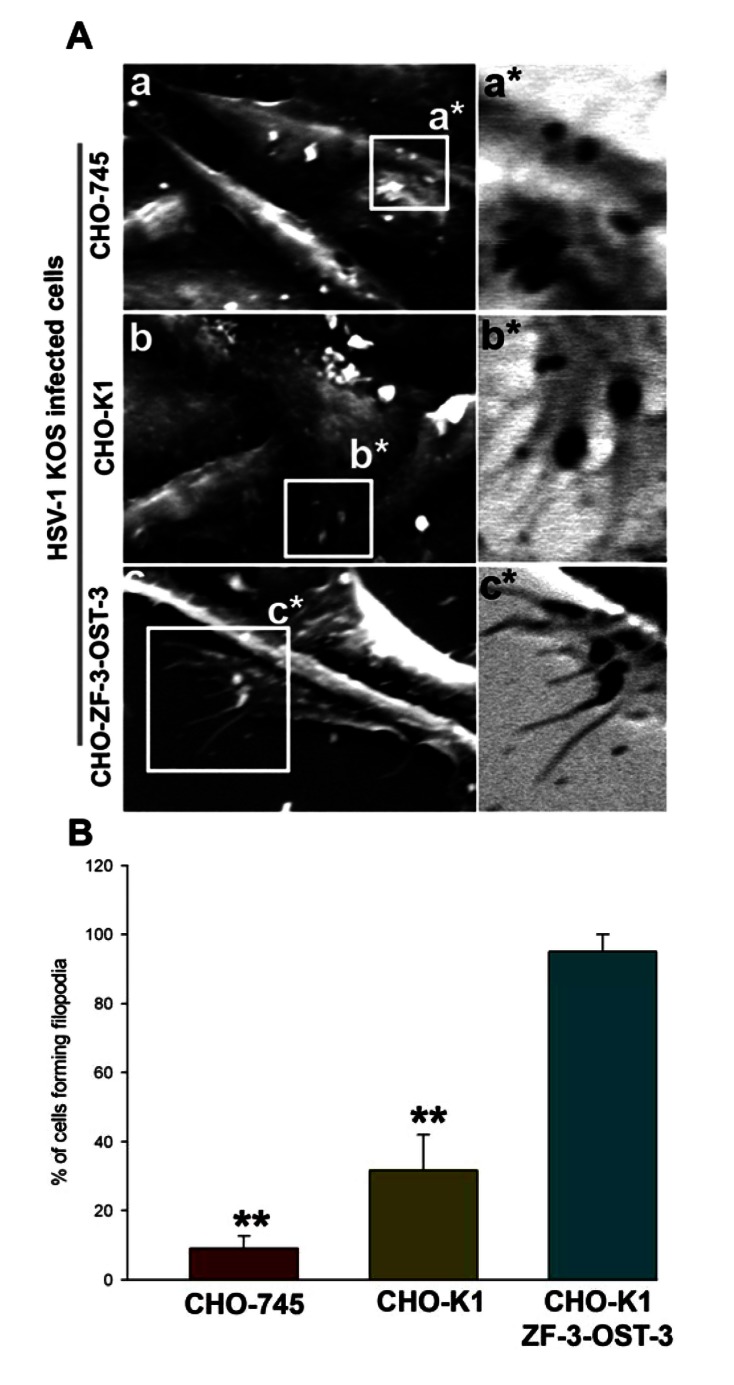
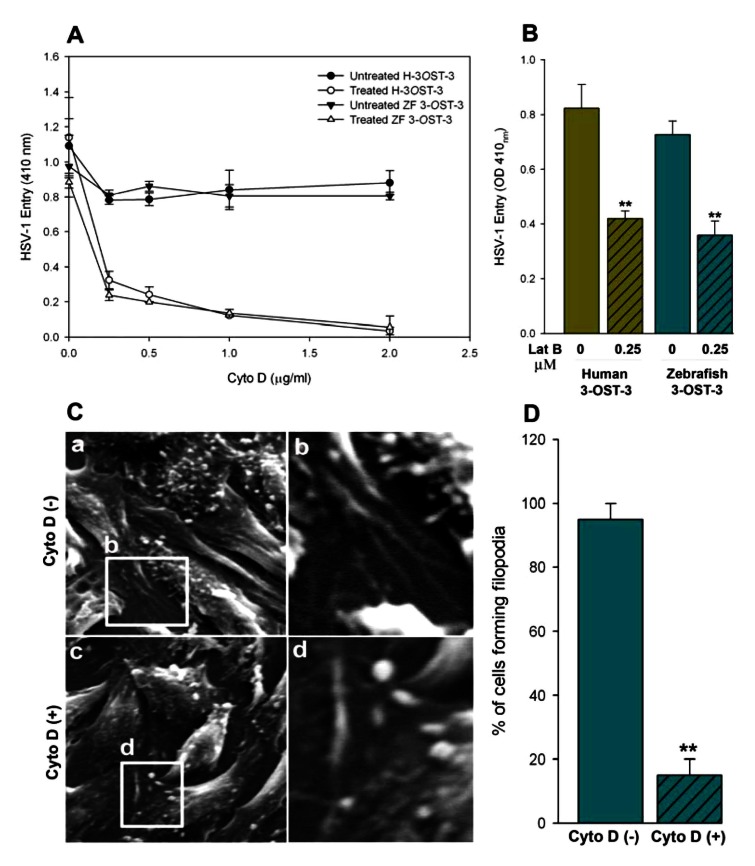
Under high resolution scanning electron microscopy (SEM), actin cytoskeleton changes were observed by a dramatic increase in the number of filopodia formed during early interactions of HSV-1 with the target cells. While the increase in number was common among all the infected cells, the highest numbers of filopodia was observed in cells expressing the 3-OST-3 modified form of heparan sulfate (HS) encoded either by human or ZF. The levels of viral infection and filopodia induction were reduced with the actin polymerization inhibitors, Cytochalasin-D and Lantriculin B, suggesting an important role for actin reorganization during ZF-3-OST-3 mediated HSV-1 entry. Supporting an interesting possibility of filopodia usage during HSV-1 spread, pre-treatment of cytochalasin D in ZF-3-OST-3 cells drastically reduced virus glycoprotein induced cell fusion.
Taken together, our results provide new evidence on the involvement of filopodia during HSV-1 infection of ZF-3-OST-3 cells and confirm a role for modified heparan sulfate in cytoskeleton rearrangement during HSV-1 entry.
经斑马鱼(ZF)编码的氨基葡萄糖3 - O - 磺基转移酶 - 3(3 - OST - 3)修饰的硫酸乙酰肝素蛋白聚糖(HSPGs)可生成单纯疱疹病毒1型(HSV - 1)进入和传播的受体。为了阐明HSV - 1进入ZF - 3 - OST - 3细胞的机制,我们研究了病毒进入的方式。
在高分辨率扫描电子显微镜(SEM)下,观察到在HSV - 1与靶细胞早期相互作用期间形成的丝状伪足数量急剧增加,从而导致肌动蛋白细胞骨架发生变化。虽然所有感染细胞中丝状伪足数量的增加都很常见,但在表达人或ZF编码的3 - OST - 3修饰形式硫酸乙酰肝素(HS)的细胞中观察到的丝状伪足数量最多。肌动蛋白聚合抑制剂细胞松弛素 - D和兰曲霉素B可降低病毒感染水平和丝状伪足诱导,这表明在ZF - 3 - OST - 3介导的HSV - 1进入过程中,肌动蛋白重组起着重要作用。支持HSV - 1传播过程中使用丝状伪足这一有趣可能性的是,在ZF - 3 - OST - 3细胞中用细胞松弛素D预处理可大幅降低病毒糖蛋白诱导的细胞融合。
综上所述,我们的结果为丝状伪足在HSV - 1感染ZF - 3 - OST - 3细胞过程中的参与提供了新证据,并证实了修饰的硫酸乙酰肝素在HSV - 1进入过程中细胞骨架重排中的作用。