Hodik M, Lukinius A, Korsgren O, Frisk G
Department of Immunology, Genetics and Pathology, Rudbeck Laboratory, Uppsala University, Uppsala, Sweden.
Open Virol J. 2013 Apr 5;7:49-56. doi: 10.2174/1874357901307010049. Print 2013.
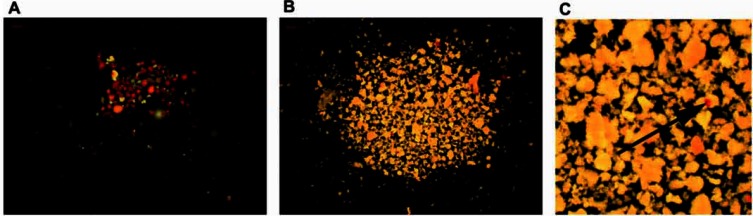
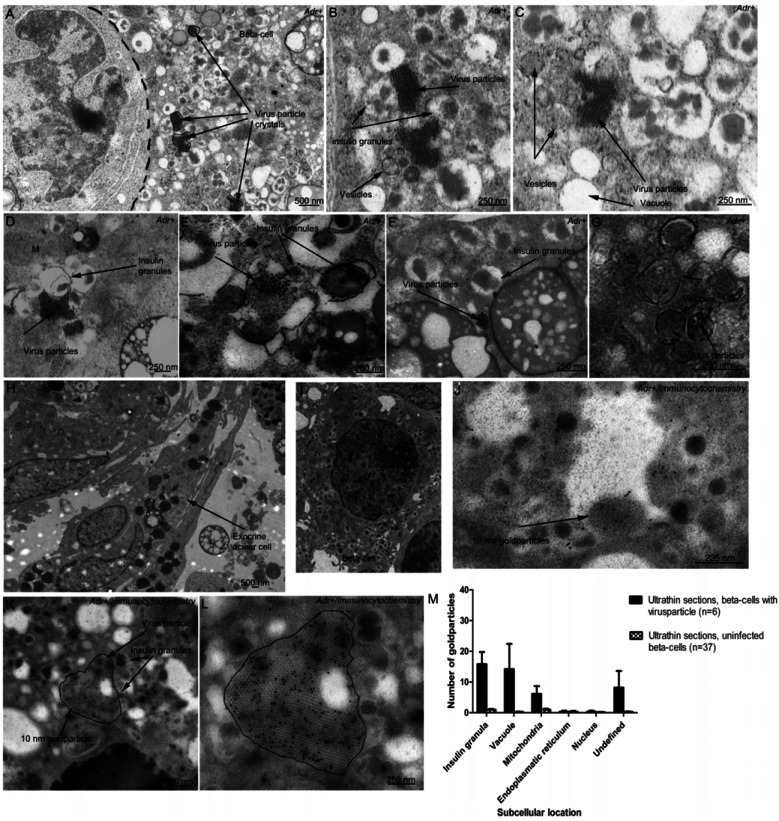
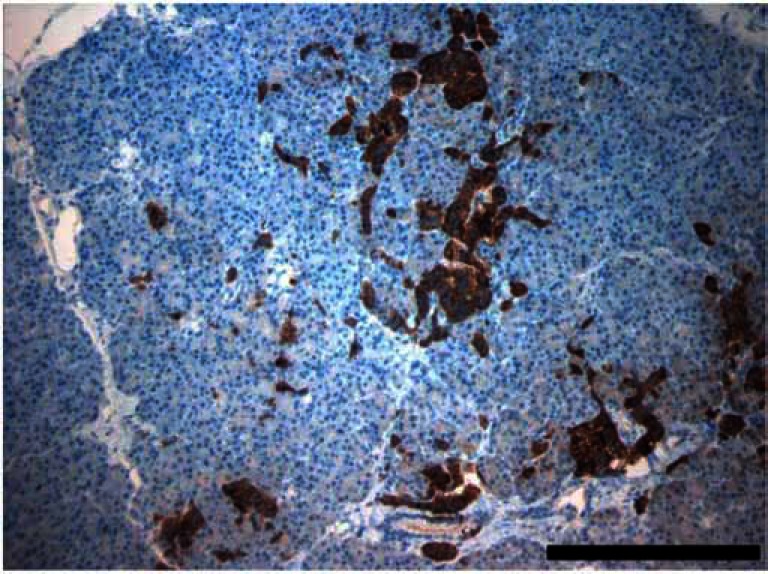
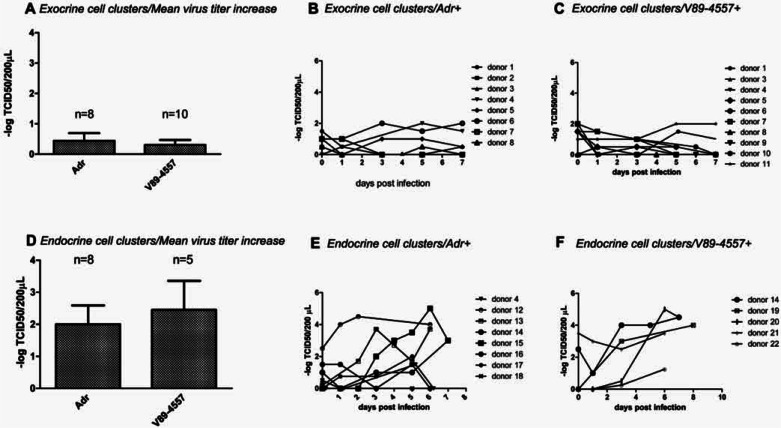
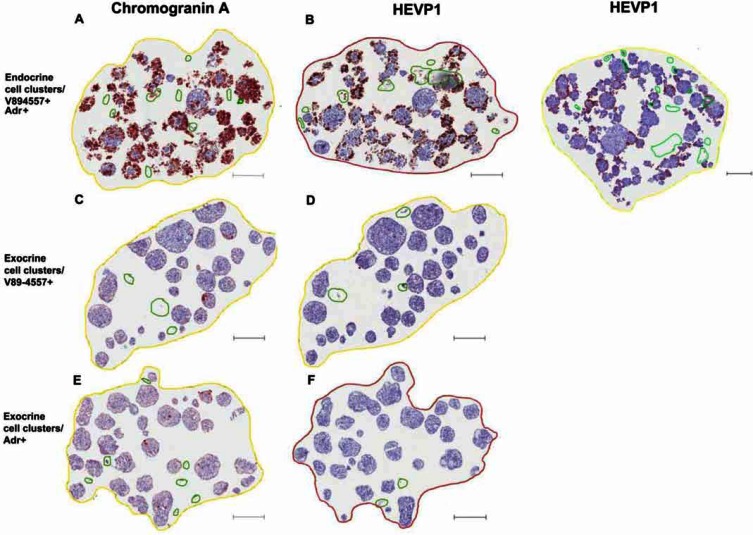
Human Enteroviruses (HEVs) have been implicated in human pancreatic diseases such as pancreatitis and type 1 diabetes (T1D). Human studies are sparse or inconclusive and our aim was to investigate the tropism of two strains of Coxsackie B virus 5 (CBV-5) in vitro to primary human pancreatic cells. Virus replication was measured with TCID50 titrations of aliquots of the culture medium at different time points post inoculation. The presence of virus particles or virus proteins within the pancreatic cells was studied with immunohistochemistry (IHC) and electron microscopy (EM). None of the strains replicated in the human exocrine cell clusters, in contrast, both strains replicated in the endocrine islets of Langerhans. Virus particles were found exclusively in the endocrine cells, often in close association with insulin granules. In conclusion, CBV-5 can replicate in human endocrine cells but not in human exocrine cells, thus they might not be the cause of pancreatitis in humans. The association of virus with insulin granules might reflect the use of these as replication scaffolds.
人类肠道病毒(HEVs)与人类胰腺疾病如胰腺炎和1型糖尿病(T1D)有关。人体研究稀少或无定论,我们的目的是在体外研究两株柯萨奇B组5型病毒(CBV-5)对原代人胰腺细胞的嗜性。在接种后不同时间点,通过对培养基等分试样进行半数组织培养感染剂量(TCID50)滴定来测定病毒复制情况。用免疫组织化学(IHC)和电子显微镜(EM)研究胰腺细胞内病毒颗粒或病毒蛋白的存在情况。两株病毒均未在人外分泌细胞簇中复制,相反,两株病毒均在朗格汉斯胰岛中复制。病毒颗粒仅在内分泌细胞中发现,常与胰岛素颗粒紧密相关。总之,CBV-5可在人内分泌细胞中复制,但不能在人外分泌细胞中复制,因此它们可能不是人类胰腺炎的病因。病毒与胰岛素颗粒的关联可能反映了将这些颗粒用作复制支架的情况。