Department of Periodontics, University of Texas Health Science Center, San Antonio, TX, USA.
Int J Oral Sci. 2013 Jun;5(2):75-84. doi: 10.1038/ijos.2013.41. Epub 2013 Jun 28.
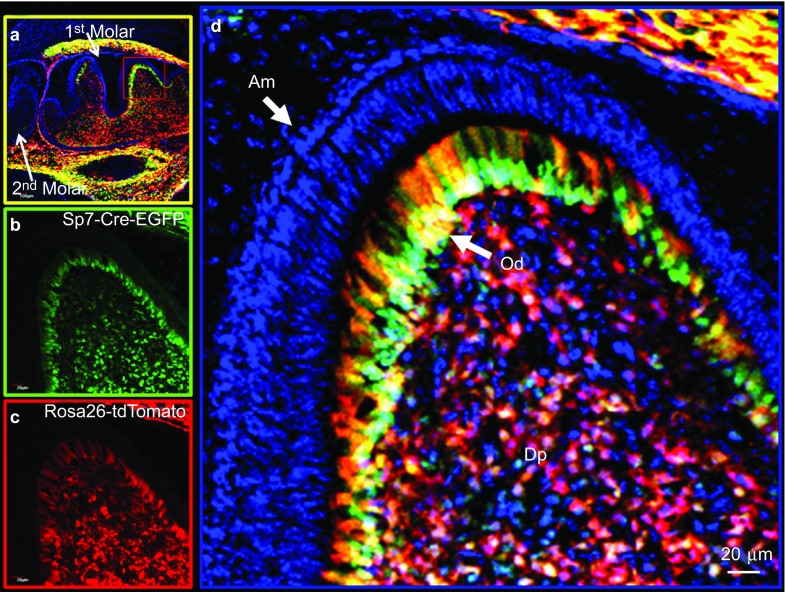
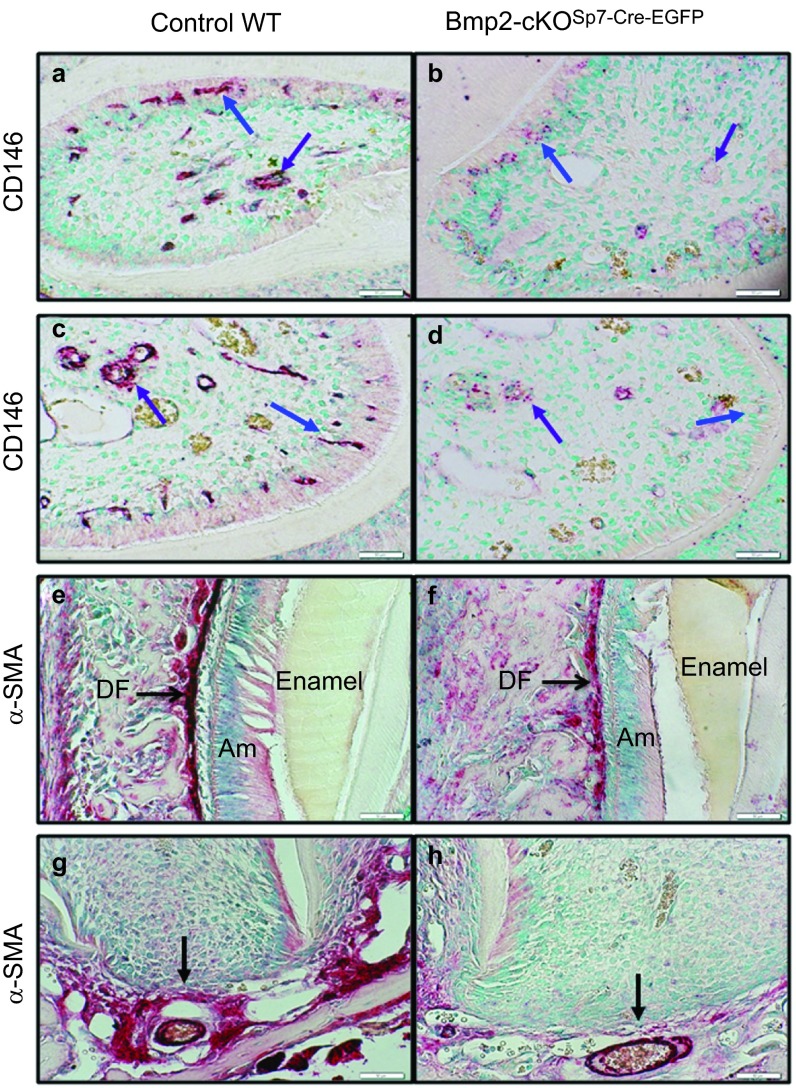
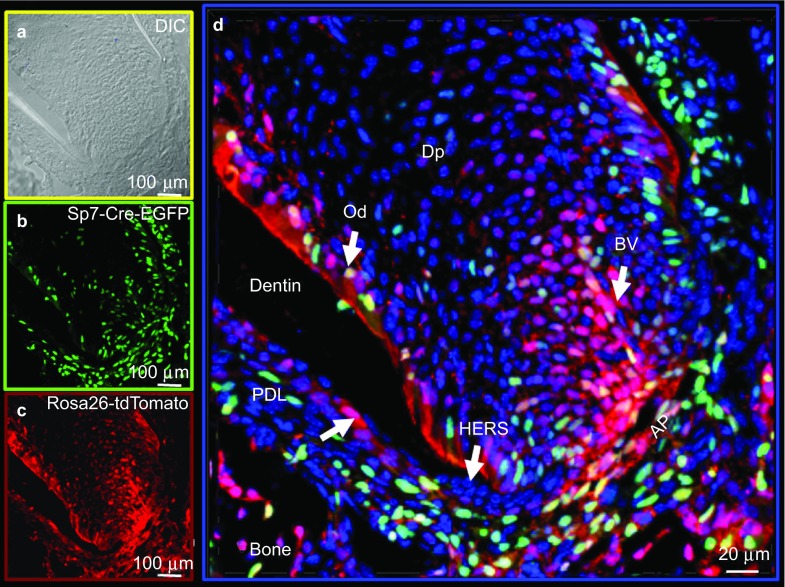
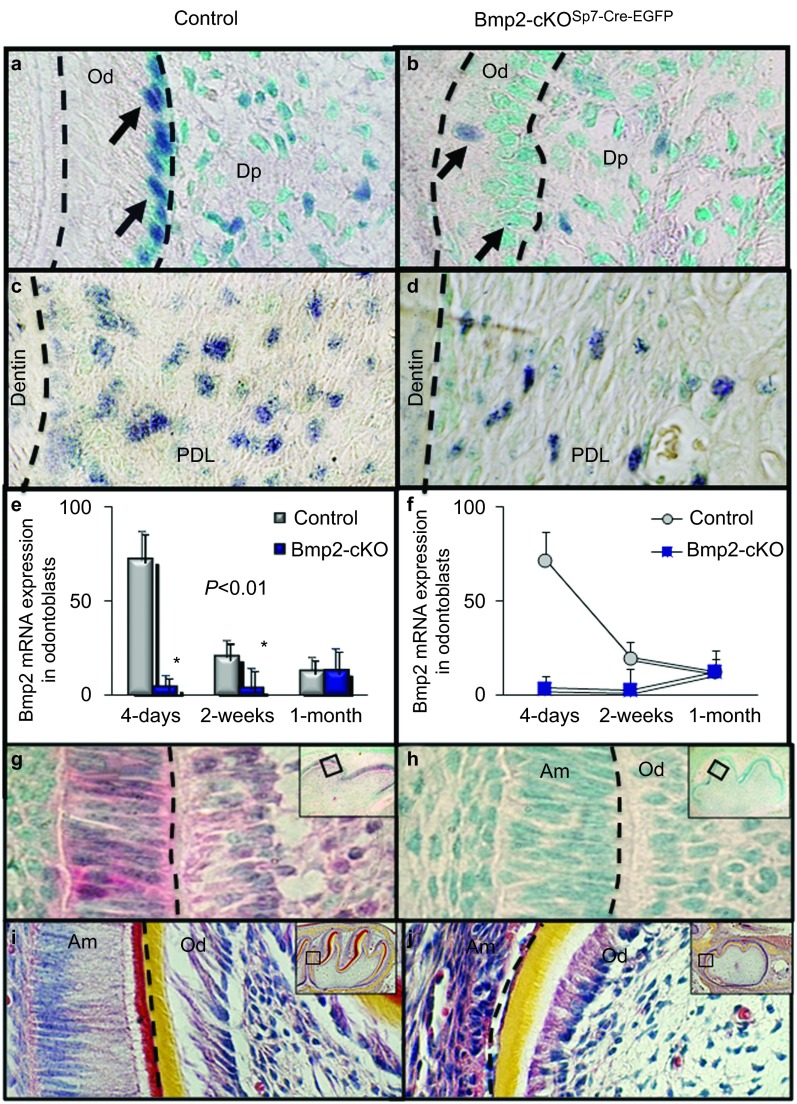
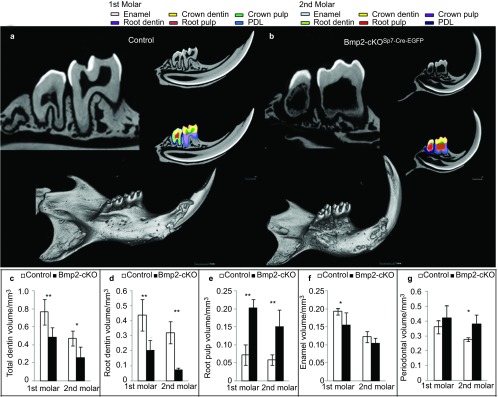
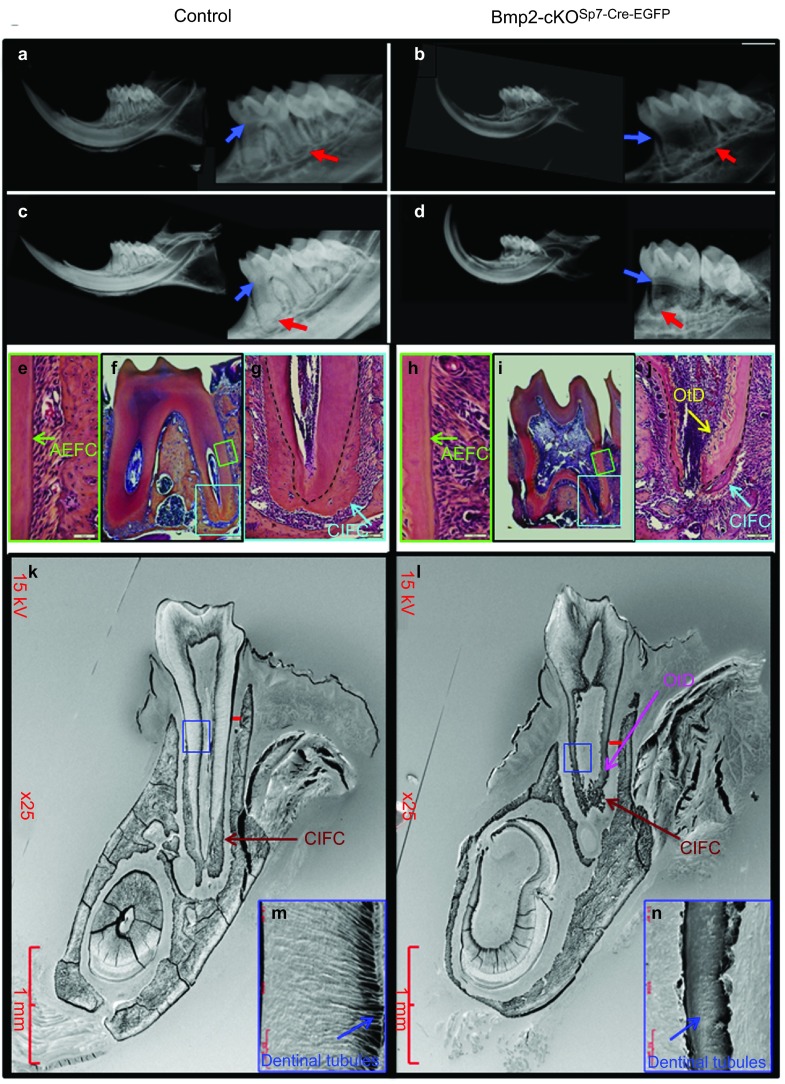
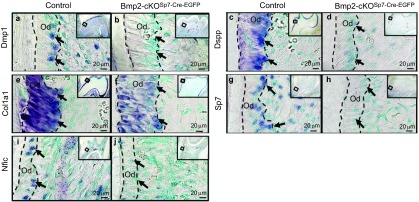
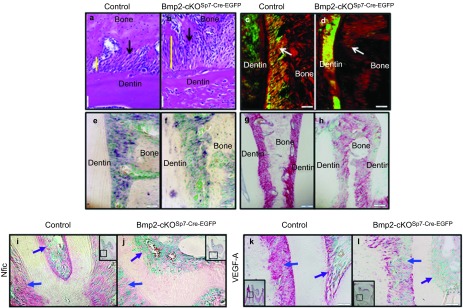
Formation of the periodontium begins following onset of tooth-root formation in a coordinated manner after birth. Dental follicle progenitor cells are thought to form the cementum, alveolar bone and Sharpey's fibers of the periodontal ligament (PDL). However, little is known about the regulatory morphogens that control differentiation and function of these progenitor cells, as well as the progenitor cells involved in crown and root formation. We investigated the role of bone morphogenetic protein-2 (Bmp2) in these processes by the conditional removal of the Bmp2 gene using the Sp7-Cre-EGFP mouse model. Sp7-Cre-EGFP first becomes active at E18 in the first molar, with robust Cre activity at postnatal day 0 (P0), followed by Cre activity in the second molar, which occurs after P0. There is robust Cre activity in the periodontium and third molars by 2 weeks of age. When the Bmp2 gene is removed from Sp7(+) (Osterix(+)) cells, major defects are noted in root, cellular cementum and periodontium formation. First, there are major cell autonomous defects in root-odontoblast terminal differentiation. Second, there are major alterations in formation of the PDLs and cellular cementum, correlated with decreased nuclear factor IC (Nfic), periostin and α-SMA(+) cells. Third, there is a failure to produce vascular endothelial growth factor A (VEGF-A) in the periodontium and the pulp leading to decreased formation of the microvascular and associated candidate stem cells in the Bmp2-cKO(Sp7-Cre-EGFP). Fourth, ameloblast function and enamel formation are indirectly altered in the Bmp2-cKO(Sp7-Cre-EGFP). These data demonstrate that the Bmp2 gene has complex roles in postnatal tooth development and periodontium formation.
牙周组织的形成始于牙齿根部形成后出生后的协调方式。牙滤泡祖细胞被认为形成牙骨质、牙槽骨和牙周韧带(PDL)的Sharpey 纤维。然而,对于控制这些祖细胞分化和功能的调节形态发生因子以及参与牙冠和牙根形成的祖细胞知之甚少。我们使用 Sp7-Cre-EGFP 小鼠模型通过条件性去除 Bmp2 基因来研究骨形态发生蛋白 2(Bmp2)在这些过程中的作用。Sp7-Cre-EGFP 在 E18 时首先在第一磨牙中活跃,在出生后第 0 天(P0)具有强烈的 Cre 活性,然后在第二磨牙中具有 Cre 活性,发生在 P0 之后。在 2 周龄时,牙周组织和第三磨牙中具有强烈的 Cre 活性。当 Bmp2 基因从 Sp7(+)(Osterix(+))细胞中去除时,在牙根、细胞牙骨质和牙周组织形成中观察到主要缺陷。首先,在牙根-成牙本质细胞终端分化中存在主要的细胞自主缺陷。其次,在 PDL 和细胞牙骨质的形成中存在主要改变,与核因子 IC(Nfic)、骨桥蛋白和α-SMA(+)细胞减少相关。第三,在牙周组织和牙髓中不能产生血管内皮生长因子 A(VEGF-A),导致微脉管和相关候选干细胞在 Bmp2-cKO(Sp7-Cre-EGFP)中形成减少。第四,在 Bmp2-cKO(Sp7-Cre-EGFP)中,成釉细胞功能和釉质形成间接改变。这些数据表明,Bmp2 基因在出生后牙齿发育和牙周组织形成中具有复杂的作用。