Institute of Neuroscience, Newcastle University, The Medical School, Framlington Place, Newcastle upon Tyne NE2 4HH, UK.
Institute of Neuroscience, Newcastle University, The Medical School, Framlington Place, Newcastle upon Tyne NE2 4HH, UK.
Eur Neuropsychopharmacol. 2014 Feb;24(2):321-32. doi: 10.1016/j.euroneuro.2013.07.005. Epub 2013 Aug 6.
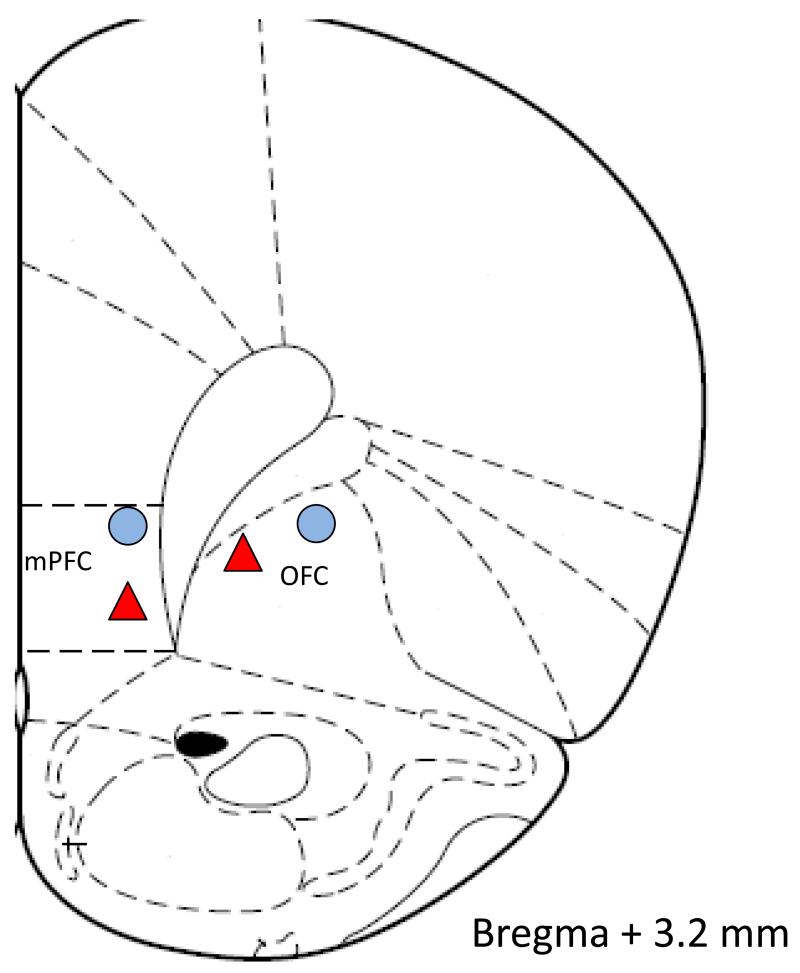
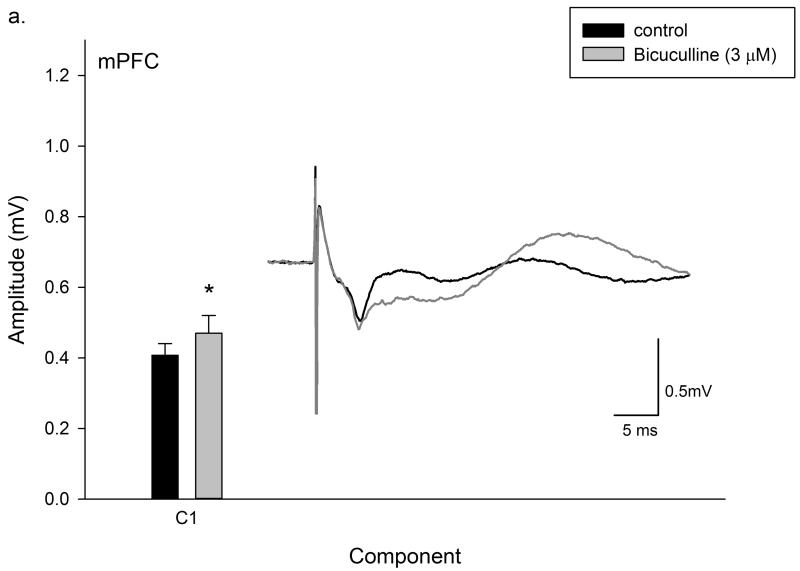
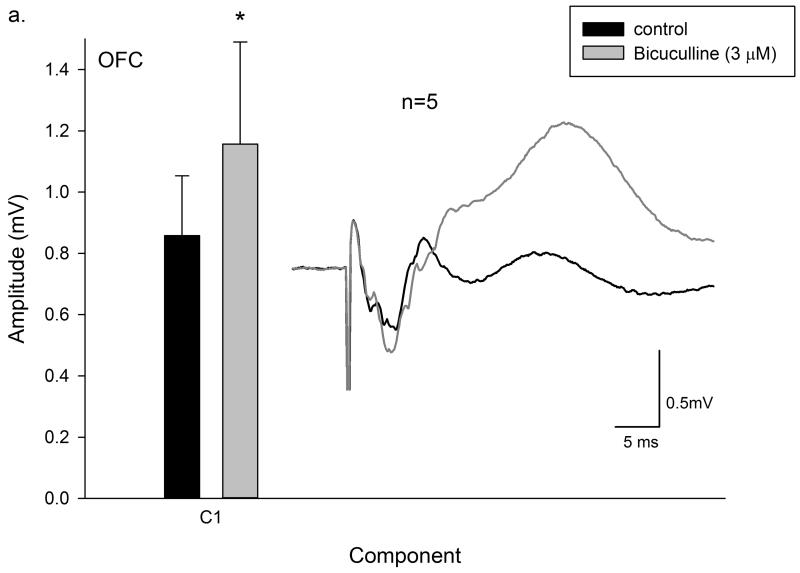
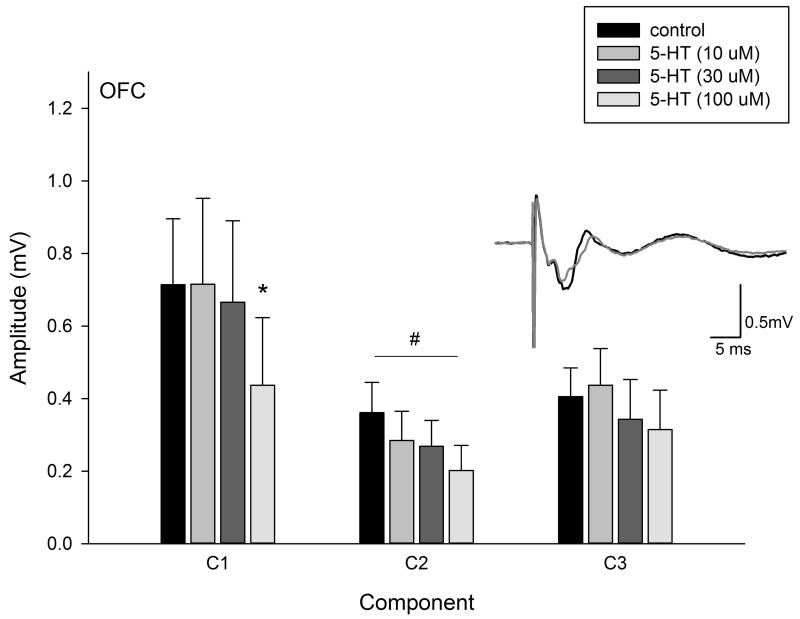
Medial prefrontal cortex (mPFC) and orbitofrontal cortex (OFC) play critical roles in cognition and behavioural control. Glutamatergic, GABAergic, and monoaminergic dysfunction in the prefrontal cortex has been hypothesised to underlie symptoms in neuropsychiatric disorders. Here we characterised electrically-evoked field potentials in the mPFC and OFC. Electrical stimulation evoked field potentials in layer V/VI of the mPFC and layer V of the OFC. The earliest component (approximately 2 ms latency) was insensitive to glutamate receptor blockade and was presumed to be presynaptic. Later components were blocked by 6,7-dinitroquinoxaline-2,3-dione (DNQX (20 µM)) and were assumed to reflect monosynaptic (latency 4-6 ms) and polysynaptic activity (latency 6-40 ms) mediated by glutamate via AMPA/kainate receptor. In the mPFC, but not the OFC, the monosynaptic component was also partly blocked by 2-amino-5-phosphonopentanoic acid (AP-5 (50-100µM)) indicating the involvement of NMDA receptors. Bicuculline (3-10 µM) enhanced the monosynaptic component suggesting electrically-evoked and/or glutamate induced GABA release inhibits the monosynaptic component via GABAA receptor activation. There were complex effects of bicuculline on polysynaptic components. In the mPFC both the mono- and polysynaptic components were attenuated by 5-HT (10-100 µM) and NA (30 and 60 µM) and the monosynaptic component was attenuated by DA (100 µM). In the OFC the mono- and polysynaptic components were also attenuated by 5-HT (100 µM), NA (10-100 µM) but DA (10-100 µM) had no effect. We propose that these pharmacologically characterised electrically-evoked field potentials in the mPFC and OFC are useful models for the study of prefrontal cortical physiology and pathophysiology.
内侧前额叶皮层(mPFC)和眶额皮层(OFC)在认知和行为控制中起着关键作用。据推测,前额叶皮层中的谷氨酸能、GABA 能和单胺能功能障碍是神经精神疾病症状的基础。在这里,我们描述了 mPFC 和 OFC 中的电诱发场电位。电刺激诱发了 mPFC 中第 V/VI 层和 OFC 中第 V 层的场电位。最早的成分(大约 2 毫秒潜伏期)对谷氨酸受体阻断不敏感,被认为是突触前的。随后的成分被 6,7-二硝基喹喔啉-2,3-二酮(DNQX(20µM))阻断,被认为反映了通过 AMPA/KA 受体介导的谷氨酸的单突触(潜伏期 4-6ms)和多突触活动(潜伏期 6-40ms)。在 mPFC 中,但不在 OFC 中,单突触成分也被 2-氨基-5-磷酸戊酸(AP-5(50-100µM))部分阻断,表明 NMDA 受体的参与。荷包牡丹碱(3-10µM)增强了单突触成分,表明电诱发和/或谷氨酸诱导的 GABA 释放通过 GABAA 受体激活抑制单突触成分。荷包牡丹碱对多突触成分有复杂的影响。在 mPFC 中,5-HT(10-100µM)和 NA(30 和 60µM)都减弱了单突触和多突触成分,而 DA(100µM)则减弱了单突触成分。在 OFC 中,5-HT(100µM)、NA(10-100µM)也减弱了单突触和多突触成分,但 DA(10-100µM)没有影响。我们提出,这些在 mPFC 和 OFC 中通过药理学方法描述的电诱发场电位是研究前额叶皮层生理学和病理生理学的有用模型。