Department of Biology, University of Waterloo, Waterloo, Ontario, Canada.
PLoS One. 2013 Jul 30;8(7):e70338. doi: 10.1371/journal.pone.0070338. Print 2013.
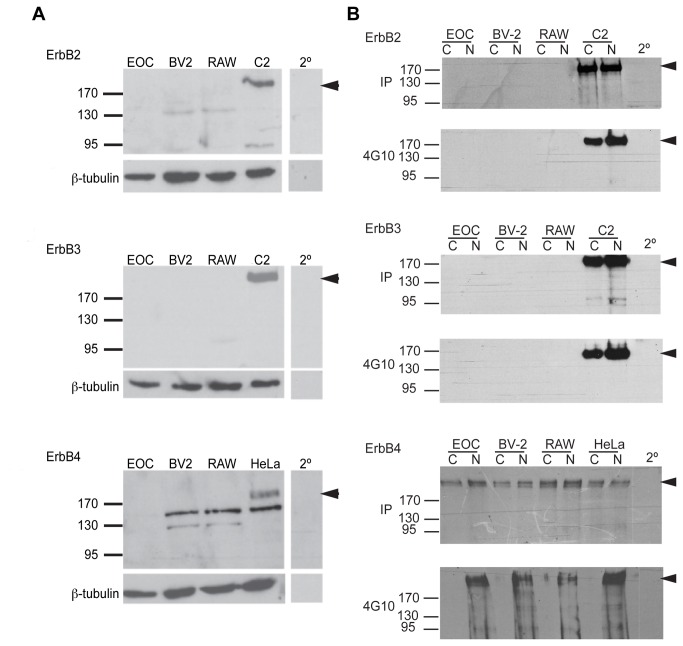
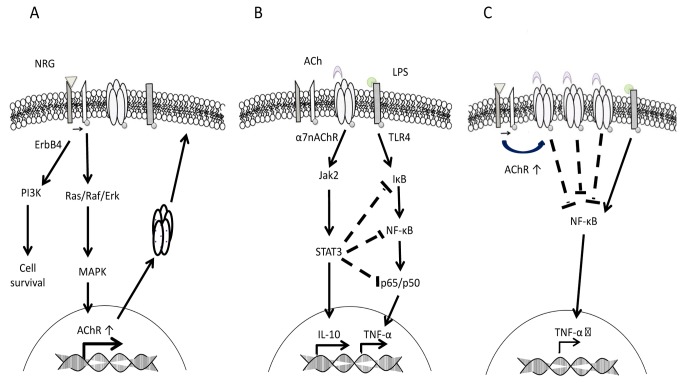
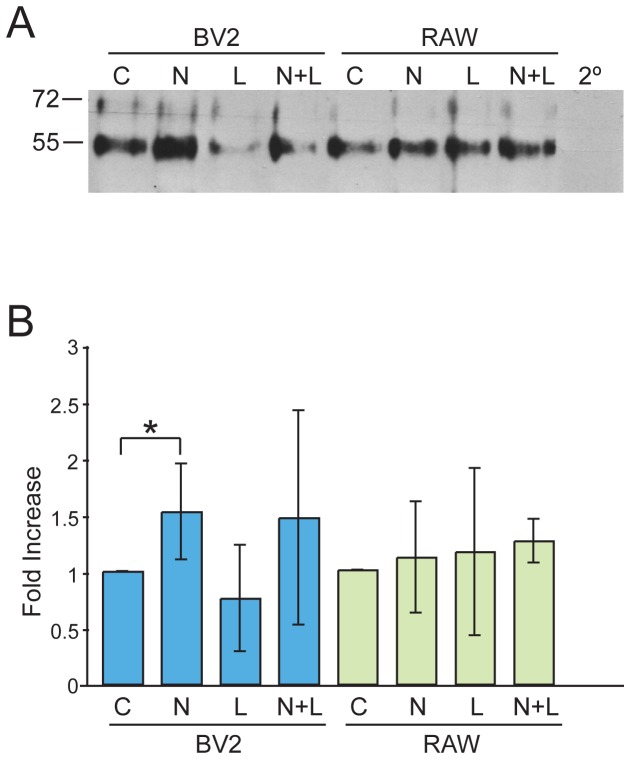
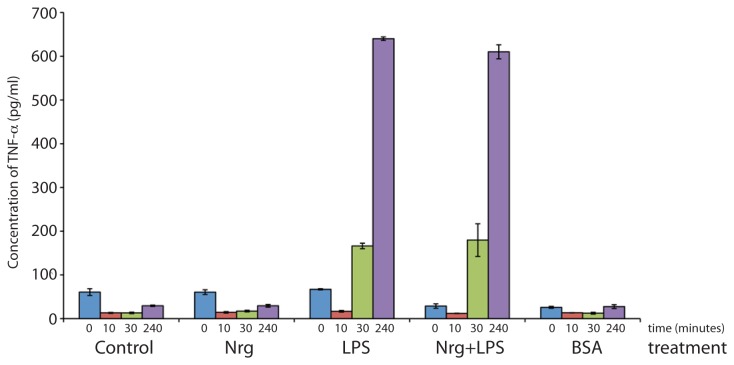
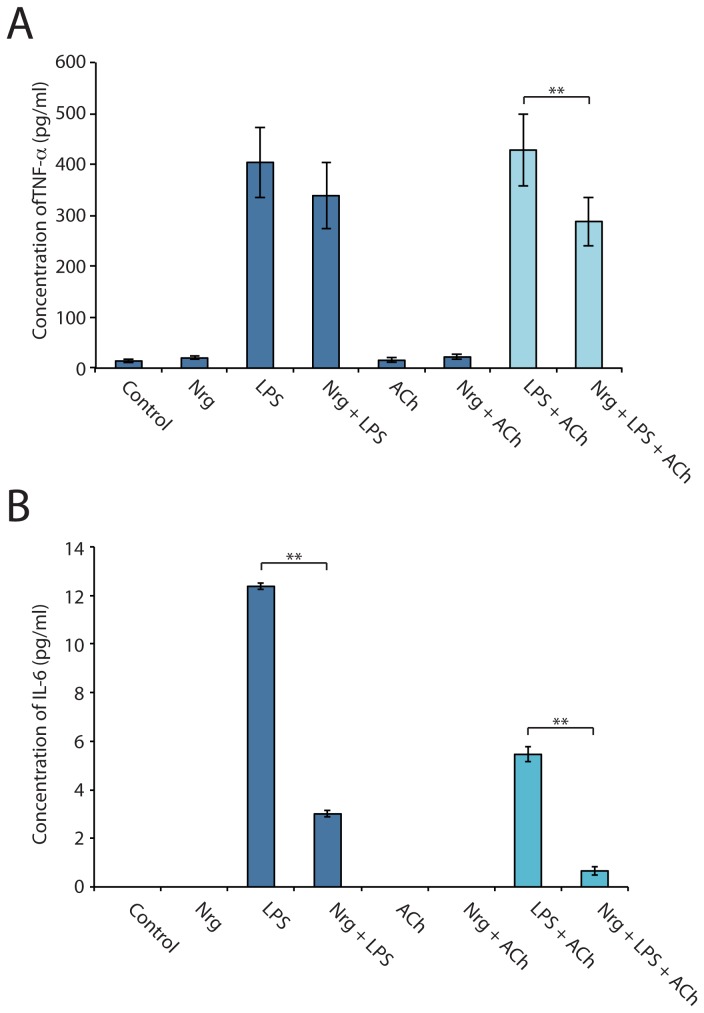
Neuregulin, previously known as ARIA, is a signaling protein involved in cell survival, synaptic plasticity, cell communication and differentiation. Neuregulin has also been described as a potent inducer of acetylcholine receptor transcription in muscle and although both neuregulin and acetylcholine have been individually described to have neuroprotective roles, their relationship in the cholinergic anti-inflammatory pathway of the brain has not been examined. Using three cell lines, BV-2, EOC-20 and RAW 264.7, we investigated the role that neuregulin signaling through the Erb family of tyrosine kinases may play in the anti-inflammatory process mediated by the α7 nicotinic acetylcholine receptors. Here we show that ErbB4 is expressed in all of our cell lines and is phosphorylated upon treatment with neuregulin. Neuregulin treatment further increases the expression of α7 nicotinic acetylcholine receptors in the microglial lines tested. Given the central role of α7 nicotinic acetylcholine receptors in regulating system inflammation we analyzed the expression of several pro-inflammatory cytokines in our system. Using ELISAs for TNF-α and IL-6 we show that treatment with NRG can produce a nearly a 33% decrease in the levels of tumor necrosis factor-α secreted by activated microglia and a nearly 88% decrease in IL-6. Given these results we propose a neuroprotective role for neuregulin wherein it modulates the expression of TNF-α and thus inflammation in the CNS via the upregulation of α7 nicotinic acetylcholine receptor expression in microglia in vitro. We suggest that the disregulation of neuregulin expression may be pivotal in neurological disorders characterized by inflammation.
神经调节蛋白,以前称为 ARIA,是一种信号蛋白,参与细胞存活、突触可塑性、细胞通讯和分化。神经调节蛋白也被描述为肌肉中乙酰胆碱受体转录的有效诱导剂,尽管神经调节蛋白和乙酰胆碱都被单独描述具有神经保护作用,但它们在大脑胆碱能抗炎途径中的关系尚未被研究。使用三种细胞系,BV-2、EOC-20 和 RAW 264.7,我们研究了通过 Erb 家族酪氨酸激酶的神经调节蛋白信号在由α7 烟碱型乙酰胆碱受体介导的抗炎过程中可能发挥的作用。在这里,我们表明 ErbB4 在我们所有的细胞系中都有表达,并在神经调节蛋白处理后被磷酸化。神经调节蛋白处理进一步增加了在测试的小胶质细胞系中α7 烟碱型乙酰胆碱受体的表达。鉴于α7 烟碱型乙酰胆碱受体在调节系统炎症中的核心作用,我们在我们的系统中分析了几种促炎细胞因子的表达。使用 TNF-α 和 IL-6 的 ELISA,我们表明 NRG 处理可以使激活的小胶质细胞分泌的肿瘤坏死因子-α水平降低近 33%,IL-6 降低近 88%。鉴于这些结果,我们提出了神经调节蛋白的神经保护作用,即在体外通过上调小胶质细胞中α7 烟碱型乙酰胆碱受体的表达来调节 TNF-α 的表达,从而调节中枢神经系统的炎症。我们认为,神经调节蛋白表达的失调可能在以炎症为特征的神经紊乱中至关重要。