Landman Ellie B M, Miclea Razvan L, van Blitterswijk Clemens A, Karperien Marcel
Arthritis Res Ther. 2013 Aug 21;15(4):R93. doi: 10.1186/ar4273.
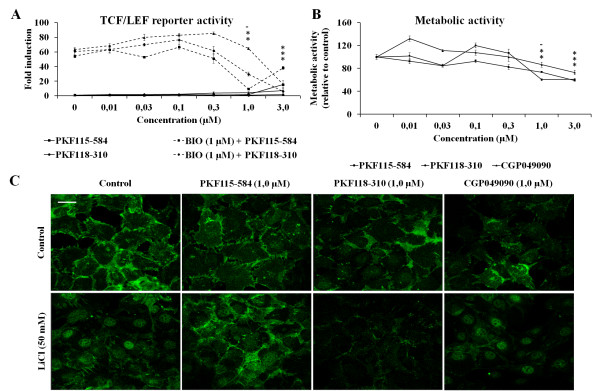
In this study, we tested the ability of small molecule inhibitors of WNT/β-catenin signaling to block interleukin 1β (IL-1β)- and tumor necrosis factor α (TNFα)-induced cartilage degradation. Proinflammatory cytokines such as IL-1β and TNFα are potent inducers of cartilage degradation by upregulating matrix metalloproteinase (MMP) expression and activity. Because WNT/β-catenin signaling was found to be involved in IL-1β- and TNFα-induced upregulation of MMP activity, we hypothesized that inhibition of WNT/β-catenin signaling might block IL-1β- and TNFα-induced cartilage degradation. We tested the effect of small molecules that block the interaction between β-catenin and TCF/Lef transcription factors on IL-1β- and TNFα-induced cartilage degradation in mouse fetal metatarsals.
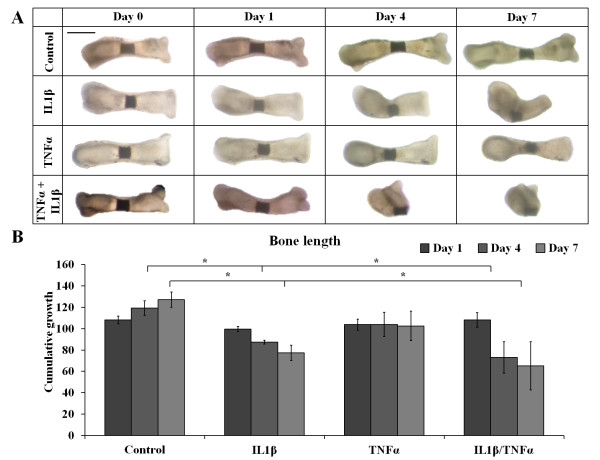
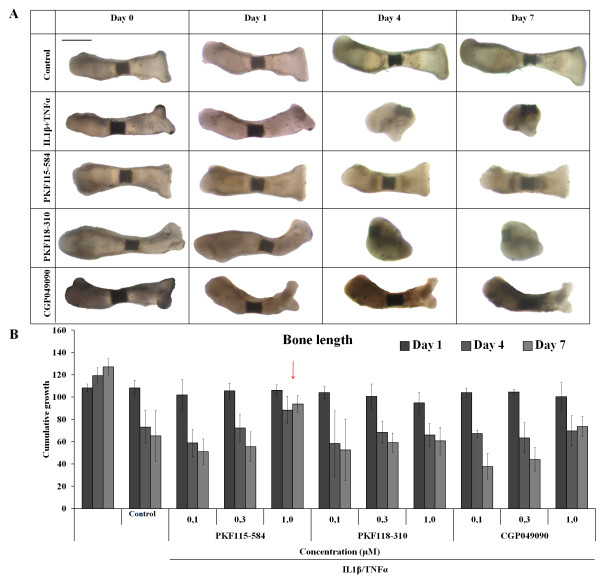
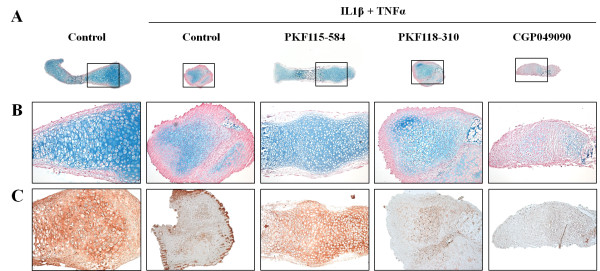
We used mouse fetal metatarsals treated with IL-1β and TNFα as an ex vivo model for cytokine-induced cartilage degradation. Metatarsals were treated with IL-1β and TNFα in combination with the small molecules PKF115-584, PKF118-310 and CGP049090 at different concentrations and then harvested them for histological and gene expression analysis.
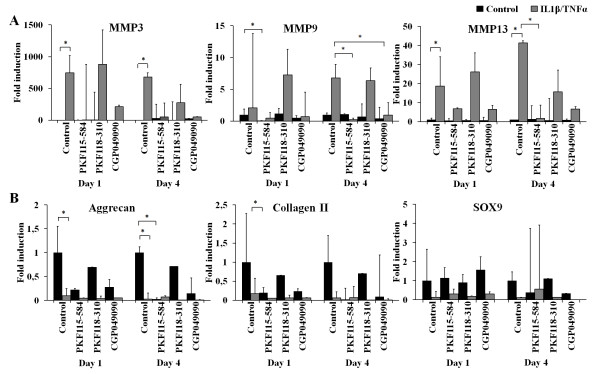
We found that IL-1β- and TNFα-induced cartilage degradation in mouse fetal metatarsals was blocked by inhibiting WNT/β-catenin signaling using small molecule PKF115-584 and partially using CGP049090 dose-dependently. In addition, we found that PKF115-584 blocked IL-1β- and TNFα-induced MMP mRNA expression, but did not reverse the inhibitory effect of IL-1β on the expression of cartilage anabolic genes.
In this study, we show that inhibition of WNT/β-catenin signaling by small molecules can effectively prevent IL-1β- and TNFα-induced cartilage degradation by blocking MMP expression and activity. Furthermore, we elucidate the involvement of WNT/β-catenin signaling in IL-1β- and TNFα-induced cartilage degradation.
在本研究中,我们测试了WNT/β-连环蛋白信号通路的小分子抑制剂阻断白细胞介素1β(IL-1β)和肿瘤坏死因子α(TNFα)诱导的软骨降解的能力。IL-1β和TNFα等促炎细胞因子通过上调基质金属蛋白酶(MMP)的表达和活性,有力地诱导软骨降解。由于发现WNT/β-连环蛋白信号通路参与了IL-1β和TNFα诱导的MMP活性上调,我们推测抑制WNT/β-连环蛋白信号通路可能会阻断IL-1β和TNFα诱导的软骨降解。我们测试了阻断β-连环蛋白与TCF/Lef转录因子之间相互作用的小分子对小鼠胎儿跖骨中IL-1β和TNFα诱导的软骨降解的影响。
我们将用IL-1β和TNFα处理的小鼠胎儿跖骨作为细胞因子诱导软骨降解的离体模型。将跖骨用IL-1β和TNFα与不同浓度的小分子PKF115-584、PKF118-310和CGP049090联合处理,然后收获用于组织学和基因表达分析。
我们发现,使用小分子PKF115-584抑制WNT/β-连环蛋白信号通路可阻断小鼠胎儿跖骨中IL-1β和TNFα诱导的软骨降解,使用CGP049090部分阻断且呈剂量依赖性。此外,我们发现PKF115-584阻断了IL-1β和TNFα诱导的MMP mRNA表达,但并未逆转IL-1β对软骨合成代谢基因表达的抑制作用。
在本研究中,我们表明小分子抑制WNT/β-连环蛋白信号通路可通过阻断MMP表达和活性有效预防IL-1β和TNFα诱导的软骨降解。此外,我们阐明了WNT/β-连环蛋白信号通路参与IL-1β和TNFα诱导的软骨降解。