Kohli Santvana, Kaur Manpreet, Sahoo Sangeeta, Vajifdar Homay, Kohli Pramod
Department of Anaesthesia and Intensive Care, Jai Prakash Narayan ApexTrauma Centre, All India Institute of Medical Sciences, New Delhi, India.
J Anaesthesiol Clin Pharmacol. 2013 Oct;29(4):491-5. doi: 10.4103/0970-9185.119147.
The role of clonidine as an adjuvant to local anesthetic agents in brachial plexus block (BPB) has been extensively studied. However, till date there has been no consensus about the ideal dose of clonidine for this purpose. This study was carried out to evaluate two doses of clonidine-1 and 2 g/kg, added to 0.5% bupivacaine, with regard to onset and duration of sensorimotor blockade, hemodynamic effects, postoperative analgesia, and adverse effects.
Sixty adult patients undergoing upper limb surgeries were randomly allocated into two groups. Thirty patients received 1 g/kg clonidine (group I) and the rest received 2 g/kg clonidine (group II) added to 30 mL of 0.5% bupivacaine through nerve stimulator-guided supraclavicular BPB. The onset and duration of sensorimotor blockade, hemodynamic variables, duration of analgesia, level of sedation, and adverse effects was assessed.
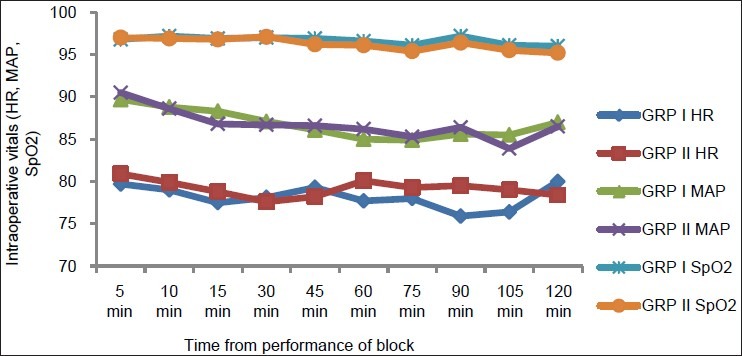
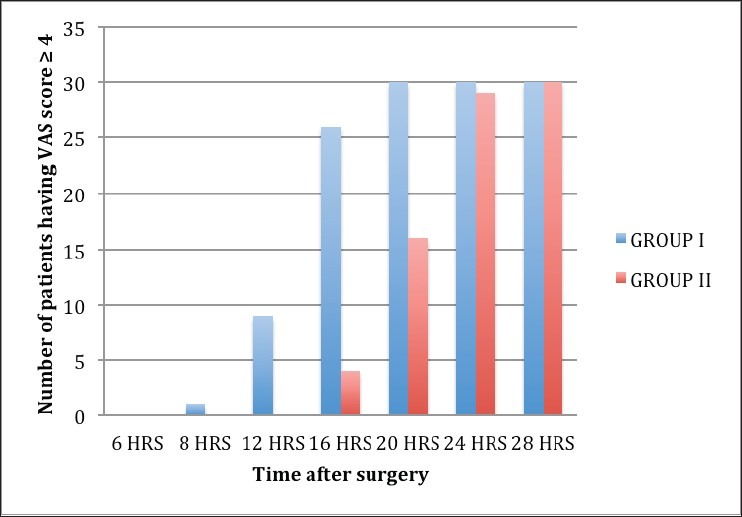
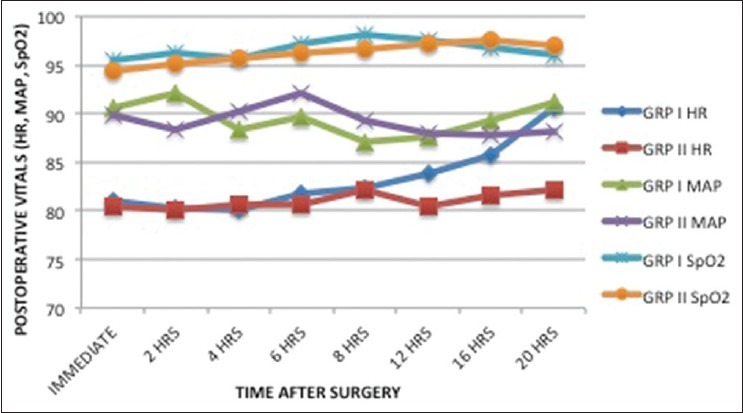
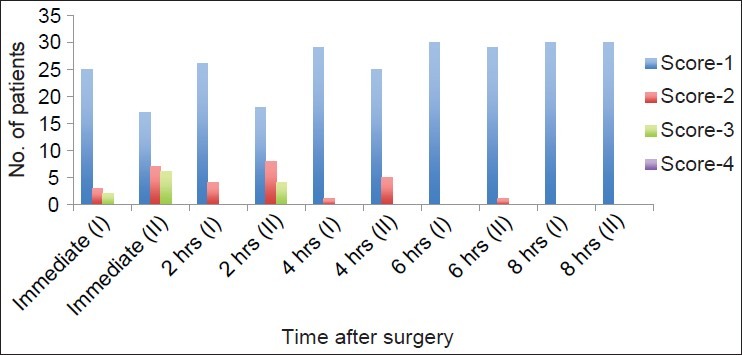
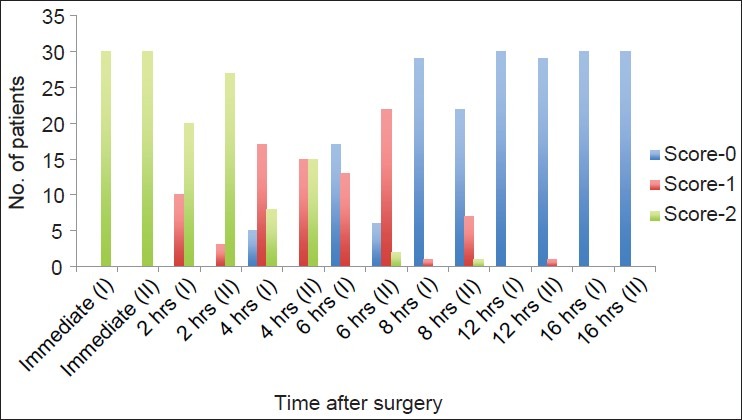
The onset of sensorimotor block was earlier in group II (9.9 ± 4.1 min for sensory block and 13.2 ± 6.7 min for motor block) than in group I (15.9 ± 6.8 min for sensory block and 18.5 ± 7.8 min for motor block). The duration of analgesia was also prolonged in patients receiving the higher dose (21.0 ± 2.96 h vs. 14.9 ± 3.0 h). Although hemodynamics remained comparable in both the groups, incidence of hypotension and bradycardia was higher in group II as compared to group I. The sedation was clinically and statistically more in group II patients (43% vs. 17%).
Higher dose of clonidine in BPB hastens the onset, prolongs the duration of sensorimotor blockade and postoperative analgesia without significant hemodynamic alterations. It also causes more sedation, which although ensures patient comfort in most cases, but might be undesirable in certain situations.
可乐定作为局部麻醉药辅助剂在臂丛神经阻滞(BPB)中的作用已得到广泛研究。然而,迄今为止,关于用于此目的的可乐定理想剂量尚无共识。本研究旨在评估添加到0.5%布比卡因中的两种剂量可乐定(1μg/kg和2μg/kg)在感觉运动阻滞的起效和持续时间、血流动力学效应、术后镇痛及不良反应方面的情况。
60例接受上肢手术的成年患者被随机分为两组。30例患者接受1μg/kg可乐定(I组),其余患者接受2μg/kg可乐定(II组),通过神经刺激器引导的锁骨上臂丛神经阻滞,将其添加到30mL 0.5%布比卡因中。评估感觉运动阻滞的起效和持续时间、血流动力学变量、镇痛持续时间、镇静水平及不良反应。
II组感觉运动阻滞的起效时间早于I组(感觉阻滞为9.9±4.1分钟,运动阻滞为13.2±6.7分钟)(I组感觉阻滞为15.9±6.8分钟,运动阻滞为18.5±7.8分钟)。接受较高剂量可乐定患者的镇痛持续时间也延长(21.0±2.96小时对14.9±3.0小时)。尽管两组的血流动力学情况相当,但II组低血压和心动过缓的发生率高于I组。II组患者的镇静在临床和统计学上更明显(43%对17%)。
臂丛神经阻滞中较高剂量的可乐定可加快起效,延长感觉运动阻滞和术后镇痛的持续时间,且无明显血流动力学改变。它还会导致更多的镇静,这虽然在大多数情况下可确保患者舒适,但在某些情况下可能并不理想。