
自闭症谱系障碍儿童及其未受影响的双胞胎/兄弟姐妹的B淋巴细胞对雌激素、二氢睾酮和外源性物质的敏感性改变。
Alterations in sensitivity to estrogen, dihydrotestosterone, and xenogens in B-lymphocytes from children with autism spectrum disorder and their unaffected twins/siblings.
作者信息
Sharpe Martyn A, Gist Taylor L, Baskin David S
机构信息
Department of Neurosurgery, The Methodist Neurological Institute, 6560 Fannin Street, Scurlock Tower 944, Houston, TX 77030, USA.
出版信息
J Toxicol. 2013;2013:159810. doi: 10.1155/2013/159810. Epub 2013 Nov 6.
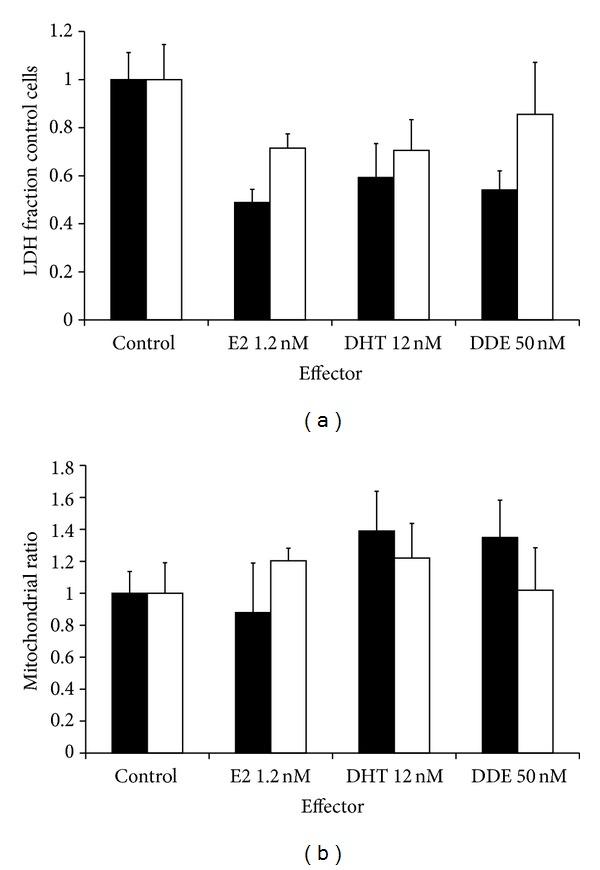
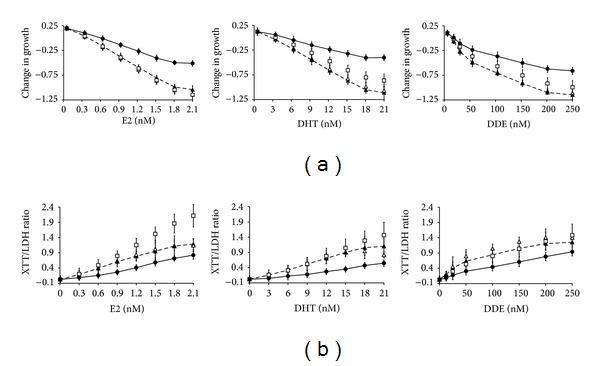
It has been postulated that androgen overexposure in a susceptible person leads to excessive brain masculinization and the autism spectrum disorder (ASD) phenotype. In this study, the responses to estradiol (E2), dihydrotestosterone (DHT), and dichlorodiphenyldichloroethylene (DDE) on B-lymphocytes from ASD subjects and controls are compared. B cells were obtained from 11 ASD subjects, their unaffected fraternal twins, and nontwin siblings. Controls were obtained from a different cell bank. Lactate dehydrogenase (LDH) and sodium 2,3-bis(2-methoxy-4-nitro-5-sulfophenyl)-2H-tetrazolium-5-carboxanilide (XTT) reduction levels were measured after incubation with different concentrations of E2, DHT, and DDE. XTT/LDH ratio, representative of mitochondria number per cell, was calculated. E2, DHT, and DDE all cause "U"-shaped growth curves, as measured by LDH levels. ASD B cells show less growth depression compared to siblings and controls (P < 0.01). They also have reduced XTT/LDH ratios (P < 0.01) when compared to external controls, whereas siblings had values of XTT/LDH between ASD and external controls. B-lymphocytes from people with ASD exhibit a differential response to E2, DHT, and hormone disruptors in regard to cell growth and mitochondrial upregulation when compared to non-ASD siblings and external controls. Specifically, ASD B-lymphocytes show significantly less growth depression and less mitochondrial upregulation when exposed to these effectors. A mitochondrial deficit in ASD individuals is implied.
据推测,易感人群雄激素暴露过度会导致大脑过度男性化和自闭症谱系障碍(ASD)表型。在本研究中,比较了ASD受试者和对照组B淋巴细胞对雌二醇(E2)、二氢睾酮(DHT)和二氯二苯二氯乙烯(DDE)的反应。B细胞取自11名ASD受试者、他们未受影响的异卵双胞胎和非双胞胎兄弟姐妹。对照组取自不同的细胞库。在与不同浓度的E2、DHT和DDE孵育后,测量乳酸脱氢酶(LDH)和2,3-双(2-甲氧基-4-硝基-5-磺基苯基)-2H-四唑-5-甲酰苯胺(XTT)的还原水平。计算代表每个细胞线粒体数量的XTT/LDH比值。通过LDH水平测量,E2、DHT和DDE均导致“U”形生长曲线。与兄弟姐妹和对照组相比,ASD B细胞的生长抑制较小(P<0.01)。与外部对照组相比,它们的XTT/LDH比值也降低(P<0.01),而兄弟姐妹的XTT/LDH值介于ASD组和外部对照组之间。与非ASD兄弟姐妹和外部对照组相比,ASD患者的B淋巴细胞在细胞生长和线粒体上调方面对E2、DHT和激素干扰物表现出不同的反应。具体而言,ASD B淋巴细胞在暴露于这些效应物时,生长抑制明显较小,线粒体上调也较少。这意味着ASD个体存在线粒体缺陷。

 Zotero 插件