Department of Chemistry "G. Ciamician", University of Bologna, Via S. Giacomo 11, I-40126 Bologna, Italy.
Department of Chemistry, University of Ottawa, 10 Marie Curie Pvt., Ottawa, Ontario, Canada K1N 6N5.
Beilstein J Org Chem. 2013 Dec 4;9:2781-92. doi: 10.3762/bjoc.9.313. eCollection 2013.
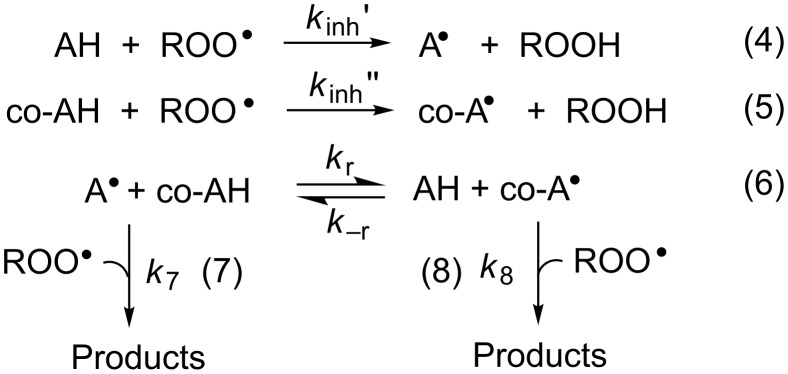
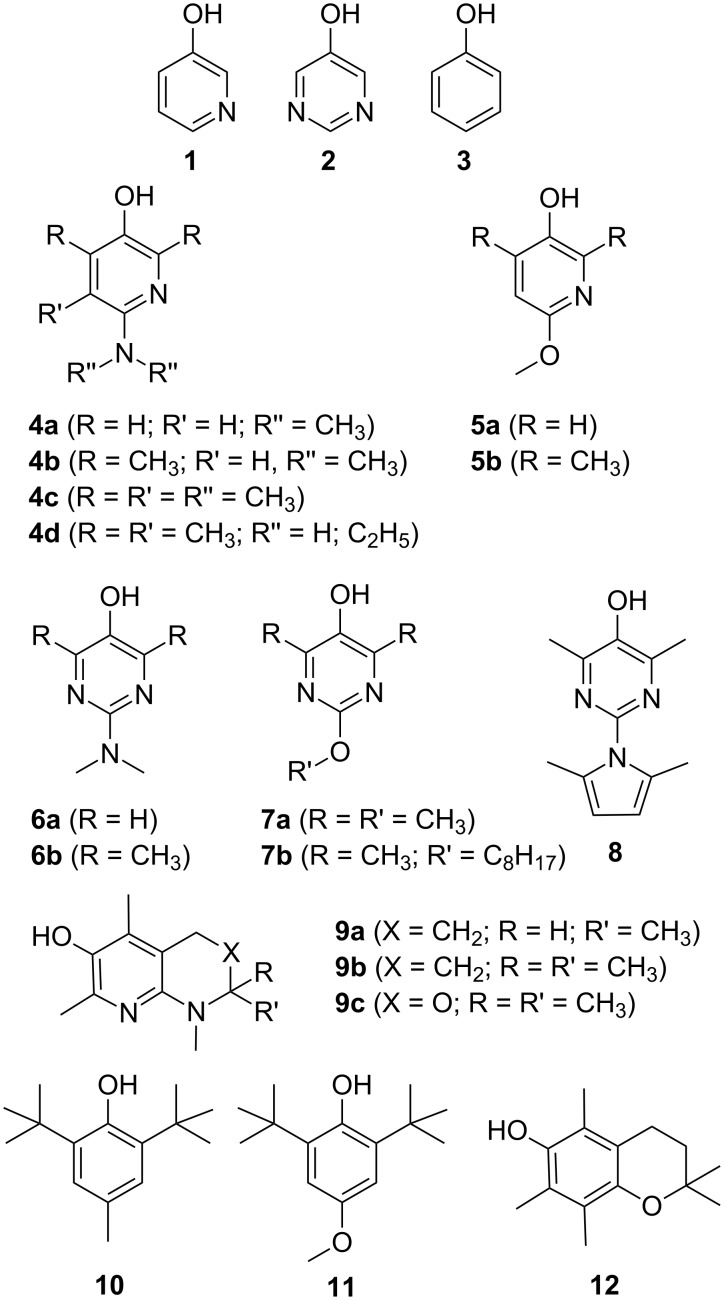
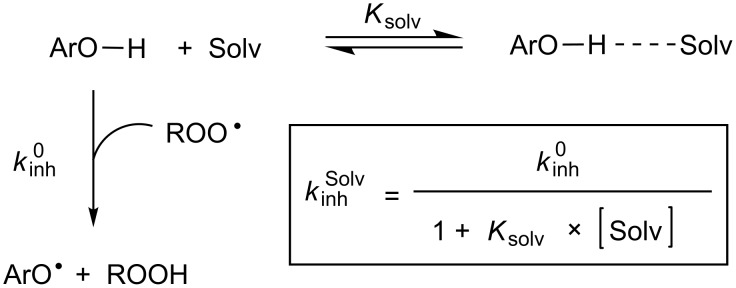
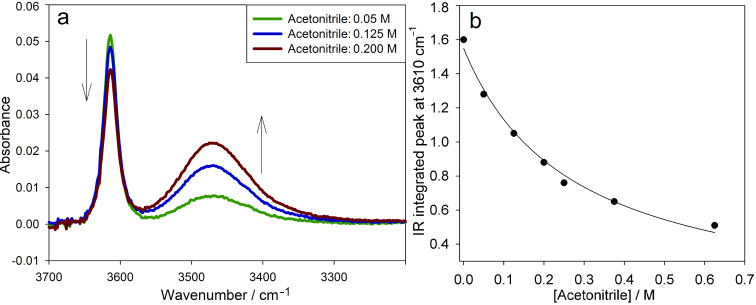
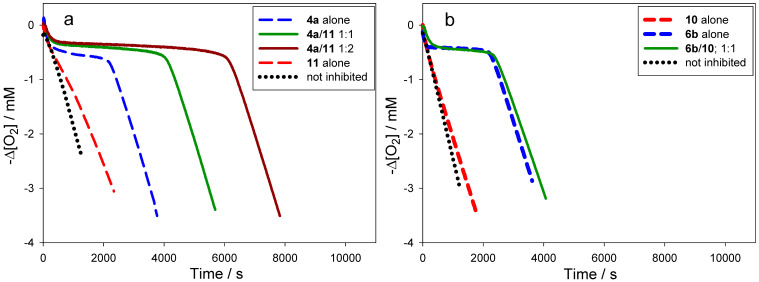
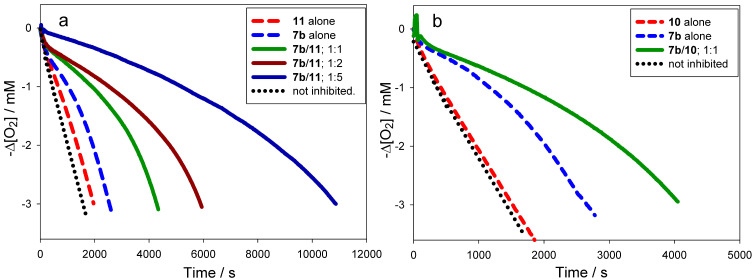
The incorporation of nitrogen atoms into the aromatic ring of phenolic compounds has enabled the development of some of the most potent radical-trapping antioxidants ever reported. These compounds, 3-pyridinols and 5-pyrimidinols, have stronger O-H bonds than equivalently substituted phenols, but possess similar reactivities toward autoxidation chain-carrying peroxyl radicals. These attributes suggest that 3-pyridinols and 5-pyrimidinols will be particularly effectiveco-antioxidants when used in combination with more common, but less reactive, phenolic antioxidants such as 2,6-di-tert-butyl-4-methylphenol (BHT), which we demonstrate herein. The antioxidants function in a synergistic manner to inhibit autoxidation; taking advantage of the higher reactivity of the 3-pyridinols/5-pyrimidinols to trap peroxyl radicals and using the less reactive phenols to regenerate them from their corresponding aryloxyl radicals. The present investigations were carried out in chlorobenzene and acetonitrile in order to provide some insight into the medium dependence of the synergism and the results, considered with some from our earlier work, prompt a revision of the H-bonding basicity value of acetonitrile to β2 (H) of 0.39. Overall, the thermodynamic and kinetic data presented here enable the design of co-antioxidant systems comprising lower loadings of the more expensive 3-pyridinol/5-pyrimidinol antioxidants and higher loadings of the less expensive phenolic antioxidants, but which are equally efficacious as the 3-pyridinol/5-pyrimidinol antioxidants alone at higher loadings.
氮原子被引入酚类化合物的芳环中,从而开发出了一些迄今为止报道的最有效的自由基捕获抗氧化剂。这些化合物,3-吡啶醇和 5-嘧啶醇,具有比相应取代的酚更强的 O-H 键,但对自氧化链携带的过氧自由基具有相似的反应性。这些特性表明,3-吡啶醇和 5-嘧啶醇将特别有效地作为共抗氧化剂使用,与更常见但反应性较低的酚类抗氧化剂(如 2,6-二叔丁基-4-甲基苯酚(BHT))结合使用,我们在本文中证明了这一点。抗氧化剂以协同方式发挥作用,抑制自氧化;利用 3-吡啶醇/5-嘧啶醇的高反应性来捕获过氧自由基,并利用反应性较低的酚类将其从相应的芳氧基自由基中再生。本研究在氯苯和乙腈中进行,以便深入了解协同作用的介质依赖性,考虑到我们早期工作的一些结果,提示对乙腈的氢键基本性值β2(H)进行修订,修正值为 0.39。总的来说,这里提出的热力学和动力学数据使设计共抗氧化剂系统成为可能,该系统包括负载较低的昂贵的 3-吡啶醇/5-嘧啶醇抗氧化剂和负载较高的较便宜的酚类抗氧化剂,但在较高负载下,其效力与单独使用 3-吡啶醇/5-嘧啶醇抗氧化剂相当。