
微阵列技术在颅内细菌感染检测中的应用。
Application of microarray technology for the detection of intracranial bacterial infection.
作者信息
Shen Jianhong, Guan Yixiang, Zhang Jianping, Tang Jianwu, Lu Xiaojian, Zhang Chunxiu
机构信息
Department of Neurosurgery, Affiliated Hospital of Nantong University, Nantong, Jiangsu 226001, P.R. China.
Department of Surgery, Affiliated Haian People's Hospital of Nantong University, Haian, Jiangsu 226600, P.R. China.
出版信息
Exp Ther Med. 2014 Feb;7(2):496-500. doi: 10.3892/etm.2013.1443. Epub 2013 Dec 10.
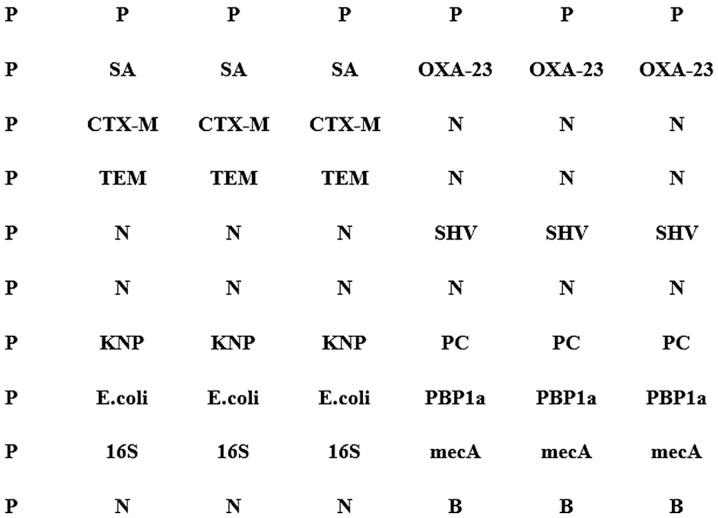
The aim of this study was to assess the value of microarray technology for the detection of intracranial bacterial infection. A small gene chip was prepared based on the four pathogens commonly known to cause intracranial infection and the corresponding six types of common resistance genes in The Affiliated Hospital of Nantong University and The Affiliated Haian People's Hospital of Nantong University. Cerebrospinal fluid samples were then collected from 30 patients with clinically diagnosed intracranial infection for the detection of the bacteria and resistance genes. The results were compared with the bacterial culture and sensitivity test results from the Department of Clinical Laboratories. The laboratory bacterial culture took 4-5 days, and revealed that 12 cases were positive and 18 cases were negative for bacteria. The microarray analysis took 1 day, and bacteria and resistance genes were detected in 15 cases. The 16S gene and drug resistance genes were detected in 8 cases; however, the bacterial strain was not identified. Seven cases appeared negative for bacteria and resistance genes. Microarray technology is rapid, sensitive and suitable for use in the detection of intracranial infections and other diseases for which conventional bacterial culture has a low positive rate.
本研究的目的是评估微阵列技术在检测颅内细菌感染方面的价值。在南通大学附属医院和南通大学附属海安人民医院,基于已知可引起颅内感染的四种病原体及相应的六种常见耐药基因制备了一种小型基因芯片。然后从30例临床诊断为颅内感染的患者中采集脑脊液样本,用于检测细菌和耐药基因。将结果与临床实验室的细菌培养及药敏试验结果进行比较。实验室细菌培养需要4 - 5天,结果显示12例细菌阳性,18例细菌阴性。微阵列分析需要1天,在15例中检测到细菌和耐药基因。在8例中检测到16S基因和耐药基因,但未鉴定出细菌菌株。7例细菌和耐药基因检测呈阴性。微阵列技术快速、灵敏,适用于检测颅内感染及其他传统细菌培养阳性率较低的疾病。



 Zotero 插件