Morris Derek W, Pearson Richard D, Cormican Paul, Kenny Elaine M, O'Dushlaine Colm T, Perreault Louis-Philippe Lemieux, Giannoulatou Eleni, Tropea Daniela, Maher Brion S, Wormley Brandon, Kelleher Eric, Fahey Ciara, Molinos Ines, Bellini Stefania, Pirinen Matti, Strange Amy, Freeman Colin, Thiselton Dawn L, Elves Rachel L, Regan Regina, Ennis Sean, Dinan Timothy G, McDonald Colm, Murphy Kieran C, O'Callaghan Eadbhard, Waddington John L, Walsh Dermot, O'Donovan Michael, Grozeva Detelina, Craddock Nick, Stone Jennifer, Scolnick Ed, Purcell Shaun, Sklar Pamela, Coe Bradley, Eichler Evan E, Ophoff Roel, Buizer Jacobine, Szatkiewicz Jin, Hultman Christina, Sullivan Patrick, Gurling Hugh, Mcquillin Andrew, St Clair David, Rees Elliott, Kirov George, Walters James, Blackwood Douglas, Johnstone Mandy, Donohoe Gary, O'Neill Francis A, Kendler Kenneth S, Gill Michael, Riley Brien P, Spencer Chris C A, Corvin Aiden
Department of Psychiatry and Neuropsychiatric Genetics Research Group, Institute of Molecular Medicine, Trinity College Dublin, Dublin 2, Ireland.
Wellcome Trust Centre for Human Genetics, University of Oxford, Roosevelt Drive, Oxford OX3 7BN, UK.
Hum Mol Genet. 2014 Jun 15;23(12):3316-26. doi: 10.1093/hmg/ddu025. Epub 2014 Jan 28.
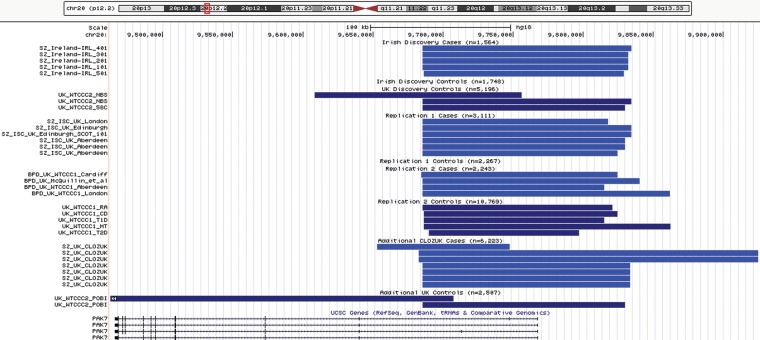
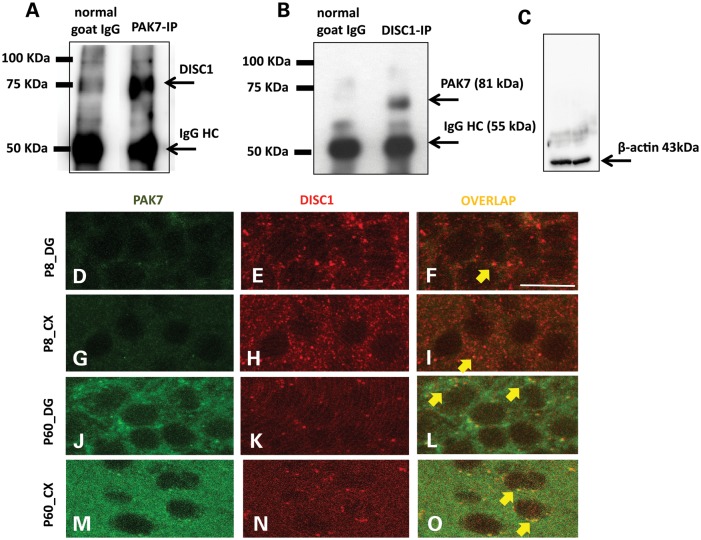
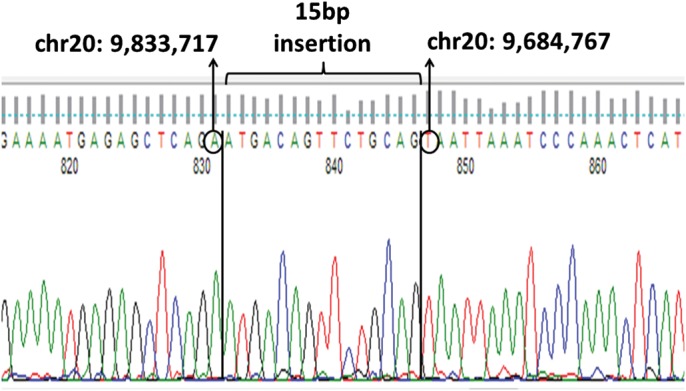
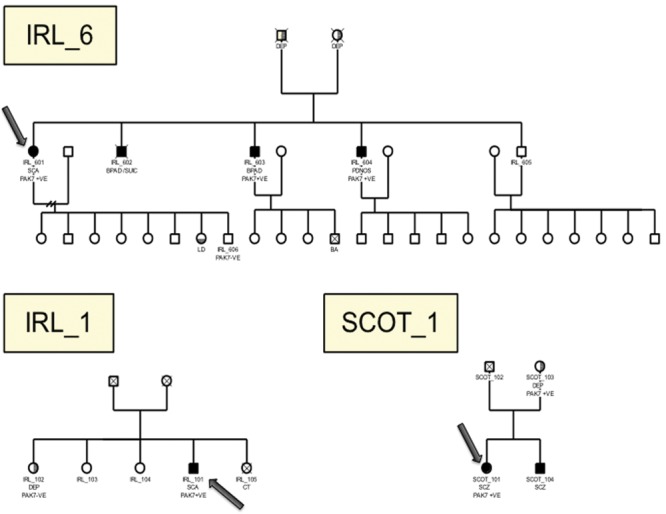
Identifying rare, highly penetrant risk mutations may be an important step in dissecting the molecular etiology of schizophrenia. We conducted a gene-based analysis of large (>100 kb), rare copy-number variants (CNVs) in the Wellcome Trust Case Control Consortium 2 (WTCCC2) schizophrenia sample of 1564 cases and 1748 controls all from Ireland, and further extended the analysis to include an additional 5196 UK controls. We found association with duplications at chr20p12.2 (P = 0.007) and evidence of replication in large independent European schizophrenia (P = 0.052) and UK bipolar disorder case-control cohorts (P = 0.047). A combined analysis of Irish/UK subjects including additional psychosis cases (schizophrenia and bipolar disorder) identified 22 carriers in 11 707 cases and 10 carriers in 21 204 controls [meta-analysis Cochran-Mantel-Haenszel P-value = 2 × 10(-4); odds ratio (OR) = 11.3, 95% CI = 3.7, ∞]. Nineteen of the 22 cases and 8 of the 10 controls carried duplications starting at 9.68 Mb with similar breakpoints across samples. By haplotype analysis and sequencing, we identified a tandem ~149 kb duplication overlapping the gene p21 Protein-Activated Kinase 7 (PAK7, also called PAK5) which was in linkage disequilibrium with local haplotypes (P = 2.5 × 10(-21)), indicative of a single ancestral duplication event. We confirmed the breakpoints in 8/8 carriers tested and found co-segregation of the duplication with illness in two additional family members of one of the affected probands. We demonstrate that PAK7 is developmentally co-expressed with another known psychosis risk gene (DISC1) suggesting a potential molecular mechanism involving aberrant synapse development and plasticity.
识别罕见的、高外显率风险突变可能是剖析精神分裂症分子病因的重要一步。我们对来自爱尔兰的1564例精神分裂症患者和1748例对照组成的威康信托病例对照研究联盟2(WTCCC2)样本中的大型(>100 kb)罕见拷贝数变异(CNV)进行了基于基因的分析,并进一步将分析扩展至另外5196例英国对照。我们发现与20号染色体短臂12.2区的重复存在关联(P = 0.007),并且在大型独立的欧洲精神分裂症队列(P = 0.052)和英国双相情感障碍病例对照队列(P = 0.047)中发现了重复的证据。对包括更多精神病病例(精神分裂症和双相情感障碍)的爱尔兰/英国受试者进行的联合分析,在11707例病例中识别出22名携带者,在21204例对照中识别出10名携带者[荟萃分析 Cochr an - Mantel - Haenszel P值 = 2 × 10⁻⁴;优势比(OR) = 11.3,95%可信区间 = 3.7,∞]。22例病例中的19例以及10例对照中的8例携带了起始于9.68 Mb的重复,且各样本间断点相似。通过单倍型分析和测序,我们识别出一个约149 kb的串联重复,其与p21蛋白激活激酶7(PAK7,也称为PAK5)基因重叠,该重复与局部单倍型处于连锁不平衡状态(P = 2.5 × 10⁻²¹),表明这是一个单一的祖先重复事件。我们在8/8名接受检测的携带者中确认了断点,并在一名受影响先证者的另外两名家庭成员中发现该重复与疾病共分离。我们证明PAK7在发育过程中与另一个已知的精神病风险基因(DISC1)共表达,提示存在一种涉及异常突触发育和可塑性的潜在分子机制。