Chen Kuo-Hu, Chen Li-Ru, Wang Ying-Kuan
Department of Obstetrics and Gynecology, Taipei Tzu-Chi Hospital, The Buddhist Tzu-Chi Medical Foundation, Taipei, Taiwan ; School of Medicine, Tzu-Chi University, Hualien, Taiwan.
Mackay Memorial Hospital, Taipei, Taiwan ; Department of Mechanical Engineering, National Chiao-Tung University, Hsinchu, Taiwan.
PLoS One. 2014 Feb 18;9(2):e78512. doi: 10.1371/journal.pone.0078512. eCollection 2014.
This prospective study aims to identify and compare the incidence of bacterial contamination of hospital charts and the distribution of species responsible for chart contamination in different units of a tertiary hospital.
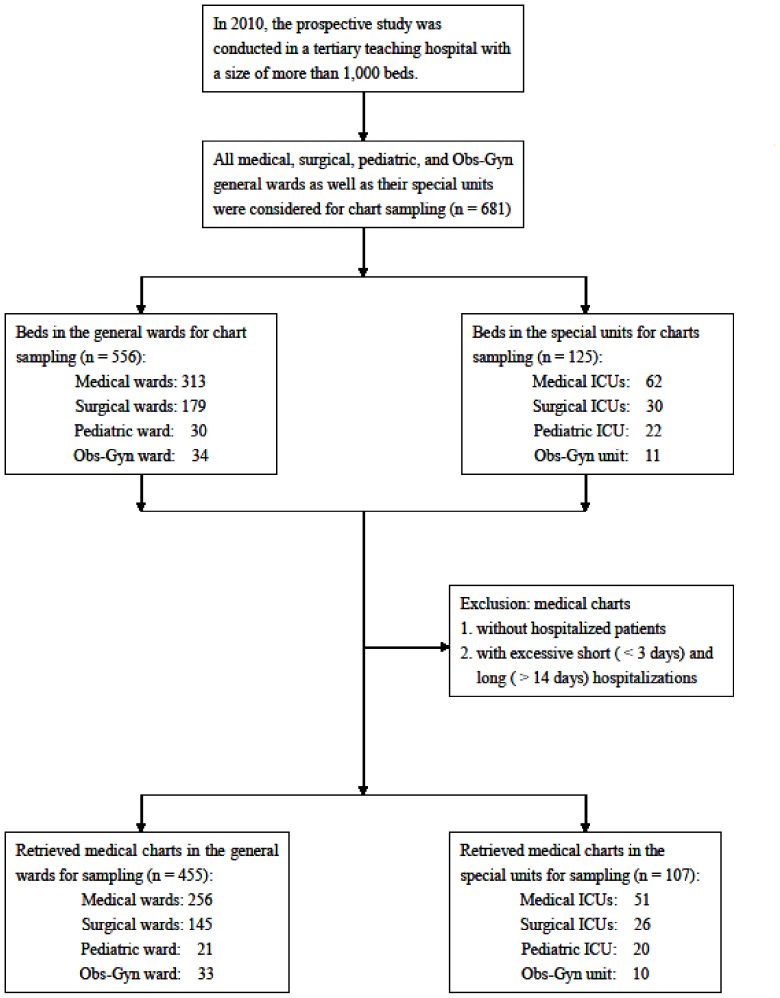
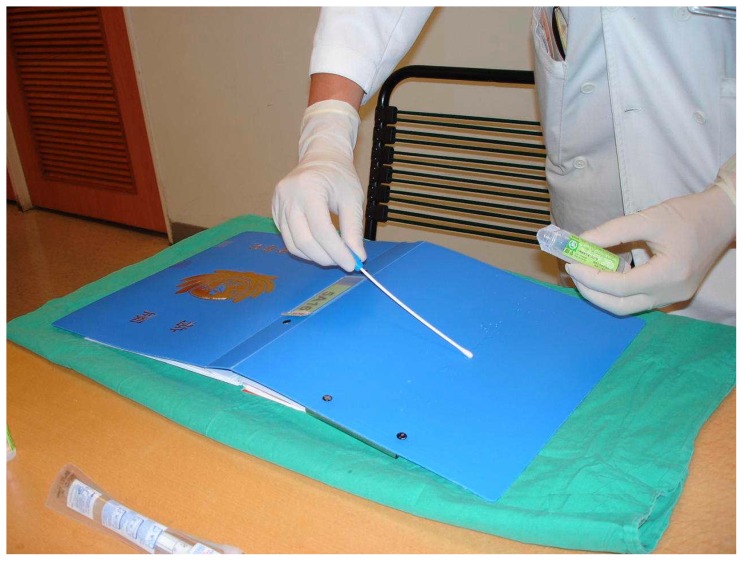
All beds in medical, surgical, pediatric, and obstetric-gynecologic general wards (556) and those in corresponding special units (125) including medical, surgical, pediatric intensive care units (ICUs), the obstetric tocolytic unit and delivery room were surveyed for possible chart contamination. The outer surfaces of included charts were sampled by one experienced investigator with sterile cotton swabs rinsed with normal saline.
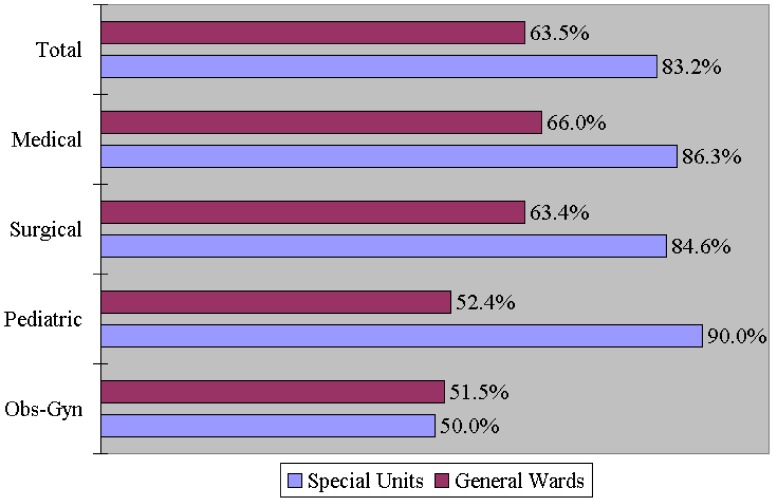
For general wards and special units, the overall sampling rates were 81.8% (455/556) and 85.6% (107/125) (p = 0.316); the incidence of chart contamination was 63.5% and 83.2%, respectively (p<0.001). Except for obstetric-gynecologic charts, the incidence was significantly higher in each and in all ICUs than in corresponding wards. Coagulase-negative staphylococci was the most common contaminant in general wards (40.0%) and special units (34.6%) (p>0.05). Special units had a significantly higher incidence of bacterial contamination due to Staphylococcus aureus (17.8%), Methicillin-resistant Staphylococcus aureus (9.3%), Streptococcus viridans (9.4%), Escherichia coli (11.2%), Klebsiella pneumoniae (7.5%), and Acinetobacter baumannii (7.5%). Logistic regression analysis revealed the incidence of chart contamination was 2- to 4-fold higher in special units than in general wards [odds ratios: 1.97-4.00].
Noting that most hospital charts are contaminated, our study confirms that a hospital chart is not only a medical record but also an important source of potential infection. The plastic cover of the medical chart can harbor potential pathogens, thus acting as a vector of bacteria. Additionally, chart contamination is more common in ICUs. These findings highlight the importance of effective hand-washing before and after handling medical charts. However, managers and clinical staff should pay more attention to the issue and may consider some interventions.
本前瞻性研究旨在确定并比较一家三级医院不同科室医院病历的细菌污染发生率以及造成病历污染的菌种分布情况。
对内科、外科、儿科以及妇产科普通病房(共556张床位)和相应特殊科室(共125张床位,包括内科、外科、儿科重症监护病房(ICU)、产科安胎病房和产房)的所有床位进行调查,以确定病历是否可能被污染。由一名经验丰富的研究人员用蘸有生理盐水的无菌棉签对纳入调查的病历外表面进行采样。
普通病房和特殊科室的总体采样率分别为81.8%(455/556)和85.6%(107/125)(p = 0.316);病历污染发生率分别为63.5%和83.2%(p<0.001)。除妇产科病历外,各ICU及所有ICU的污染发生率均显著高于相应病房。凝固酶阴性葡萄球菌是普通病房(40.0%)和特殊科室(34.6%)中最常见的污染物(p>0.05)。特殊科室因金黄色葡萄球菌(17.8%)、耐甲氧西林金黄色葡萄球菌(9.3%)、草绿色链球菌(9.4%)、大肠杆菌(11.2%)、肺炎克雷伯菌(7.5%)和鲍曼不动杆菌(7.5%)导致的细菌污染发生率显著更高。逻辑回归分析显示,特殊科室病历污染发生率比普通病房高2至4倍[比值比:1.97 - 4.00]。
鉴于大多数医院病历被污染,我们的研究证实医院病历不仅是医疗记录,也是潜在感染的重要来源。病历的塑料封皮可能携带潜在病原体,因此成为细菌的传播媒介。此外,病历污染在ICU中更为常见。这些发现凸显了在处理病历时有效洗手的重要性。然而,管理人员和临床工作人员应更加关注该问题,并可考虑采取一些干预措施。