Max-Planck Institute of Biochemistry, Martinsried, Germany; Institute of Immunology, University of Heidelberg, Heidelberg, Germany.
PLoS One. 2014 Apr 16;9(4):e94922. doi: 10.1371/journal.pone.0094922. eCollection 2014.
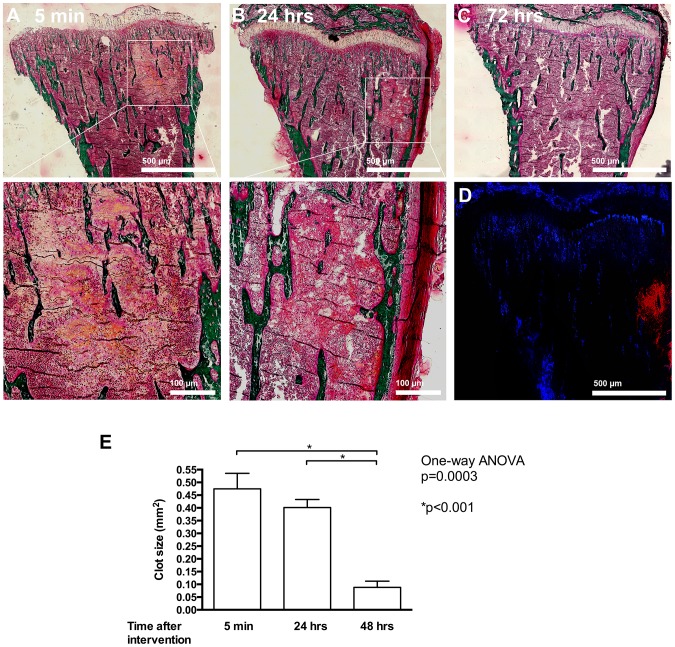
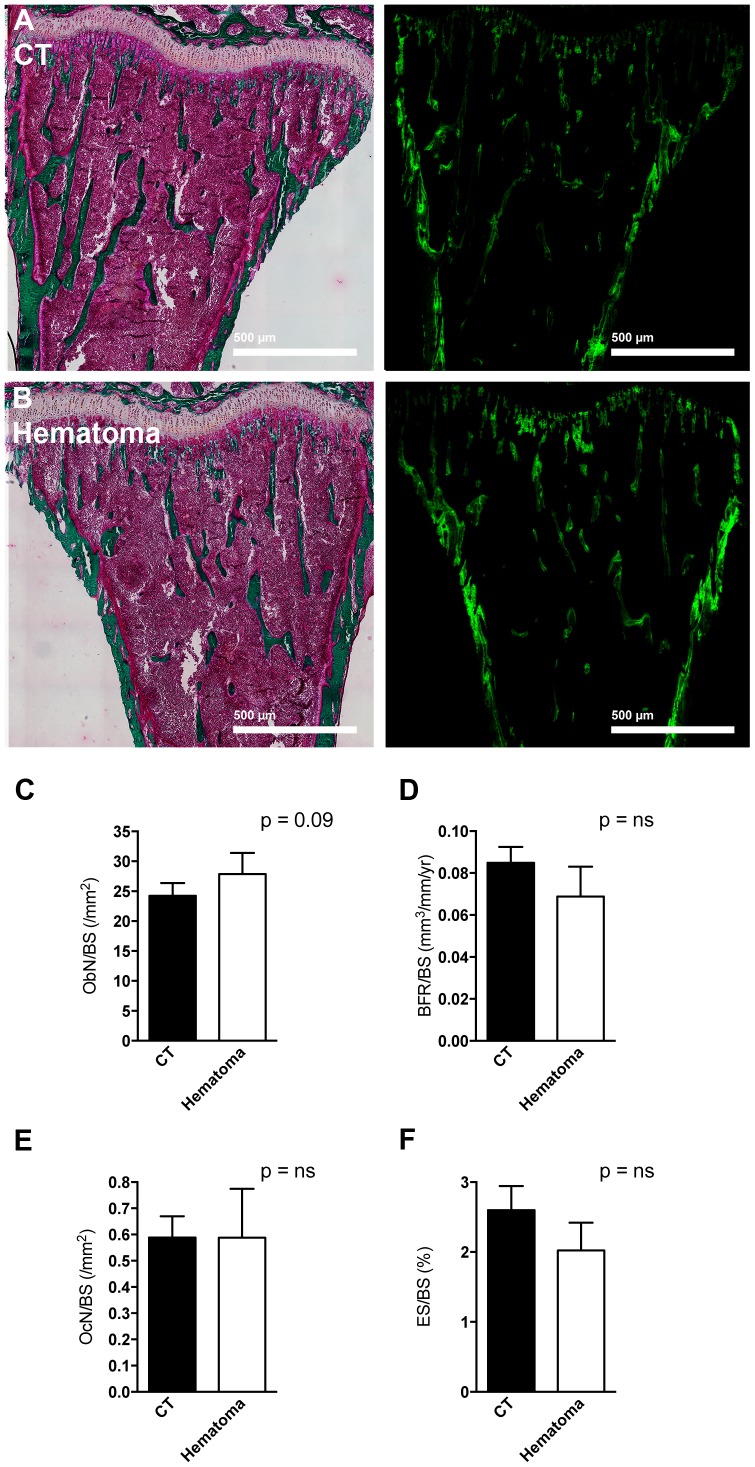
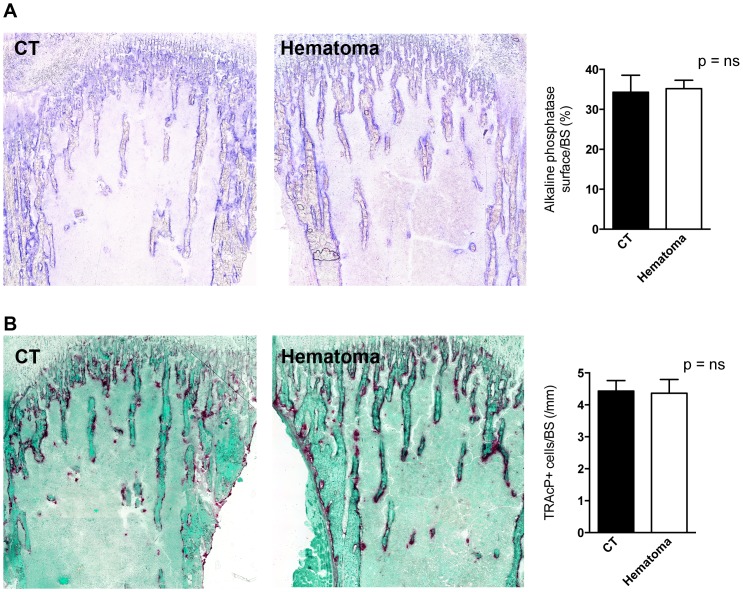
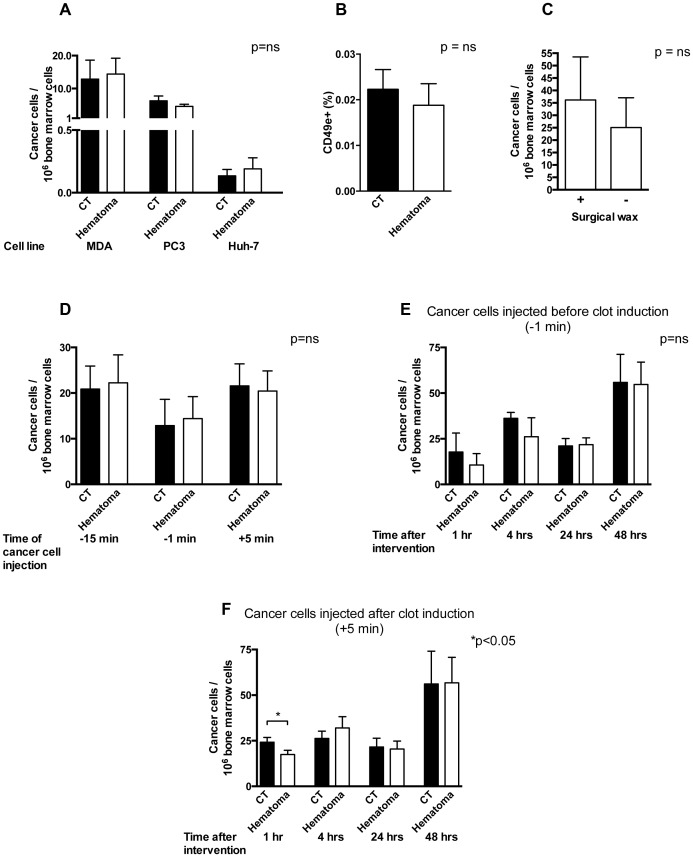
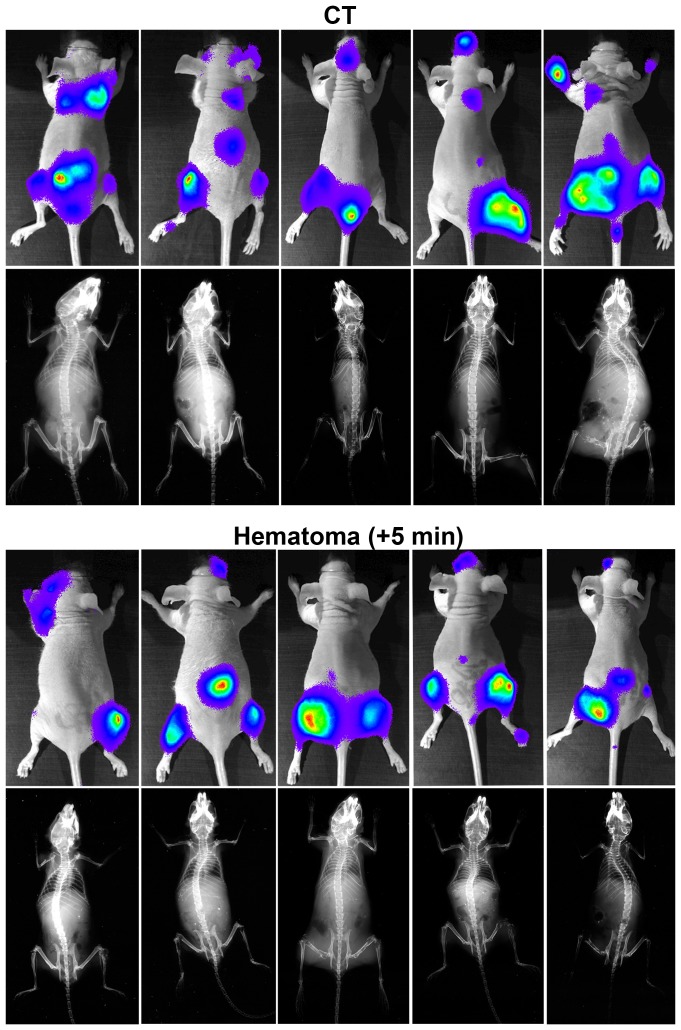
Cancer is associated with increased fracture risk, due either to metastasis or associated osteoporosis. After a fracture, blood clots form. Because proteins of the coagulation cascade and activated platelets promote cancer development, a fracture in patients with cancer often raises the question whether it is a pathologic fracture or whether the fracture itself might promote the formation of metastatic lesions. We therefore examined whether blood clot formation results in increased metastasis in a murine model of experimental breast cancer metastasis. For this purpose, a clot was surgically induced in the bone marrow of the left tibia of immundeficient mice. Either one minute prior to or five minutes after clot induction, human cancer cells were introduced in the circulation by intracardiac injection. The number of cancer cells that homed to the intervention site was determined by quantitative real-time PCR and flow cytometry. Metastasis formation and longitudinal growth were evaluated by bioluminescence imaging. The number of cancer cells that homed to the intervention site after 24 hours was similar to the number of cells in the opposite tibia that did not undergo clot induction. This effect was confirmed using two more cancer cell lines. Furthermore, no difference in the number of macroscopic lesions or their growth could be detected. In the control group 72% developed a lesion in the left tibia. In the experimental groups with clot formation 79% and 65% developed lesions in the left tibia (p = ns when comparing each experimental group with the controls). Survival was similar too. In summary, the growth factors accumulating in a clot/hematoma are neither enough to promote cancer cell homing nor support growth in an experimental model of breast cancer bone metastasis. This suggests that blood clot formation, as occurs in traumatic fractures, surgical interventions, and bruises, does not increase the risk of metastasis formation.
癌症与骨折风险增加有关,原因可能是转移或相关的骨质疏松症。骨折后会形成血栓。由于凝血级联反应的蛋白和激活的血小板促进癌症的发展,因此在癌症患者中发生骨折时,经常会提出这样的问题,即这是病理性骨折还是骨折本身可能会促进转移性病变的形成。因此,我们研究了在实验性乳腺癌转移的小鼠模型中,血栓形成是否会导致转移增加。为此,在免疫缺陷小鼠左胫骨的骨髓中通过手术诱导血栓形成。在诱导血栓形成之前一分钟或之后五分钟,通过心内注射将人类癌细胞引入循环中。通过定量实时 PCR 和流式细胞术确定归巢到干预部位的癌细胞数量。通过生物发光成像评估转移形成和纵向生长。 24 小时后归巢到干预部位的癌细胞数量与未进行血栓诱导的对侧胫骨中的细胞数量相似。使用另外两种癌细胞系证实了这一效果。此外,在宏观病变的数量或其生长方面未检测到差异。在对照组中,72%的动物在左胫骨中形成病变。在形成血栓的实验组中,79%和 65%的动物在左胫骨中形成病变(在每个实验组与对照组进行比较时,p>0.05)。生存情况也相似。总之,在血栓/血肿中积累的生长因子既不足以促进癌细胞归巢,也不足以支持乳腺癌骨转移的实验模型中的生长。这表明,如在创伤性骨折,手术干预和瘀伤中发生的血栓形成不会增加转移形成的风险。