Venkataraman Vinayak, Donohue Sean J, Biglan Kevin M, Wicks Paul, Dorsey E Ray
Department of Neurology (VV, ERD), Johns Hopkins Medicine, Baltimore; Johns Hopkins University (SJD), Baltimore, MD; Department of Neurology (KMB), University of Rochester Medical Center, NY; and PatientsLikeMe (PW), Cambridge, MA.
Neurol Clin Pract. 2014 Apr;4(2):146-152. doi: 10.1212/01.CPJ.0000437937.63347.5a.
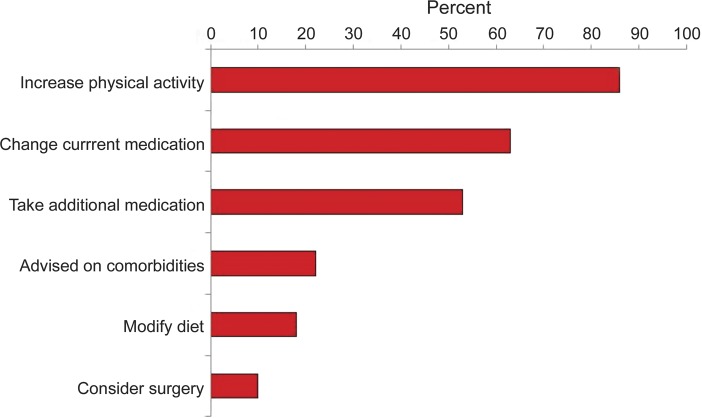
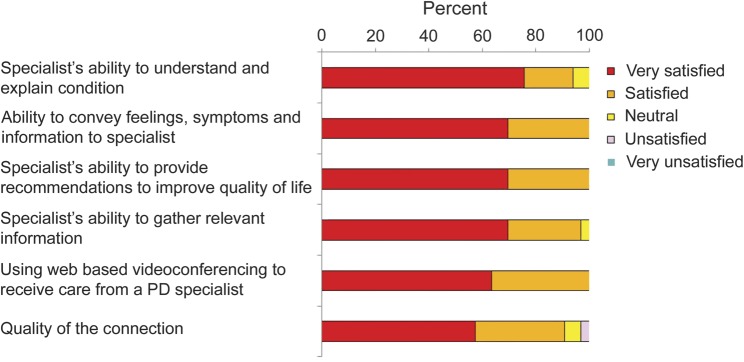
We sought to characterize recommendations and feedback of patients with Parkinson disease, each offered a free telemedicine consultation with a specialist. Visits consisted of history, neurologic examination, and recommendations. Midway through the program, patients were asked to complete an online satisfaction survey. From August 2012 to May 2013, 55 patients in 5 states (mean age 67.8 years) participated, with 80% of visits conducted from their home. Patients with Parkinson disease were recommended to exercise (86%), change current medication (63%), and add new medication (53%). Thirty-three of 35 consecutive patients completed a survey. Patient satisfaction exceeded 90% for virtually all aspects of the visit measured. Providing care to patients in their homes via telemedicine is feasible, results in changes to care, and is well-received.
我们试图对帕金森病患者的建议和反馈进行描述,每位患者都获得了与专科医生的免费远程医疗咨询服务。问诊包括病史、神经系统检查及建议。在项目进行到一半时,要求患者完成一项在线满意度调查。2012年8月至2013年5月,来自5个州的55名患者(平均年龄67.8岁)参与其中,80%的问诊是在患者家中进行的。帕金森病患者被建议进行锻炼(86%)、更改当前药物(63%)以及添加新药物(53%)。连续35名患者中有33名完成了调查。对于所测量的问诊几乎所有方面,患者满意度均超过90%。通过远程医疗为居家患者提供护理是可行的,会带来护理方面的改变,并且受到广泛好评。