Chen Jianmin, Chiazza Fausto, Collino Massimo, Patel Nimesh S A, Coldewey Sina M, Thiemermann Christoph
Queen Mary University of London, William Harvey Research Institute, Barts and the London School of Medicine and Dentistry, London, United Kingdom.
University of Turin, Department of Drug Science and Technology, Turin, Italy.
PLoS One. 2014 Jun 19;9(6):e100631. doi: 10.1371/journal.pone.0100631. eCollection 2014.
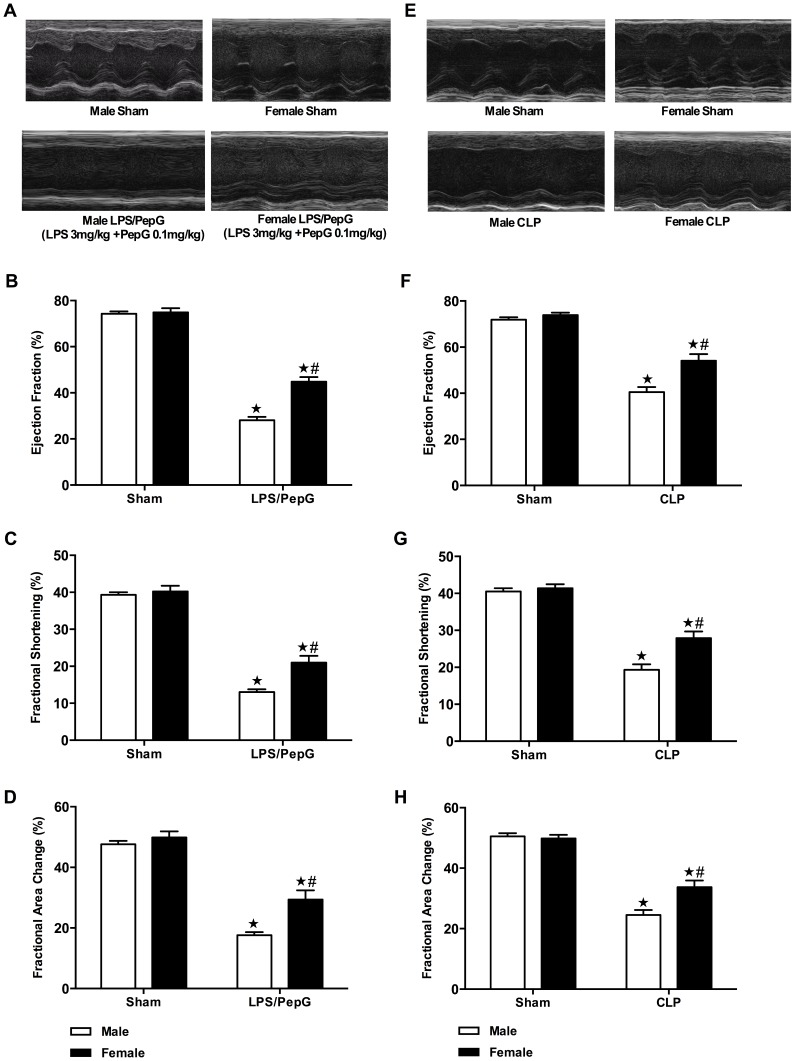
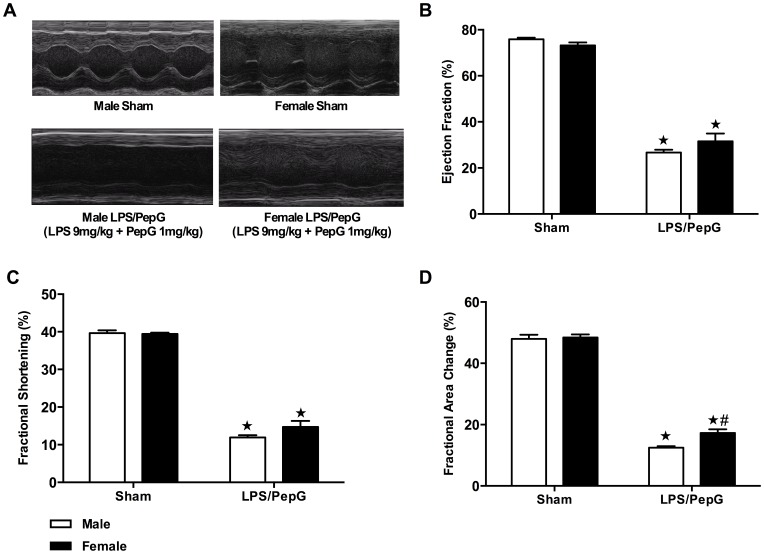
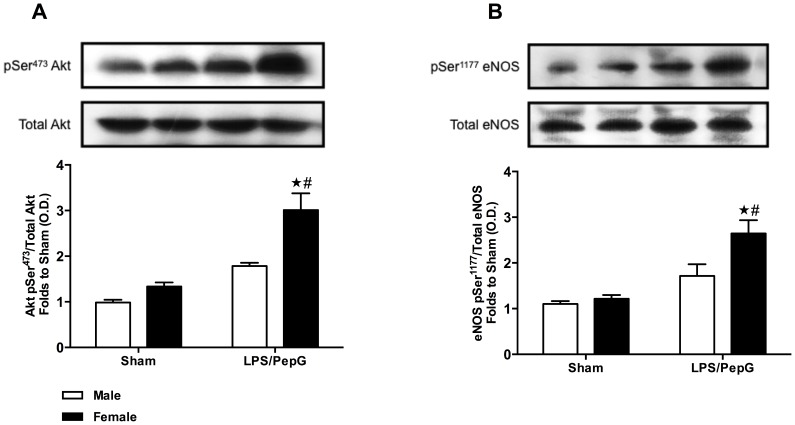
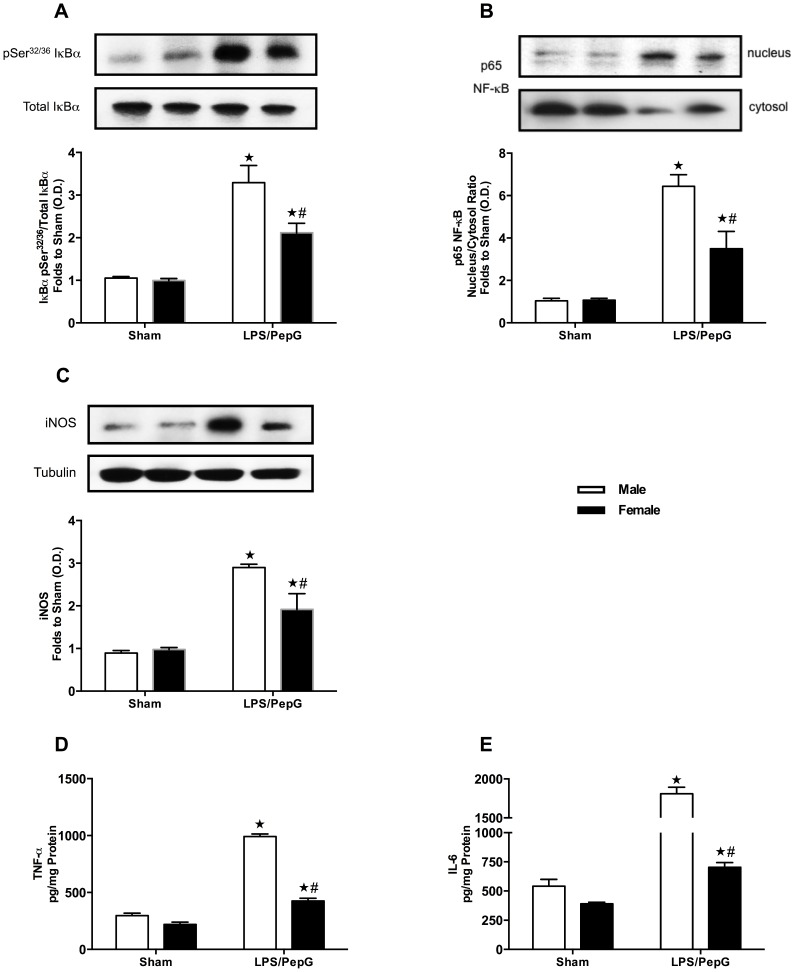
Development of cardiac dysfunction is associated with increased morbidity and mortality in patients with sepsis. Increasing evidence shows that gender determines the degree of inflammatory response of the host and that females tolerate sepsis better than males. It is unknown whether gender affects the cardiac dysfunction in animals or patients with sepsis. To investigate this, male or female C57BL/6 mice were subjected to either lipopolysaccharide (LPS)/peptidoglycan (PepG) co-administration or cecal ligation and puncture (CLP). At 18 hours after LPS/PepG injection or 24 hours after CLP, cardiac function was evaluated by echocardiography. The septic insult caused a significant cardiac dysfunction in both genders. However, the cardiac dysfunction was significantly less pronounced in females in comparison with males subjected to LPS (3 mg/kg)/PepG (0.1 mg/kg) or CLP. Compared with males injected with LPS (3 mg/kg)/PepG (0.1 mg/kg), western blotting analysis of the myocardium from females injected with LPS/PepG revealed i) profound increases in phosphorylation of Akt and eNOS; ii) significant decreases in phosphorylation of IκBα, nuclear translocation of the NF-κB subunit p65, decreased expression of iNOS and decreased synthesis of TNF-α and IL-6 in the heart. However, the gender dimorphism of the cardiac dysfunction secondary to LPS/PepG was not observed when higher doses of LPS (9 mg/kg)/PepG (1 mg/kg) were used. In conclusion, the cardiac dysfunction caused by sepsis was less pronounced in female than in male mice. The protection of female hearts against the dysfunction associated with sepsis is (at least in part) attributable to cardiac activation of the Akt/eNOS survival pathway, decreased activation of NF-κB, and decreased expression of iNOS, TNF-α and IL-6. It should be noted that the observed gender dimorphism of the cardiac dysfunction in sepsis was not seen when a very severe stimulus (high dose of LPS/PepG co-administration) was used to cause cardiac dysfunction.
脓毒症患者心脏功能障碍的发生与发病率和死亡率增加相关。越来越多的证据表明,性别决定宿主炎症反应的程度,女性比男性更能耐受脓毒症。尚不清楚性别是否会影响脓毒症动物或患者的心脏功能障碍。为了研究这一点,将雄性或雌性C57BL/6小鼠进行脂多糖(LPS)/肽聚糖(PepG)联合给药或盲肠结扎穿孔(CLP)。在注射LPS/PepG后18小时或CLP后24小时,通过超声心动图评估心脏功能。脓毒症损伤在两性中均导致显著的心脏功能障碍。然而,与接受LPS(3mg/kg)/PepG(0.1mg/kg)或CLP的雄性相比,雌性的心脏功能障碍明显不那么明显。与注射LPS(3mg/kg)/PepG(0.1mg/kg)的雄性相比,对注射LPS/PepG的雌性心肌进行蛋白质印迹分析发现:i)Akt和eNOS磷酸化显著增加;ii)IκBα磷酸化、NF-κB亚基p65核转位显著降低,心脏中诱导型一氧化氮合酶(iNOS)表达降低,肿瘤坏死因子-α(TNF-α)和白细胞介素-6(IL-6)合成减少。然而,当使用更高剂量的LPS(9mg/kg)/PepG(1mg/kg)时,未观察到LPS/PepG继发的心脏功能障碍的性别差异。总之,脓毒症引起的心脏功能障碍在雌性小鼠中比在雄性小鼠中不那么明显。雌性心脏对与脓毒症相关的功能障碍的保护作用(至少部分)归因于Akt/eNOS存活途径的心脏激活、NF-κB激活减少以及iNOS、TNF-α和IL-6表达降低。需要注意的是,当使用非常严重的刺激(高剂量LPS/PepG联合给药)导致心脏功能障碍时,未观察到脓毒症中所观察到的心脏功能障碍的性别差异。