Liu Jian, Xu Dongkui, Wang Haijuan, Zhang Ying, Chang Yanan, Zhang Jinlong, Wang Jia, Li Chunxiao, Liu Huan, Zhao Mei, Lin Chen, Zhan Qimin, Huang Changzhi, Qian Haili
State Key Laboratory of Molecular Oncology; Cancer Institute/Hospital, Peking Union Medical College & ChineseAcademy of Medical Sciences, Beijing, China. Medical Research Center, Beijing ChaoYang Hospital, Capital Medical University, Beijing, China. These authors contribute equally to this work.
Department of Abdominal Surgery, Cancer Institute/Hospital, Peking Union Medical College & ChineseAcademy of Medical Sciences, Beijing, China. These authors contribute equally to this work.
Oncotarget. 2014 Jul 15;5(13):5153-64. doi: 10.18632/oncotarget.2095.
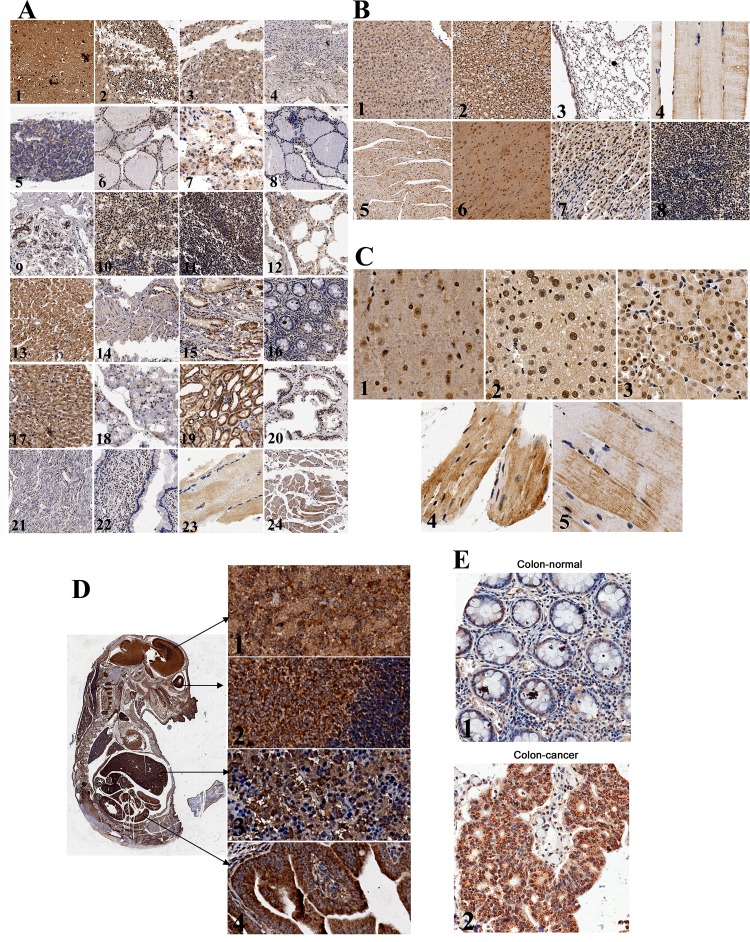
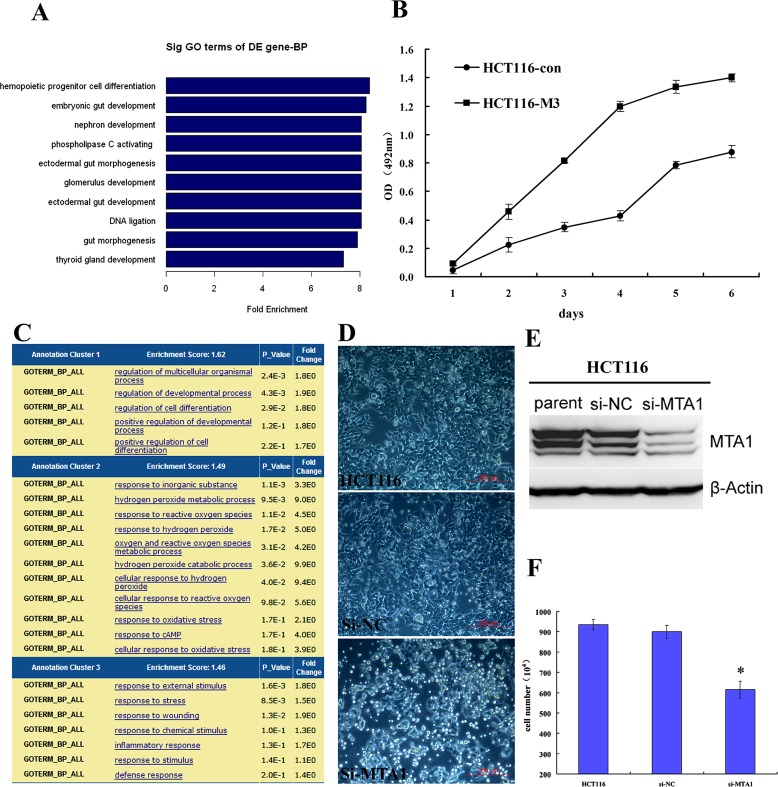
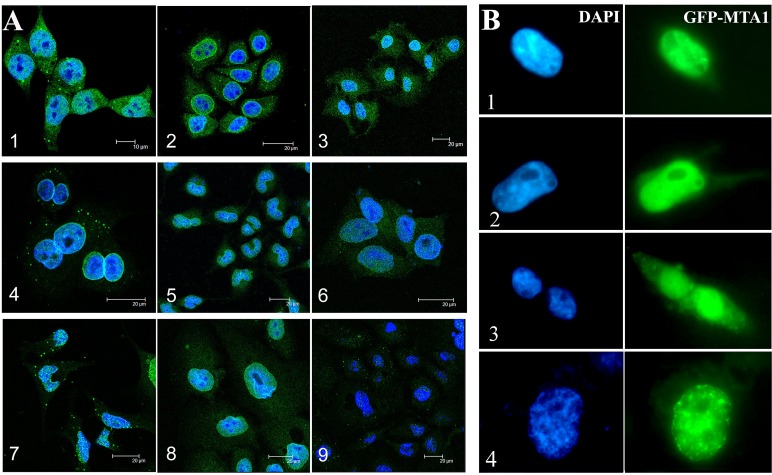
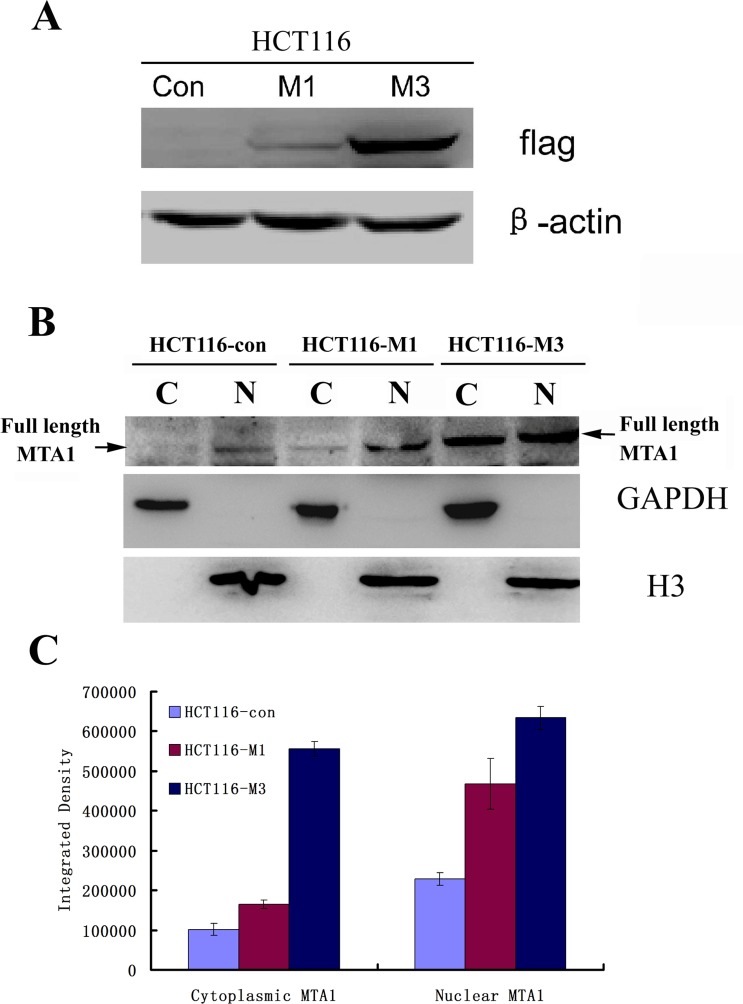
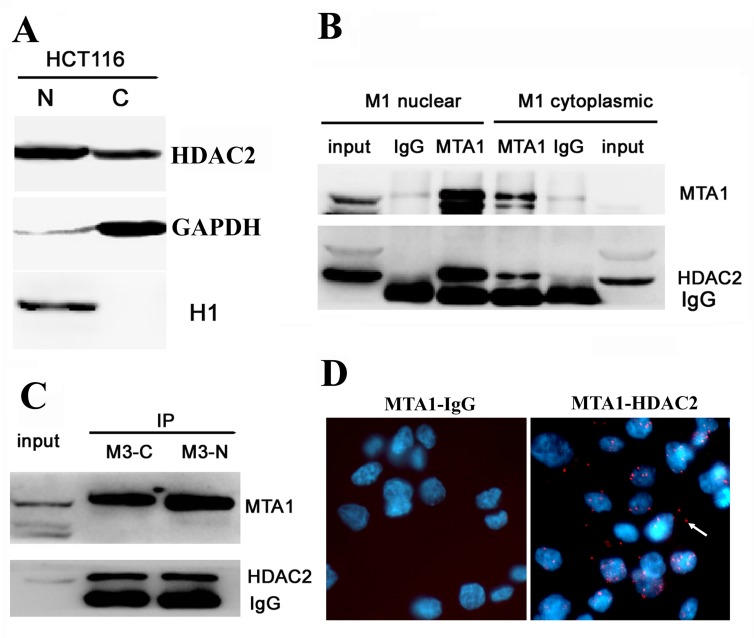
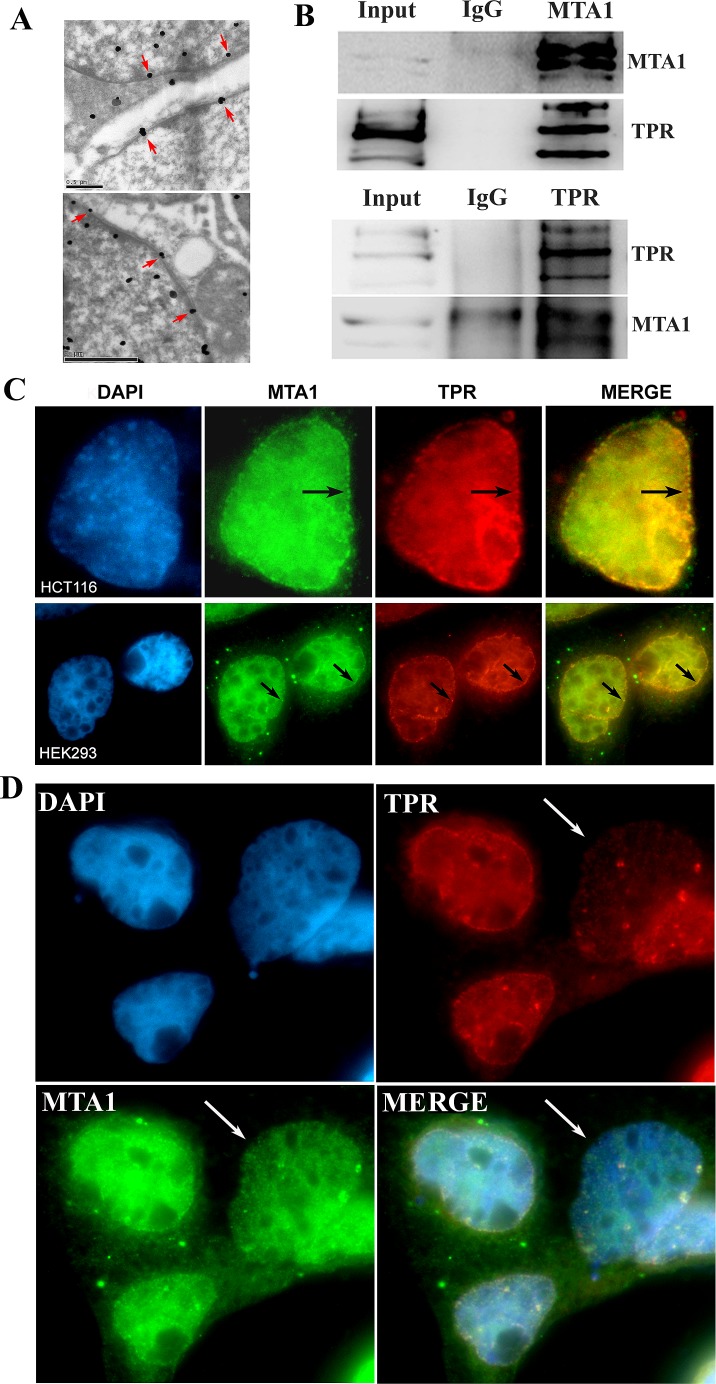
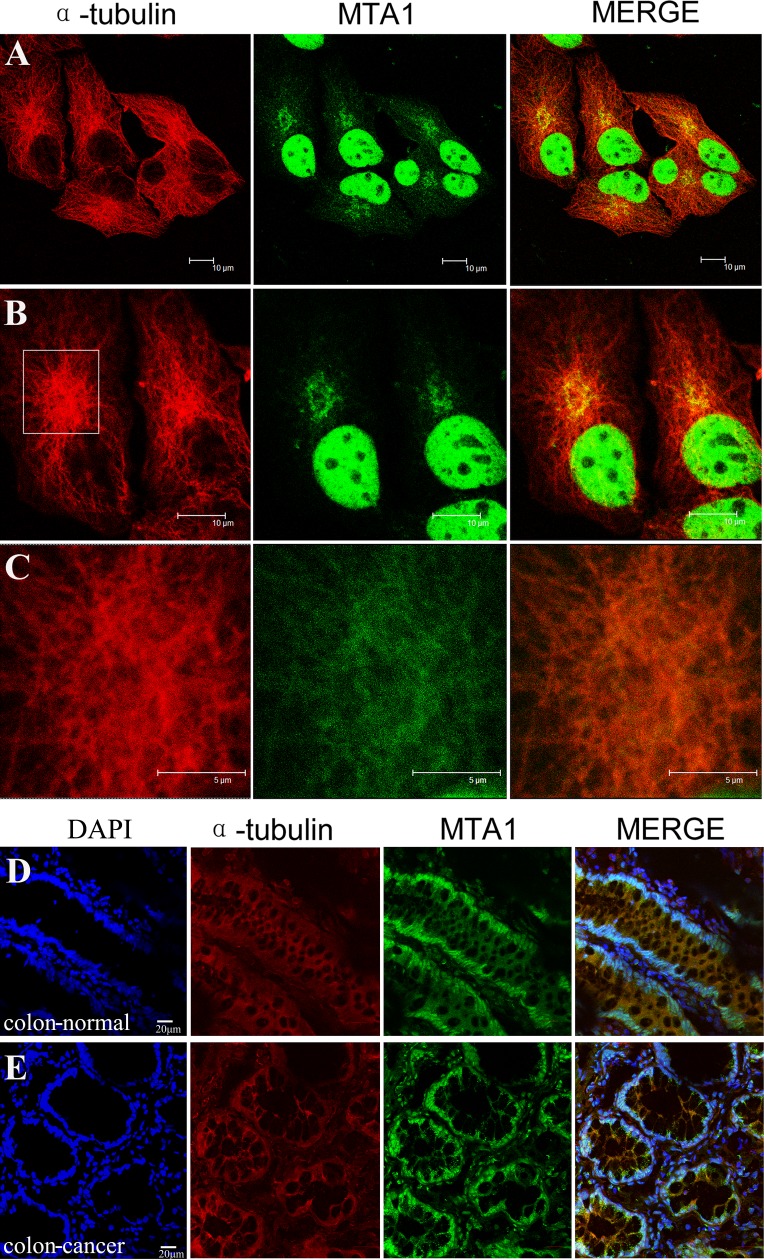
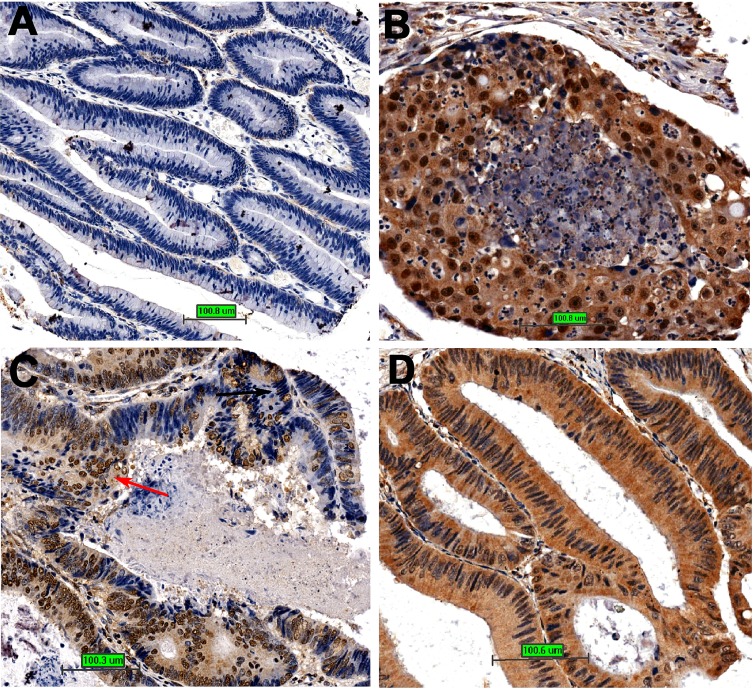
The functions and mechanisms of metastasis-associated protein 1 (MTA1) in cancer progression are still unclear due to a lagged recognition of the subcellular localization. In the present study, using multiple molecular technologies we confirmed for the first time that MTA1 localizes to the nucleus, cytoplasm and nuclear envelope. MTA1 is primarily localized in the nucleus of normal adult tissues but in the cytoplasm of embryonic tissues. While in colon cancer, both distributions have been described. Further investigation revealed that MTA1 localizes on the nuclear envelope in a translocated promoter region (TPR)-dependent manner, while in the cytoplasm, MTA1 shows an obvious localization on microtubules. Both nuclear and cytoplasmic MTA1 are associated with cancer progression. However, these functions may be associated with different mechanisms because only nuclear MTA1 has been associated with cancer differentiation. Overexpression of MTA1 in HCT116 cells inhibited differentiation and promoted proliferation, whereas MTA1 knockdown resulted in cell differentiation and death. Theses results not only suggest that nuclear MTA1 is a good marker for cancer differentiation diagnosis and a potential target for the treatment of cancers but also reveal the necessity to differentially examine the functions of nuclear and cytoplasmic MTA1.
由于对转移相关蛋白1(MTA1)亚细胞定位的认识滞后,其在癌症进展中的功能和机制仍不清楚。在本研究中,我们首次使用多种分子技术证实MTA1定位于细胞核、细胞质和核膜。MTA1主要定位于正常成人组织的细胞核,但在胚胎组织的细胞质中。而在结肠癌中,两种分布情况均有报道。进一步研究表明,MTA1以依赖易位启动子区域(TPR)的方式定位于核膜,而在细胞质中,MTA1在微管上有明显定位。细胞核和细胞质中的MTA1均与癌症进展相关。然而,这些功能可能与不同机制有关,因为只有细胞核中的MTA1与癌症分化相关。在HCT116细胞中过表达MTA1会抑制分化并促进增殖,而敲低MTA1则导致细胞分化和死亡。这些结果不仅表明细胞核中的MTA1是癌症分化诊断的良好标志物和癌症治疗的潜在靶点,还揭示了分别研究细胞核和细胞质中MTA1功能的必要性。