
日本血吸虫分泌性丝氨酸蛋白酶抑制剂(SjB6)的特性分析
Characterisation of a secretory serine protease inhibitor (SjB6) from Schistosoma japonicum.
作者信息
Molehin Adebayo J, Gobert Geoffrey N, Driguez Patrick, McManus Donald P
机构信息
Molecular Parasitology Laboratory, QIMR Berghofer Medical Research Institute, 300 Herston Road, Herston 4006, Australia.
出版信息
Parasit Vectors. 2014 Jul 14;7:330. doi: 10.1186/1756-3305-7-330.
BACKGROUND
Proteins belonging to the serine protease inhibitor (serpin) superfamily play essential physiological roles in many organisms. In pathogens, serpins are thought to have evolved specifically to limit host immune responses by interfering with the host immune-stimulatory signals. Serpins are less well characterised in parasitic helminths, although some are thought to be involved in mechanisms associated with host immune modulation. In this study, we cloned and partially characterised a secretory serpin from Schistosoma japonicum termed SjB6, these findings provide the basis for possible functional roles.
METHODS
SjB6 gene was identified through database mining of our previously published microarray data, cloned and detailed sequence and structural analysis and comparative modelling carried out using various bioinformatics and proteomics tools. Gene transcriptional profiling was determined by real-time PCR and the expression of native protein determined by immunoblotting. An immunological profile of the recombinant protein produced in insect cells was determined by ELISA.
RESULTS
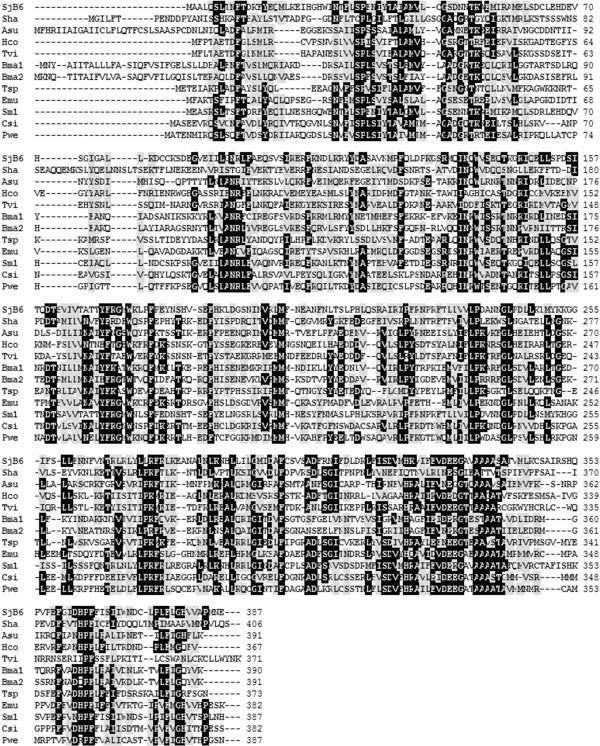
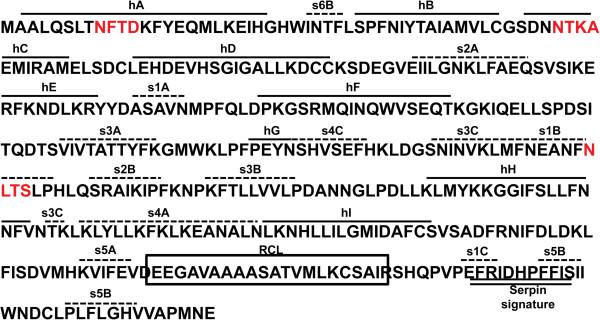
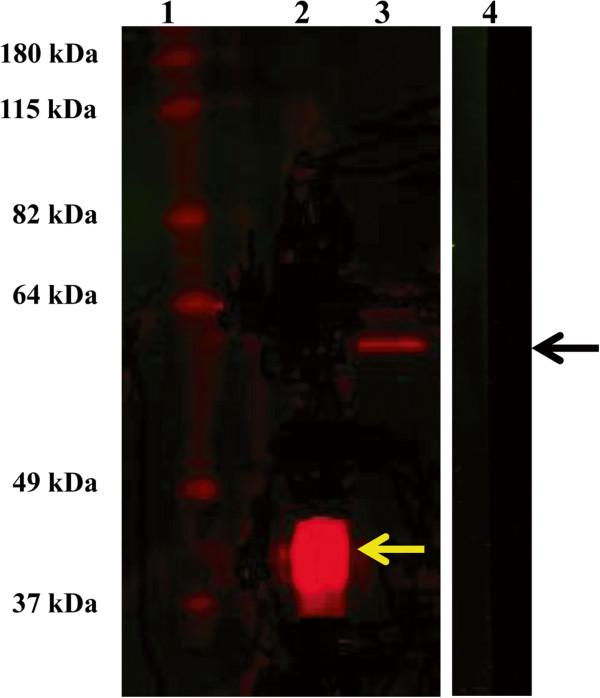
SjB6 contains an open reading frame of 1160 base pairs that encodes a protein of 387 amino acid residues. Detailed sequence analysis, comparative modelling and structural-based alignment revealed that SjB6 contains the essential structural motifs and consensus secondary structures typical of inhibitory serpins. The presence of an N-terminal signal sequence indicated that SjB6 is a secretory protein. Real-time data indicated that SjB6 is expressed exclusively in the intra-mammalian stage of the parasite life cycle with its highest expression levels in the egg stage (p < 0.0001). The native protein is approximately 60 kDa in size and recombinant SjB6 (rSjB6) was recognised strongly by sera from rats experimentally infected with S. japonicum.
CONCLUSIONS
The significantly high expression of SjB6 in schistosome eggs, when compared to other life cycle stages, suggests a possible association with disease pathology, while the strong reactivity of sera from experimentally infected rats against rSjB6 suggests that native SjB6 is released into host tissue and induces an immune response. This study presents a comprehensive demonstration of sequence and structural-based analysis of a secretory serpin from a trematode and suggests SjB6 may be associated with important functional roles in S. japonicum, particularly in parasite modulation of the host microenvironment.
背景
属于丝氨酸蛋白酶抑制剂(serpin)超家族的蛋白质在许多生物体中发挥着重要的生理作用。在病原体中,丝氨酸蛋白酶抑制剂被认为是通过干扰宿主免疫刺激信号而专门进化来限制宿主免疫反应的。在寄生蠕虫中,丝氨酸蛋白酶抑制剂的特征了解较少,尽管一些被认为参与了与宿主免疫调节相关的机制。在本研究中,我们克隆并部分鉴定了日本血吸虫的一种分泌性丝氨酸蛋白酶抑制剂SjB6,这些发现为其可能的功能作用提供了基础。
方法
通过对我们之前发表的微阵列数据进行数据库挖掘来鉴定SjB6基因,使用各种生物信息学和蛋白质组学工具进行克隆、详细的序列和结构分析以及比较建模。通过实时PCR确定基因转录谱,通过免疫印迹确定天然蛋白质的表达。通过ELISA确定昆虫细胞中产生的重组蛋白的免疫学特征。
结果
SjB6包含一个1160个碱基对的开放阅读框,编码一个387个氨基酸残基的蛋白质。详细的序列分析、比较建模和基于结构的比对表明,SjB6包含抑制性丝氨酸蛋白酶抑制剂典型的基本结构基序和共有二级结构。N端信号序列的存在表明SjB6是一种分泌蛋白。实时数据表明,SjB6仅在寄生虫生命周期的哺乳动物内阶段表达,在卵阶段表达水平最高(p < 0.0001)。天然蛋白质大小约为60 kDa,重组SjB6(rSjB6)被实验感染日本血吸虫的大鼠血清强烈识别。
结论
与其他生命周期阶段相比,SjB6在血吸虫卵中的高表达表明其可能与疾病病理学有关,而实验感染大鼠血清对rSjB6的强烈反应表明天然SjB6释放到宿主组织中并诱导免疫反应。本研究全面展示了对吸虫分泌性丝氨酸蛋白酶抑制剂进行基于序列和结构的分析,并表明SjB6可能在日本血吸虫中发挥重要功能作用,特别是在寄生虫对宿主微环境的调节中。




 Zotero 插件